
Portsmouth · London and the South East
New roof snagging in Farlington, Portsmouth
An experienced roof surveyor for new roof snagging in Farlington. Over 5,000 surveys and 20+ years behind us across London and the South East.
- Missing or blocked roof ventilation
- Loose flashings at walls or chimneys
- Poorly finished verges
About our new roof snagging in Farlington
Our snagging inspections cover Farlington and the rest of London and the South East. Time on site typically takes about 1–2 hours for a typical new house roof, longer where the roof is large or complicated. We inspect as far as it’s safe to see, and by drone where it’s applicable. A photo report follows. Visits can be on weekdays, Saturdays or Sundays. We are often asked to look into underlay ending short at the eaves and cracked mortar at the ridge or hips, across new-build homes, ridges and verges and new flat roofs.
Bungalows, chalet bungalows and older cottages are common in smaller places like Farlington, many of them extended or given dormers over the years. Even on a low roof, dormers, valleys and flat-roofed additions need a careful look. The same goes for a purchase or a new roof around Farlington. Snags and wear both tend to show at dormer lead work and along flat-roof edges.
Report times depend on the survey you book: Basic within 48 hours, Standard in 24–48 hours and Premium the same day.
- Place
- Farlington (PO6, PO9, PO7)
- Wider area
- Portsmouth
- Cost
- From £150 inc. VAT
- Your report
- A written report with photos, by email
- Survey days
- Weekdays and weekends
- Insured
- PI and public liability insurance
- Phone
- 07833 053749
- Last updated
- 27 October 2026
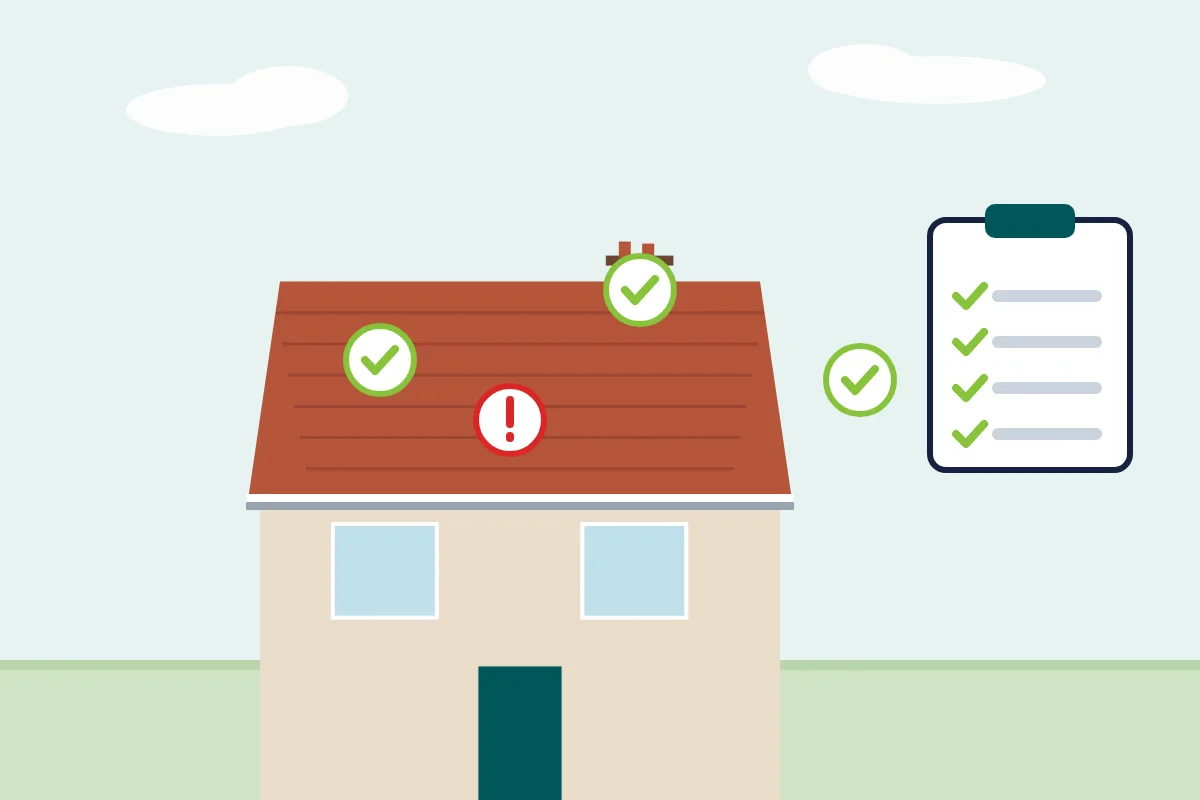
New roof snagging around Farlington
Farlington is within about 1 mile of the coast, and being near the sea means more wind and salt than a roof inland would face. Salt is hard on nails, clips and metal flashings, and strong wind lifts anything already loose on a roof, so exposed details get a careful look whether you are buying or signing off new work. Thatch survives on some older buildings in Hampshire’s villages. Across the South East, older homes tend to have slate or clay tiles, and many later ones concrete tiles. Each material has its own typical faults, which is what a buyer or the owner of a new roof needs to know about.
For landlords with property near Cosham station, a written report helps before buying a rental or paying for a new roof on one. Historic houses such as Warblington Castle, about 2.9 miles east, show how far back building around Farlington goes. Older homes in the area can come with listed status or conservation area rules, which affect re-roofing, so check with the council before you buy.
Farlington is about 2 miles south of Purbrook, in Portsmouth. Farlington is one of many places we visit across Portsmouth, for houses, flats and commercial buildings. Our Portsmouth coverage includes Farlington.
New roof snagging in PO6, PO9 and PO7 are booked the same way as anywhere else. Streets in the area include Galt Road, Grant Road and Havant Road. Other places close to Farlington include Drayton (1 mile west), Widley (1 mile north-west), Cosham (1 mile west), Bedhampton (1 mile north-east) and Purbrook (2 miles north). Within a short drive, we also cover Portsmouth (3 miles south-west), Southsea (5 miles south), Milton (4 miles south), Landport (4 miles south-west), Baffins (3 miles south) and Rudmore (3 miles south-west).
What’s near Farlington
We work in homes and buildings around Springfield School, Springfield School and New Inn and the streets around them. For rail, the closest station is Cosham station, about 1.5 miles west. Other landmarks nearby include Warblington Castle (2.9 miles east) and Queen Alexandra Hospital (1.6 miles west). Open spaces near Farlington include Portsdown Hill and Southmoor Nature Reserve.
Also near Farlington
More services for Farlington
When to book a survey in Farlington
Scaffolding and materials can damage other parts of a building. We look for knock-on damage, not just the new roof.
We’re often asked to look at:
- Loose or badly finished ridge tiles
- Loose flashings at walls or chimneys
- Offcuts and broken tiles left behind
- Verge tiles or slates not secured
Take an older house close to Church of St Andrew: older patch repairs can hide behind a tidy front slope, and the survey looks past them.
Questions to ask before you book
- How long the report takes to arrive
- Whether VAT is in the quoted price
- What exactly goes into their report
- How they’ll see the roof: from the ground, the loft, the roof or by drone
For landlords and managing agents
Managing agents and residents’ management companies use roof surveys to plan maintenance. Recommendations are set out with the most urgent first where relevant, which helps when budgeting.
An agent can book and manage the survey for a landlord, and the report can go to both. Access is agreed with the tenant beforehand.
Roof by roof
Slate roofs
Ridges, verges and valleys are checked closely on new slate roofs as far as can be seen safely.
Clay and concrete tiles
Interlocking tiles need to sit neatly in line. We note any that look out of place.
Should I look at the roof myself first?
Fresh stains on ceilings or walls after rain are worth noting. Take a photo and write down when you saw it, which helps when we check the roof.
What you can’t do safely is get up close. Slates, tiles, flat roofs and rooflights can give way. That part is for a survey, using safe viewpoints and a drone where it applies.
Your questions about new roof snagging in Farlington
Will you come out to Farlington?
Yes, Farlington is covered. We cover the whole of London and South East England, from towns to the smallest villages. Longer journeys are simply planned beforehand.
Is my home in Farlington listed or in a conservation area?
You can check whether a building is listed on Historic England’s list, and your council can tell you if it is in a conservation area. If a home is listed, changes that affect its special interest need listed building consent, and in a conservation area re-roofing in different materials may need permission.
How long have you been surveying roofs?
More than 5,000 surveys over 20+ years.
Do you lift tiles to check the fixings?
No. We don’t open up the new roof, so fixings under the coverings can’t be checked. We note what couldn’t be seen.
Do I need to be at home?
Not always. An outside-only look can be arranged beforehand, but the loft and any rooms with damp need someone to let us in.
What’s the best way to book?
To arrange a survey, call 07833 053749 or use the contact form and tell us the address and what you want to find out. We’ll confirm the price and agree a day with you.
Do you test for asbestos?
No. We don’t sample or test for asbestos. Where a material might contain it, such as old cement sheets on a building from before 2000, the report flags it, with a recommendation to have a specialist asbestos surveyor check before it’s disturbed.
What we can’t see
Every survey has limits, and we’d rather be clear about that before booking. Bear these in mind:
- Repair costs for putting snags right
- What’s under the new coverings
- How the roof will perform for years to come
Not sure which survey suits your roof? You can ring 07833 053749 or use the contact form and we will tell you. What our survey covers.
Roof types and parts we check
- Loft conversions and dormers
- Flashings and valleys
- New-build homes
- Replacement roofs
- Ridges and verges
- New flat roofs
What we do, step by step
We’ll ask a few questions first, such as when any problem began and what work has been done before. The inspection then takes roughly 1–2 hours at a typical home, and longer for a large or complex roof. Some parts of a survey depend on the weather, so a visit to Farlington is booked with the forecast in mind: the parts that need calm, dry weather are planned around it.
- We start with what the roofer did and when they finished.
- We check the coverings, ridges, hips and verges from safe vantage points.
- We look at valleys, flashings, gutters and the underlay at the eaves.
- We check the loft where safe and look for debris or damage.
- Snags are listed in a report with photos.
Preparing for the visit
- Have any paperwork from past roof work to hand
- Leave a clear route to the loft
- Make a note of anything you’d like us to look at
How to book
To arrange a survey, phone 07833 053749 or drop us an email and tell us the address and what’s prompted the survey. We will confirm the price before booking.