
Isle of Wight · London and the South East
Roof leak investigation in St Helens, Isle of Wight
Tracing where water is getting into your roof across St Helens, using drones and thermal imaging where it applies. Get in touch for a price.
- Brown rings on upstairs ceilings
- Water dripping from rafters or underlay
- Damp underlay across a wide area
About our roof leak investigation in St Helens
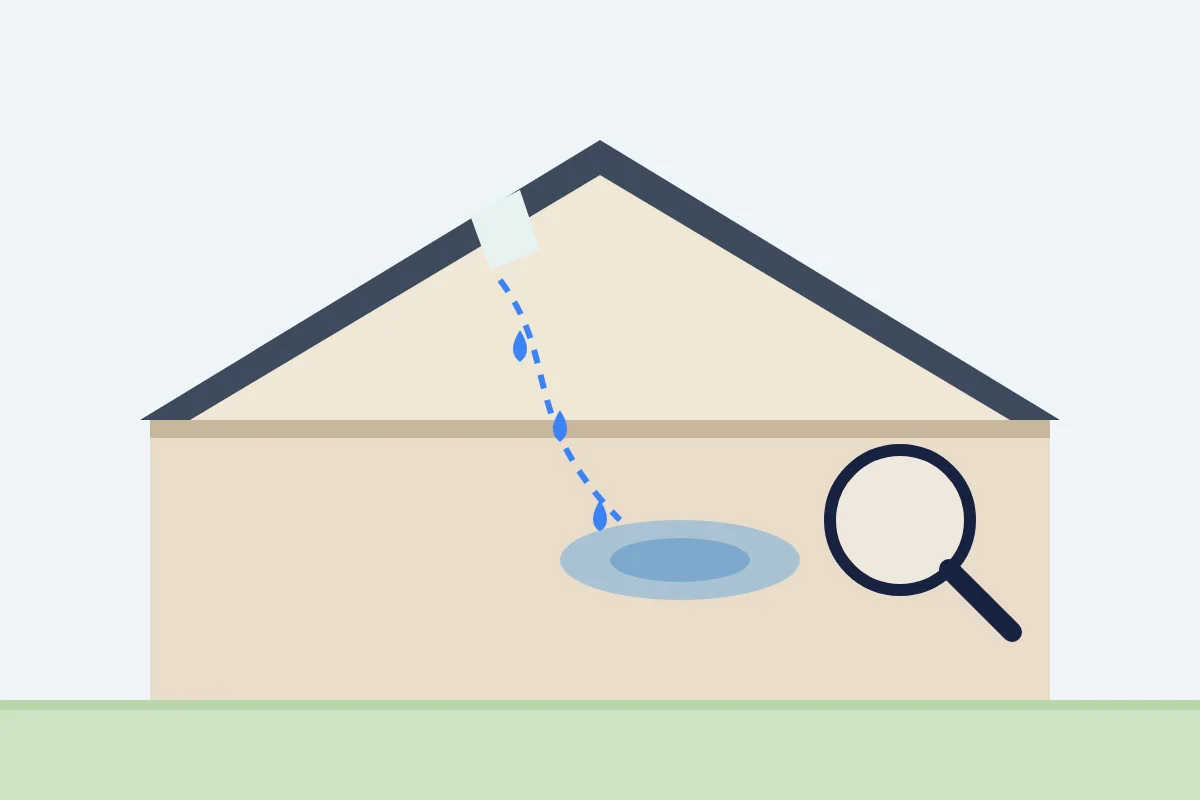
Most roof leaks start at a joint rather than the middle of a slope. Common entry points include chimney and wall flashings, valleys, parapet and box gutters, and the upstands and outlets on flat roofs. Each of these is checked in turn and follow the evidence. Chimneys, dormers and roof lights each add joints of their own. Each one is looked at from wherever it is safe to see it. We survey chimney stacks, flat roof details and slate and tile slopes, and people most often book us about condensation that looks like a leak and water that shows only in certain storms.
For a small place like St Helens, the inspection is the same as anywhere: we simply plan the journey and access ahead. It’s useful to know where the water appears, in what weather, and what you’ve seen outside, plus any earlier repairs. If you have photographs of the water coming in, they help as well.
The report records the leaking roof as we found it on the day. It’s useful right away, and a good reference for later, for example when you want to check whether anything has changed.
- Place
- St Helens (PO33)
- Wider area
- Isle of Wight
- Price
- From £150 inc. VAT
- Report
- A written report with photos, by email
- Survey days
- Weekdays and weekends
- Insurance
- Professional indemnity and public liability
- Telephone
- 07833 053749
- Last updated
- 27 October 2026
St Helens roofs and the weather
St Helens is within about 2 miles of the coast, and places near the sea get more salt in the air and more wind than inland. Wind lifts loose slates, tiles and ridge pieces, and driving rain finds any gap they leave. With Yaverland Manor about 2.1 miles south-west, St Helens sits in an area with a long building history. If yours is one of the older homes, expect a mix of original materials and later repairs on the roof, and a listed home or one in a conservation area may need consent for changes of material.
If you own a rental within reach of Brading station, a clear finding on where water gets in helps you brief a roofer straight away. For site and facilities teams at buildings such as St Helens Primary School, a leak through a large roof is often found some distance from where the water shows inside.
St Helens is about 3 miles south-east of Ryde, in the Isle of Wight. We survey roofs in St Helens and the rest of the Isle of Wight, as part of our work across London and South East England. St Helens is one of the towns and villages in the Isle of Wight we cover. Our Portsmouth page covers surveys nearby.
Every address in PO33 is within our area for roof leak investigations, from the main roads to the quietest streets. Streets in the area include Station Road, Upper Green Road and Old Chapel Lane, and we cover them all. Close by, we survey roofs in Gaskins (1 mile south-west), Brading (2 miles south-west), Yarbridge (2 miles south-west), Morton (2 miles south-west) and Yaverland (3 miles south-west). Further out, we also cover Newport (8 miles west), Ryde (3 miles north-west), Cowes (9 miles north-west), Sandown (4 miles south-west), Shanklin (5 miles south-west) and Ventnor (8 miles south-west). If you are somewhere remote, a little more planning is needed, so let us know when you get in touch.
Near you in St Helens
Around St Helens, our work takes us to homes and buildings near The Vine Inn and the streets around them. St Helens’s nearest station is Brading station, about 1.8 miles south-west of the centre. Nearby you will also find Cothey Bottom Heritage Centre (1.5 miles north-west) and Sandown Castle (3.2 miles south-west). The countryside around St Helens includes Alan Hersey Nature Reserve and Bembridge Down.
How the survey changes by roof type
Lead flashings
Mortar fillets are sometimes used instead of lead. They crack as the roof and wall move, and water runs down behind them.
Flat roof upstands and outlets
On a flat roof, a leak can show some distance from the split. Moisture readings and thermal imaging can help narrow it down where conditions suit.
Why get it checked now?
If a leak has been ‘fixed’ before and has come back, the cause was probably missed. We look past the obvious spot and check each likely route. That’s frequently what breaks the cycle. Matching old materials, such as handmade tiles or stone slates, can take time to source. Spotting a problem early leaves room to find them.
The Premium Survey includes thermal imaging and drone inspection where applicable, from £400 inc. VAT. We can help you choose the package that fits what you’d like to know.
What you get with us
- 98% customer satisfaction
- Thermal imaging and drone inspection where they help
- Professional indemnity and public liability insurance
- CAA-registered drone operator (Flyer ID and Operator ID)
Take a look at how roof surveys are priced or two real surveys.
For landlords and managing agents
Buyers’ agents can book surveys on behalf of their clients. The report is emailed, so it can go straight to your client, photos included.
Shared roofs need a little more planning: we need access agreed with the building owner or managing agent. Tell us about it as you book and we will plan the survey around it.
Signs you need a roof leak investigation in St Helens
Blocked gutters can look like a roof leak. Parapet and box gutters are the worst for this, since a blocked outlet sends water over the lining and into the building.
A survey can pick up problems such as:
- Water marks that spread in wet weather
- Damp on a chimney breast
- Water through the ceiling under a flat roof
- Damp underlay across a wide area
If you own one of the older houses in the streets near St Catherine-by-the-Green, lead flashings, valleys and old chimneys are typical places for water to get in.
Questions to ask before booking
- What exactly goes into their report
- What’s outside the scope of the survey
- Are they insured for the work?
- Their drone registration, if they fly one
FAQs for St Helens
Does being near the coast affect roofs in St Helens?
Generally, yes: wind and salt air take more of a toll near the sea. Exposed details such as ridges, verges, flashings and metal fixings are the ones to watch.
Will you come out to St Helens?
Yes, smaller places are covered as well as towns. We cover the whole of London and South East England. Let us know about access, parking and anything unusual about getting there as you book.
Do you survey roofs on blocks of flats?
Yes, as long as access is agreed. Roofs over flats are frequently shared, so we need permission from the freeholder or managing agent. We can only inspect what we’re given access to.
Do you look in the loft space?
If the survey needs it and the roof space can be reached safely, yes. A clear path to the hatch helps.
What insurance do you have?
We’re covered by professional indemnity and public liability insurance, for every survey we carry out.
Do you test for asbestos?
No. We do not sample or test for asbestos. The report may flag materials that could contain asbestos on buildings built or refurbished before 2000, with a recommendation to have a specialist asbestos surveyor check before it is disturbed.
How many surveys have you done?
We have more than 20 years’ experience and have completed over 5,000 surveys across London and the South East.
The survey, step by step
Once we’ve finished looking, we write up our findings in a report with photos, sent to you by email. On timing, most surveys take roughly 1–2 hours for most homes, though a hard-to-trace leak can take longer. In a hamlet or village like St Helens, a postcode doesn’t always lead to the right gate, so a few directions are welcome. The visit itself is the same as anywhere else.
- We start with your notes and photos of the leak.
- We examine the damp area and the rooms near it.
- From the roof space, we trace the water’s route where there’s safe access.
- We inspect the likely entry points outside, from the ground, windows and the roof where safe.
- You receive a report with the likely source, photos and recommendations.
Getting ready for the survey
- If you are buying, check with the agent that we can get in
- Make sure we can get to the back of the property
- Leave a clear route to the loft
Booking a survey
If you have photos of the roof, send them over. Take them safely from ground level or a window; never climb up to get a better view. To send them or to book, call 07833 053749 or email us.
Advice
Should I look at the roof myself first?
Your own check is a good start, but it isn’t a survey. From the ground, valleys, flashings and the backs of chimneys are often out of sight.
The one thing to avoid is getting up close. Roofs are fragile and slippery, and a fall can be serious. That part is for a survey, using safe viewpoints and a drone where applicable.