
Kent · London and the South East
Roof leak investigation in Street End, Kent
Roof leak investigations across Street End, backed by more than 20 years’ experience. You get a clear report with photographs.
- Drips in the loft during heavy rain
- Water marks that spread in wet weather
- Leaks that appear only in driving rain
What we cannot see
In fairness, there are limits to any roof survey:
- A promise to find every leak on a single visit
- Carrying out the fix
- Structural calculations (that’s a structural engineer’s job)
If you’re not sure which survey you need, ring 07833 053749 or drop us an email and we will give you a straight answer before booking. What a survey covers and does not.
Roofs we survey in Street End
- The roof space
- Rooflights and dormers
- Valleys and parapet gutters
- Flat roof details
- Chimney stacks
- Lead flashings
- Slate and tile slopes
Roof leak investigation in Street End: what you get
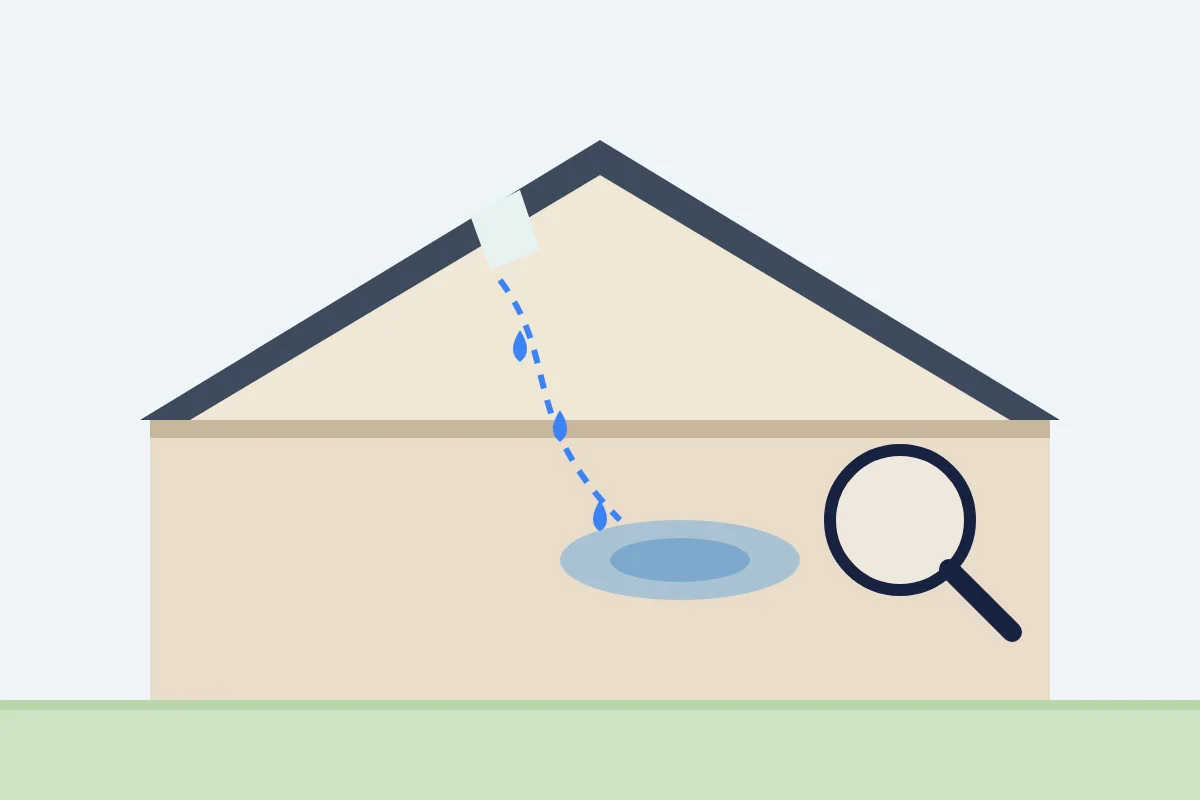
Water is good at hiding where it gets in. Water often travels along timbers or underlay before it finds a way down, so the stain on your ceiling is seldom right under the hole. Our leak investigation traces it back, one likely route at a time. A repair aimed only at the stain can miss the cause entirely. Finding the route first lets the repair go where it is needed. If you’re worried about leaks at a dormer or roof window and damp walls below an overflowing gutter, a survey will tell you what’s going on.
Somewhere as small as Street End, older roofs have often been repaired many times. That makes it hard to tell new damage from old wear, and the difference matters, particularly to an insurer. We check what can be seen safely and set out what we find. Damp in old walls and timbers is slow to dry, so the sooner the cause is found the better.
It isn’t only a list of defects. For each finding, it explains what it is, why it matters and what we’d recommend, so you can plan your next steps.
- Where
- Street End (CT4)
- Region
- Kent
- Price
- From £150 inc. VAT
- Your report
- Written, with photos, emailed to you
- Appointments
- Weekdays, Saturdays and Sundays
- Insurance
- Professional indemnity and public liability
- Call
- 07833 053749
- Updated
- 27 October 2026
What a roof leak investigation looks like in Street End
England has around 10,000 conservation areas and about 500,000 listed buildings. If your home is listed, changes that affect its special interest need listed building consent, and in a conservation area re-roofing in different materials may need permission, so the council is the place to ask. Handmade clay tiles, including Kent peg tiles hung on pegs through two holes, are typical of older Kent buildings. The county’s older buildings also include oast houses and timber-framed Wealden hall houses. Each of these roof types has its own typical places for water to get in.
If you own a rental within reach of Canterbury East station, a tenant living with a leak needs the cause found, not just the stain painted over. For businesses in and around places like Whitefriars Shopping Centre, a quick answer on where water is coming in keeps a business running.
Street End is about 2 miles south of Canterbury, in Kent. From houses to flats and shops in Street End, we can survey the roof. Street End is one of the towns and villages in Kent we cover for roof leak investigations.
We cover every part of the CT4 postcode area for roof leak investigations. Local streets include White Hill Close, Bridge Road and Faussett Hill, all of which we cover. We also cover Nackington (1 mile north-east), Lower Hardres (1 mile south), Stuppington (1 mile north-west), Pett Bottom (1 mile south-east) and Upper Hardres (2 miles south). Larger places within reach include Ashford (12 miles south-west), Dover (12 miles south-east), Folkestone (12 miles south), Whitstable (8 miles north), Deal (14 miles east) and Faversham (10 miles north-west).
Near you in Street End
For rail, the closest station is Canterbury East station, about 2.1 miles north of the centre. Other landmarks nearby include Rupert Bear Museum (2.3 miles north) and Kent and Canterbury Hospital (1.5 miles north). For a walk, there’s Blean Woods RSPB Reserve.
The survey, step by step
You do not need to do much on the day. Point out anything you’ve noticed, like stains, drips or loose pieces, and we will get on with the inspection. The survey itself takes an hour or two on an ordinary house, rising to roughly 3–4 hours on a commercial building. In a hamlet or village like Street End, a postcode doesn’t always lead to the right gate, so a few directions are welcome. The visit itself is the same as anywhere else.
- We start with your notes and photos of the leak.
- We examine the damp area and the rooms near it.
- From the roof space, we trace the water’s route where there is safe access.
- We inspect the likely entry points outside, from the ground, windows and the roof where safe.
- You receive a report with the likely source, photos and recommendations.
Preparing for the visit
- Leave a clear route to the loft
- Keep pets in another room
- Jot down any questions you want answered
Arrange a survey
For a price for roof leak investigations in Street End, phone 07833 053749 or send us an email. A few details about the property and the roof help us price the survey accurately.
Advice
Roof by roof
Parapet and box gutters
Hidden gutters run behind parapets or between roofs. A blocked outlet sends water over the lining and into the building.
Flat roof upstands and outlets
On a flat roof, a leak can show some distance from the split. Moisture readings and thermal imaging can help narrow it down where conditions suit.
Do you need a roof leak investigation in Street End?
Some water in the loft isn’t rain at all. Moist air from bathrooms and kitchens condenses on the cold underside of the roof, particularly where ventilation is poor. Wet nail tips and damp underlay over a wide area are classic signs.
Things that often lead to a survey include:
- Water marks that spread in wet weather
- Drips from nail tips in a cold loft
- Water that shows only in certain storms
- Water coming in around a roof light or dormer
If you live in an older home near Church of St Mary, the leak may come from a chimney, a valley or tired lead rather than the covering itself.
Choosing a roof surveyor
- Is VAT included in the price?
- What follow-up you get after the report
- Which viewpoints they use to see the roof
- What the survey won’t cover
Towns and villages near Street End
Other services in Street End
Common questions in Street End
Is Street End within the area you cover?
Yes, Street End is on our map. Villages and rural addresses get the same survey as a town house, with the route planned beforehand.
Do you carry out roof surveys in Street End?
Yes, Street End is within the area we cover. We work right across London and the South East. Just phone 07833 053749 or use the contact form and tell us about the property.
Do you look in the loft space?
Yes, where the survey calls for it and there’s safe access. Inside, we look for damp, staining, gaps and sagging.
How long have you been surveying roofs?
We have more than 20 years’ experience and have completed over 5,000 surveys.
Is it a structural engineer’s report?
No. We’re experienced roof surveyors, and visible signs such as sagging are noted, but we do not provide calculations or an engineer’s opinion. If one is needed, the report says so.
Will you walk on the roof?
Only where it’s safe to do so. We look at everything that can safely be seen: from ground level, from windows, from inside the loft space, from the roof where it’s safe and by drone where it applies. The report says if anything couldn’t be seen.
Why does not the damp patch line up with the hole?
Rain that gets in will run along whatever it lands on. On a pitched roof it frequently runs down a rafter before it shows. Tracing that path is the heart of a leak investigation.
Rented homes, blocks and businesses
Shared roofs need a little more planning: access has to be agreed with whoever owns or manages the building. Mention it when you get in touch and we will plan the survey around it.
Letting agents can arrange access with tenants. We survey seven days a week, which can make access easier.
What you can safely check yourself
A DIY look is useful, but it isn’t a survey. You won’t see flashings, valleys or the backs of chimneys properly from the ground.
During heavy rain, look at the gutters from ground level or a window. Water spilling over the edge can be a sign of a blockage or a gutter that has dropped.