
Kent · London and the South East
Roof leak investigation in Well Street, Kent
Know where you stand with the leaking roof before you decide what to do next. We carry out roof leak investigations in Well Street, with photos and a clear written report.
- Damp on a chimney breast
- Ceiling stains that grow after rain
- Damp ceilings under a flat roof
Roof leak investigation in Well Street: what you get
We use moisture detection and thermal imaging where they help. Moisture readings show which materials are wet. Thermal imaging shows temperature differences that can point to wet areas, not water itself, so its findings are checked with moisture readings. Thermal imaging is part of the Premium Survey, and moisture detection comes with Standard. The best thermal results come after a sunny day, with a dry roof and little wind. We survey rooflights and dormers, flat roof details and the roof space, and the problems we are asked to look at most are leaks that appear only in driving rain and wet patches high on an inside wall.
In a village or hamlet like Well Street, older cottages and farmhouses often have roofs that have been patched over many years. That makes it hard to tell new damage from old wear, which matters if you are thinking of an insurance claim. The report says what was seen and what it points to. Older walls and timbers hold water for a long time, so it is worth finding the cause soon.
We keep jargon out of it: where something needs attention, it says so plainly.
- Where
- Well Street (ME19)
- Region
- Kent
- Price
- From £150 inc. VAT
- Your report
- A written report with photos, by email
- When we survey
- Monday to Sunday, daytime
- Insurance
- Professional indemnity and public liability
- Telephone
- 07833 053749
- Page updated
- 27 October 2026
Wind, rain and roofs in Well Street
Older houses across Kent often have handmade clay or peg tiles, and many have tile-hung walls. Kent’s older buildings take in oast houses and timber-framed Wealden hall houses as well. Each of these roof types has its own typical places for water to get in. About 4.9 miles west lies Old Soar Manor, a reminder of how long the area around Well Street has been built on. Period homes nearby can have lead valleys, tall chimneys and a patchwork of past repairs, and a listed home or one in a conservation area may need consent for changes of material.
Living close to Manor Park Country Park is pleasant, but mature trees mean leaves in gutters and valleys each autumn, and blocked gutters overflow and soak walls. If you look after a building such as The Malling School, a leak through a large roof is often found some distance from where the water shows inside. For landlords with property near East Malling station, a clear finding on where water gets in helps you brief a roofer right away.
Well Street is about 4 miles west of Maidstone, in Kent. We survey roofs in Well Street across London and South East England. Our area takes in places right across Kent, from the larger towns to small villages.
All of ME19 is within our area for roof leak investigations. Nearby, we also carry out roof leak investigations in East Malling (1 mile north), West Malling (1 mile north-west), Kings Hill (1 mile south-west), Ditton (1 mile north-east) and Red Hill (2 miles south). Further out, we also cover Maidstone (4 miles east), Sittingbourne (14 miles east), Dartford (14 miles north-west), Sevenoaks (10 miles west), Royal Tunbridge Wells (12 miles south-west) and Gravesend (10 miles north).
Landmarks near Well Street
Typical jobs here are in homes near St James the Great Academy, The Rising Sun pub and Manor Park Country Park, among other places. The closest station to Well Street is East Malling station, roughly 0.5 miles east. Well-known places in the area include Coldrum Long Barrow (3.5 miles north-west) and Leybourne Castle (1.4 miles north). Not far away are Blue Bell Hill and Burham Down.
Towns and villages near Well Street
More services for Well Street
Honest limits
Our findings are based on what we can see safely on the day, so there are some things a survey cannot cover:
- A structural engineer’s report
- Putting the leak right
- Water from pipes, tanks or heating systems
If in doubt, phone 07833 053749 or email us and we will suggest the right survey. What a survey covers and does not.
Roof types and parts we check
- Valleys and parapet gutters
- Slate and tile slopes
- Flat roof details
- Rooflights and dormers
- Chimney stacks
- Lead flashings
- The roof space
What we look for on each type of roof
Parapet and box gutters
Parapet and box gutters sit behind walls or inside the roof. When their outlets block, water rises over the lining and runs indoors.
Lead flashings
A leak at a flashing often shows some way from the joint. We check every flashing that could feed the stain.
What affects the price in Well Street
All our prices include VAT. What changes the price is:
- The package you choose: Basic, Standard or Premium
- Extensions, dormers and garages with roofs of their own
- Features like valleys, chimneys, dormers and parapets
- Commercial roofs and larger buildings
A small, low roof with good viewpoints takes less time than a tall, complicated one, and the package you pick makes a difference too. The price is always agreed first.
What we need to know
What helps most when you contact us:
- Photos of the roof, taken safely from ground level or a window
- Dates you’re working to, like exchange
- The kind of building and roof involved
- The address and postcode of the property
You can call us seven days a week. For a price or to book, phone 07833 053749 or email us.
How the survey works
Where it’s relevant and can be reached safely, the roof space is checked as well as the outside. Inside, we look for staining, damp, gaps and signs of movement. All in, the survey usually takes about one to two hours for most homes, though a hard-to-trace leak can take longer. Somewhere like Well Street needs a little journey planning: let us know about narrow lanes, gates, long drives and where we can park. On the day, we inspect what can be seen safely, inside and out.
- You tell us where the water appears, when, and what the weather was doing.
- We examine the damp area and the rooms near it.
- In the loft, we follow any signs of water back towards the roof.
- Outside, we check flashings, valleys, chimneys, gutters and flat roof details from every safe viewpoint.
- We email a written report showing where the water most likely gets in.
Getting ready for the survey
- For a flat or shared roof, check access with the building owner or managing agent
- Check the loft hatch can be reached
- Leave side gates unlocked
Booking a survey
Once you know what you need, ring 07833 053749 or send us an email. We’ll suggest a package, agree the price and find a date, weekday or weekend.
Related advice
Should I look at the roof myself first?
After heavy rain, check ceilings and the tops of walls for new stains. Photograph them and note the date, as it helps a surveyor trace the cause.
Your own check is a good start, but it isn’t a survey. From ground level, valleys, flashings and the backs of chimneys are often out of sight.
Practical tips
These tips come from what we see on roofs every week, before and after a survey:
- Mention earlier attempts to fix the leak
- Write down the wind direction and rain when it leaks
- Protect furniture and flooring under the leak
- Don’t climb onto the roof to look
If condensation is the cause, we explain it, with recommendations on ventilation. It saves chasing a leak that is not there.
Keep the loft space ventilated. Air movement keeps condensation down, and condensation is a common false alarm. Make sure insulation does not block airflow at the eaves.
Well Street questions
How do I find out if my home in Well Street is listed?
For listing, use Historic England’s list; for conservation areas, ask the council. It matters most if you are planning to re-roof in a different material.
Do you cover Well Street?
We do. Every survey there gets the same written report with photographs, and visits run on weekdays and weekends.
Can you always find the source?
Not every leak can be pinned down in a single visit. Most leave clues we can follow, but intermittent leaks that need particular weather can be harder. The report sets out what we found and the most likely routes.
What will the report tell me?
It works through the roof part by part, in writing and with photos. The most urgent items are made clear.
Could my leak actually be condensation?
Condensation can look very like a leak. Widespread damp on the underside of the roof in cold weather, with blocked vents, suggests condensation. We look at the pattern, take moisture readings and tell you which is more likely.
Why does not the damp patch line up with the hole?
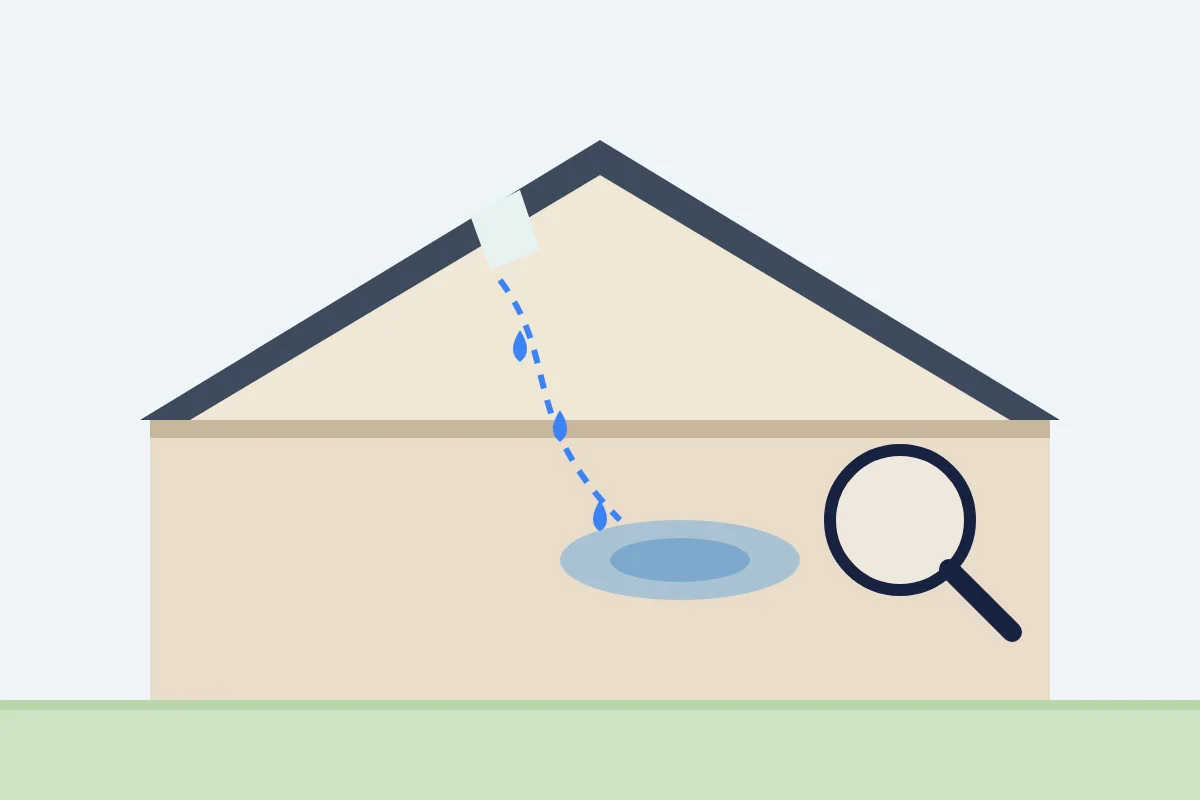
Water follows the easiest path, not the shortest. On a flat roof it can travel under the covering before it shows. Tracing that path is the heart of a leak investigation.
How quickly is the report sent?
The Premium Survey report comes the same day, the Standard within 24–48 hours and the Basic within 48 hours. Each one is emailed.