
Slough · London and the South East
Storm Damage Roof Report in Fulmer
Know where you stand with the roof before you decide what to do next. Storm damage roof reports in Fulmer.
- Damaged ridges and hips
- Broken or displaced guttering
- Cowls or aerials dislodged in the wind
How a storm damage roof report works in Fulmer
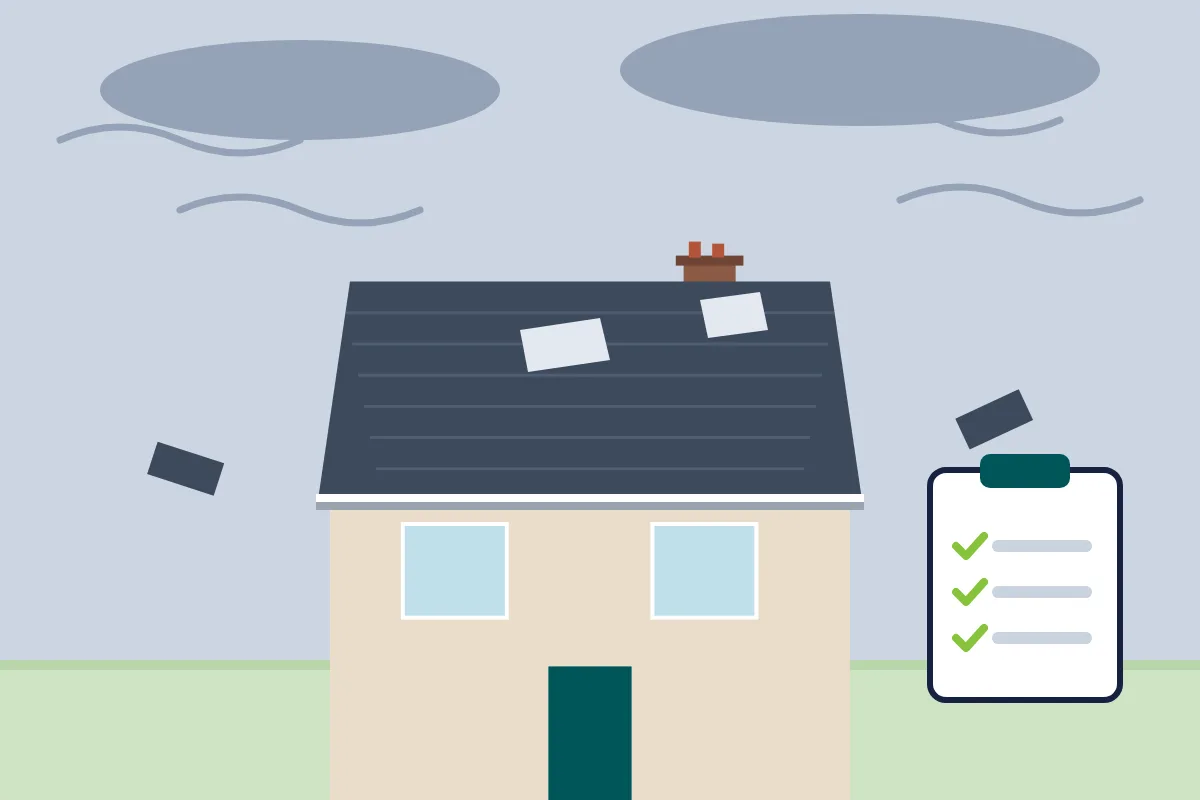
If your roof has been damaged, stay safe first. Photograph the damage from the ground or a window, and never climb up. If water is coming in, a roofer can put temporary protection in place. We then record the damage in a report you can pass to your insurer. Hold on to receipts for anything you pay for. We are often asked to look into new damp or leaks inside and loose or broken chimney pots and cowls, on chimney stacks, slate and tile slopes and flashings.
Many homes in small places like Fulmer face open ground, where storms hit ridges, verges and chimneys hardest. Damp in old stone, brick or timber walls is slow to dry out, so it pays to find the cause quickly. A record with photographs is useful if you need to show the damage to anyone else.
The report doesn’t just list problems. For each finding, it explains what it is, why it matters and what we’d recommend, so you can plan your next steps.
- Place
- Fulmer (SL3)
- Wider area
- Slough
- Cost
- From £150 inc. VAT
- Your report
- Emailed report with photos and recommendations
- Appointments
- Weekdays and weekends
- Cover
- Professional indemnity and public liability
- Telephone
- 07833 053749
- Last updated
- 27 October 2026
Leaks and storm damage in Fulmer
Older buildings may be listed or sit in a conservation area. To find out, check Historic England’s list and ask the council about conservation areas. In either case, a change of roofing material may need consent. Slate and clay tile are the usual coverings on older South East houses, with concrete tiles on many later estates, with flat-roofed extensions, dormers and garages common everywhere. Different coverings let water in at different points, which shapes where the search starts.
If you run a business near The Pavilions, finding where water is getting in quickly keeps disruption down. Living close to Bulstrode Park is pleasant, but mature trees mean leaves in gutters and valleys each autumn, so outlets and downpipes are worth watching. Landlords with a home close to Gerrards Cross station may find that a tenant living with a leak needs the cause found, not just the stain painted over.
Fulmer is about 4 miles north-east of Slough, in Slough. Surveys in Fulmer work the same way as everywhere we cover: a proper look at what can be seen safely, photographs and a clear written report. Our Slough coverage includes Fulmer and the places around it. We also survey roofs in London.
Every address in SL3 is covered for storm damage roof reports. That includes homes and businesses on Fulmer Road, Alderbourne Lane and Hay Lane and the roads around them. Other places close to Fulmer include Tatling End (1 mile north-east), Wexham Street (1 mile south-west), Gerrards Cross (1 mile north), Stoke Poges (2 miles south-west) and Rush Green (2 miles east). Within a short drive, we also cover Slough (4 miles south-west), Cippenham (5 miles south-west), Chalvey (4 miles south-west), Britwell (3 miles south-west), Langley (4 miles south) and Upton (4 miles south).
What’s near Fulmer
Around Fulmer, our work takes us to homes and buildings near Bulstrode Park, The Black Horse Public House and Khalsa Secondary Academy. The nearest railway station is Gerrards Cross station, about 1.9 miles north. A little further out are British Airways Heritage Collection (3.5 miles south-east) and Wexham Park Hospital (2.2 miles south). Not far away are Horse Shoe Bay and Stoke Common.
Your questions about storm damage roof reports in Fulmer
How do I find out if my home in Fulmer is listed?
We can’t confirm that for you, but Historic England’s list and your council can. A change of roofing material may need consent in either case.
Is Fulmer in the area you cover?
Yes. We survey roofs across London and South East England, and Fulmer is part of that. You can phone 07833 053749 or use the contact form with the address and some details, and we will talk through which survey suits.
Is it the same as a RICS Level 2 or Level 3 survey?
No. Our survey is a roof survey, not a RICS Level 2 or Level 3 survey of the whole building. It focuses on the roof, so it sits alongside a building survey rather than replacing it.
Do I have to be there for the survey?
That depends on the survey. Inside the building and in the loft, we need someone to let us in, while outside access can be discussed when you book.
How do I book a survey in Fulmer?
To book, call 07833 053749 or use the contact form with the address, the type of property and what’s prompted the survey. We’ll confirm the price and find a day that suits.
Should I go up on the roof to take photos?
Only from ground level or from windows. Do not use a ladder or go onto the roof. Binoculars can help you see damage from below and we’ll inspect the rest from safe positions.
Will you fly a drone over my roof?
Where it helps and it is safe, yes. Flights depend on the weather on the day and airspace rules. We’re a CAA-registered drone operator.
Landlords, agents and block managers in Fulmer
Freeholders and residents’ companies use a roof report to plan and budget, with the most urgent items set out first.
Letting agents can arrange access with tenants. We survey on any day of the week, which can make access easier.
Why act early in Fulmer
Knowing whether older wear played a part helps you understand your position. Our report gives an honest view of both, so there are no surprises later. Outbuildings and barns around Fulmer are easy to forget, but a failed roof there can spoil what’s stored inside. A quick look before winter can save a lot.
Simple, low roofs take less time to survey than tall or complicated ones, and the package you pick makes a difference too. We will give you the figure before anything is booked.
What you get with us
- We hold a CAA Flyer ID and Operator ID
- Weekday and weekend surveys
- Insured for professional indemnity and public liability
- Package prices that include VAT
The survey, step by step
We do not take risks to get a closer look. We inspect everything that’s safely in view, and anything we cannot see is noted in the report. Most visits take about one to two hours for most homes, depending on how much of the roof was hit. Rural addresses near Fulmer can be hard to find from a postcode alone, so a few directions are welcome. After that, the survey runs as it would anywhere.
- We note the date of the storm and the damage you’ve seen.
- We look at the roof from wherever it’s safe.
- We record and photograph the damage.
- We note the likely cause and any signs of older wear.
- We send you the report by email for your insurer.
Before the survey
- Keep pets out of the way during the survey
- Show us where any leaks or stains appear
- If the roof is shared, arrange access with whoever manages the building
Booking a survey
To get a price for storm damage roof reports in Fulmer, call 07833 053749 or use the contact form. Some details about the property and the roof help us give you an accurate price.
Read more
How we price storm damage roof reports
Every roof is different, so prices are confirmed before booking. These are the things that affect it:
- The height of the building and how the roof can safely be seen
- The use of thermal imaging or a drone
- Features like valleys, chimneys, dormers and parapets
- Basic, Standard or Premium
Every price we give includes VAT. Prices start from £150, including VAT. You’ll know the price for your survey before you book.
Booking your survey
You don’t need to know any roofing terms. It’s enough to tell us:
- What’s prompted the survey
- The address and postcode of the property
- What kind of property and roof it is
- Where any leaks, stains or damp patches show inside
You can call us seven days a week. To book or ask a question, call 07833 053749 or send us an email.
Can I check my roof myself?
After heavy rain, check ceilings and the tops of walls for new stains. Photograph them and note the date.
The one thing to avoid is getting up close. Slates, tiles, flat roofs and rooflights can give way, and falls from height are serious. That is where a survey comes in, using safe viewpoints and a drone where applicable.
How the survey changes by roof type
Clay and concrete tiles
A missing tile lets rain reach the underlay. Each gap is recorded with a photo.
Ridge and hip tiles
The ridge and hips are among the most exposed parts of a roof. The survey notes loose, cracked or missing ridge and hip tiles.