
Oxfordshire · London and the South East
Catslip Gutter Survey
A survey of gutters, valleys, outlets and downpipes in Catslip, carried out by an experienced roof surveyor. You get a clear written report with photographs.
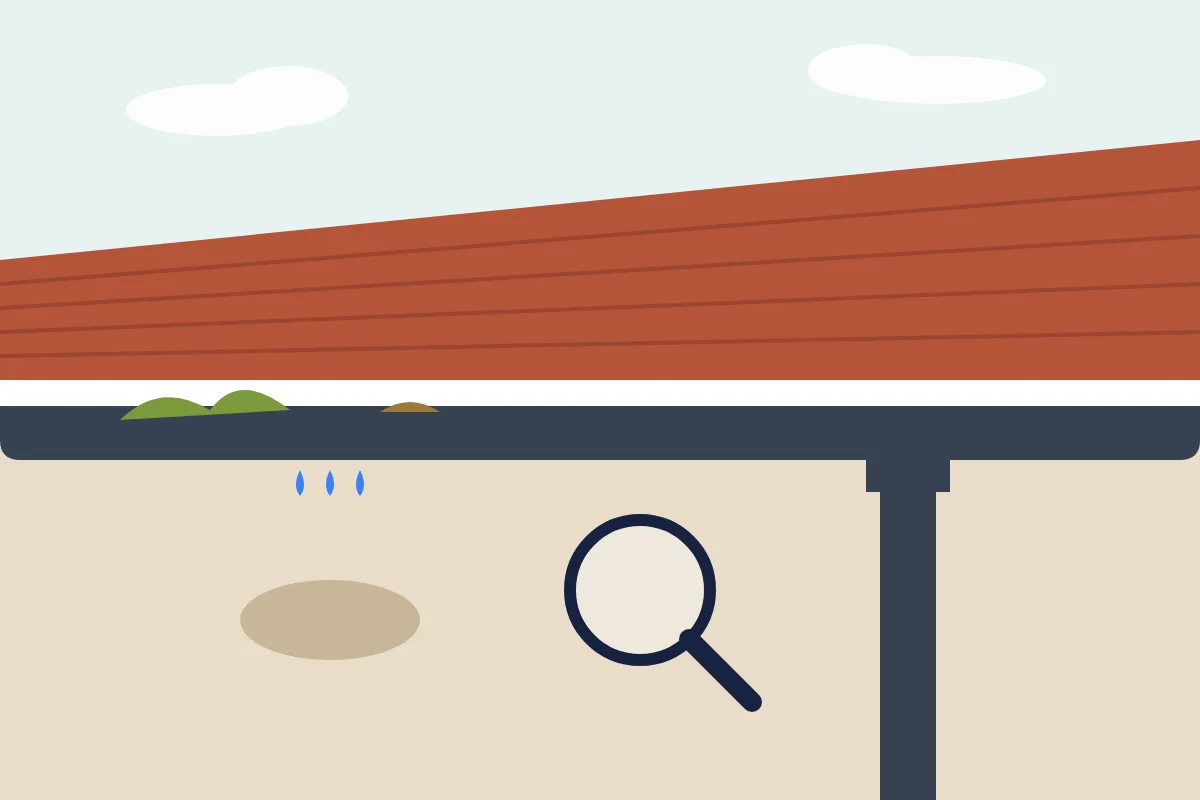
- Brackets that have dropped or snapped
- Choked outlets or hopper heads
- Fascia boards damaged by overflowing water
Tips from our surveys
From years of surveys, a few habits stand out:
- Look for green streaks or damp patches on walls
- Book gutter clearing once a year, more frequently near trees
- Have overhanging branches cut back
- Look for new stains on ceilings below valleys after rain
You receive a written report with photos and clear written recommendations. Share it with a contractor of your choice so they can see exactly what’s needed.
Get the gutters cleared every year, and more frequently if trees overhang the roof. Late autumn, after the leaves have fallen, is a sensible time. Clean gutters can do their job.
About our gutter survey in Catslip
Eaves gutters at the front of a building are easy to spot, but many aren’t. Valley gutters between slopes, gutters behind parapet walls and box or secret gutters can send water indoors when they overflow. We check them as far as they can safely be seen, from ground level, from windows, from the roof space and from the roof where it’s safe. Hidden gutters are a common source of leaks inside. We’re often asked to look into fascia boards damaged by overflowing water and joints that drip after rain, on downpipes, outlets and hoppers and parapet and box gutters.
Older buildings in small places like Catslip may be listed or in a conservation area. That can affect what materials can be used when work is done, so check with the council before planning anything. A roof report helps you plan work with that in mind. Older materials such as clay tiles, slate and stone are often matched when work is done.
The report works through the roof section by section, from the main slopes down to the gutters and outlets. You’ll see the good as well as the bad.
- Location
- Catslip (RG9)
- Region
- Oxfordshire
- Cost
- From £150 inc. VAT
- Report
- A written report with photos, by email
- Appointments
- Weekdays and weekends
- Cover
- PI and public liability insurance
- Call
- 07833 053749
- Page updated
- 27 October 2026
Towns and villages near Catslip
What else we do in Catslip
Catslip: your questions answered
Is Catslip within the area you cover?
We do. A small place gets exactly the same survey as a big one, with the route planned beforehand.
How do I find out if my home in Catslip is listed?
Start with Historic England’s list for listing and your council for conservation areas. Either can affect what roof work is allowed, so it is worth checking before planning any.
I live in a flat. Can you survey the roof?
Yes, as long as access is agreed. The roof of a block or converted house is often shared, so we need permission from the building owner or managing agent. We inspect only the parts we’re allowed to reach.
Can the survey be at a weekend?
Yes. We survey on weekdays and at weekends. To find a day that suits, call 07833 053749 or send us an email.
Will the survey check for asbestos?
No. We don’t carry out asbestos testing. Where gutters, downpipes or soffits could be asbestos cement, we flag them so a specialist asbestos surveyor can check before any work.
Do you use drones?
Yes, where it’s applicable. Whether we can fly on the day depends on the weather and the airspace rules. We hold a CAA Flyer ID and Operator ID.
How much is a gutter survey?
Gutter survey starts from £150, including VAT. The size of the property and the access affect the price. For a price, phone 07833 053749 or send us an email.
Leave it or get it looked at?
Climbing a ladder to look in the gutters yourself is risky. From ground level you can spot drips and overflows but hidden gutters are another matter. Our survey covers what can be seen safely and records it with photos. Around Catslip, older homes frequently have old roof timbers, where water from a failed roof can cause rot if it’s left.
To find out what your survey will cost, ring 07833 053749 or send us an email with the address and a few details. We will confirm the figure before booking.
What you get with us
- More than 5,000 surveys completed
- PI and public liability insurance
- Drone flown under a CAA Flyer ID and Operator ID
- Drones and thermal imaging where applicable
Read how roof surveys are priced and our case studies.
What we look for on each type of roof
Fascias and soffits
On buildings from before 2000, soffits may be asbestos cement. We flag any that could be for a specialist asbestos surveyor to check.
Cast iron gutters
Plenty of period homes still have cast iron rainwater goods. They last well when painted, but rust where the paint fails.
Common roof problems in Catslip
Brackets can loosen, corrode or snap over the years. A gutter full of wet debris is heavy, and that weight pulls sections out of line. Once the fall is lost, water sits at the low point and spills over.
Most people get in touch when they’ve noticed something like this:
- Fascia boards damaged by overflowing water
- Gutters that have fallen out of line
- Cracked or loose downpipes
- Hoppers and outlets full of debris
Anyone responsible for a site like Nettlebed Community School will know that large buildings have long gutter runs and big roofs that need checking like any other.
Before you book any roof surveyor
- Whether the inside of the roof is included
- Which parts of the roof they’ll actually see
- Whether they hold professional indemnity and public liability insurance
- Whether you can ask questions once you have the report
Local roofs in Catslip
About 2.2 miles south-east lies Greys Court, a reminder of how long the area around Catslip has been built on. On older houses around here, roofs often carry the marks of earlier repairs, from replaced slates to new lead, and the council can say whether a home is in a conservation area. Older buildings in west Oxfordshire often have Cotswold stone slate roofs, and some Oxfordshire villages still have thatch. In this part of the South East, older roofs are mostly slate or clay tile and many newer ones concrete tile. Knowing the covering helps explain which parts of a roof are likely to need work first.
Landlords with a home close to Henley-On-Thames station may find that the gap between tenancies is a good time to have the roof looked at. If your home is one of the older ones in the streets near Church of St Bartholomew, corroded nails, tired lead and weathered chimney pointing are the things to watch on older roofs.
Catslip is about 7 miles north of Caversham, in Oxfordshire. Whether the building in Catslip is a house, a flat or a commercial unit, the roof can be surveyed on a weekday or at the weekend. Catslip is one of the towns and villages in Oxfordshire where we work for gutter surveys. For surveys nearby, see our Reading page.
All of RG9 is covered for gutter surveys. Neighbouring places we cover for gutter surveys include Nettlebed (1 mile north-west), Highmoor (1 mile south-west), Highmoor Cross (1 mile south), Bix (2 miles south-east) and Middle Assendon (2 miles east). Larger places within reach include Didcot (12 miles west), Abingdon-on-Thames (15 miles north-west), Thame (12 miles north), Henley-on-Thames (4 miles south-east), Benson (6 miles north-west) and Chinnor (9 miles north).
Around Catslip
Locally, jobs take us to homes and businesses close to The Sun Inn Public House and the streets around them. The closest station to Catslip is Henley-On-Thames station, roughly 4.4 miles south-east. Open spaces near Catslip include Warburg Nature Reserve.
Should I look at the roof myself first?
Fresh stains on ceilings or walls after rain are worth noting. Photograph them and note the date, as it helps a surveyor trace the cause.
After strong wind, take a look from the pavement or garden: broken slates or tiles in the garden, gaps along the ridge or loose lead are signs to note. Leave anything above ground level to a survey.
How the survey works
We’ll ask a few questions first, like when any problem began and what work has been done before. Then the inspection itself takes an hour or two for a house, though large, tall or awkward roofs take more time. Around Catslip, older homes can have small or awkward roof spaces, so it helps to know whether there’s a loft hatch and how easy it is to reach. We only go where it’s safe.
- We start with what you’ve noticed, such as damp or overflowing gutters.
- The eaves gutters, downpipes and fascias are checked from ground level and windows.
- Valleys, parapets and box gutters are inspected where they can safely be seen.
- Where it is safe, we check the loft for signs of water.
- A photo-illustrated written report and recommendations follows.
How to prepare
- For flats, make sure roof access has been agreed
- Make sure the loft hatch can be reached
- Jot down any questions you want answered
Book a survey
When you are ready to go ahead, ring 07833 053749 or send us an email. We will suggest a package, agree the price and find a date.