
West Sussex · London and the South East
Storm damage roof report in Crawley, West Sussex
Get a clear view of the roof at a property in Crawley. Visits run on weekdays and weekends, in the daytime.
- Roofs hit by falling trees
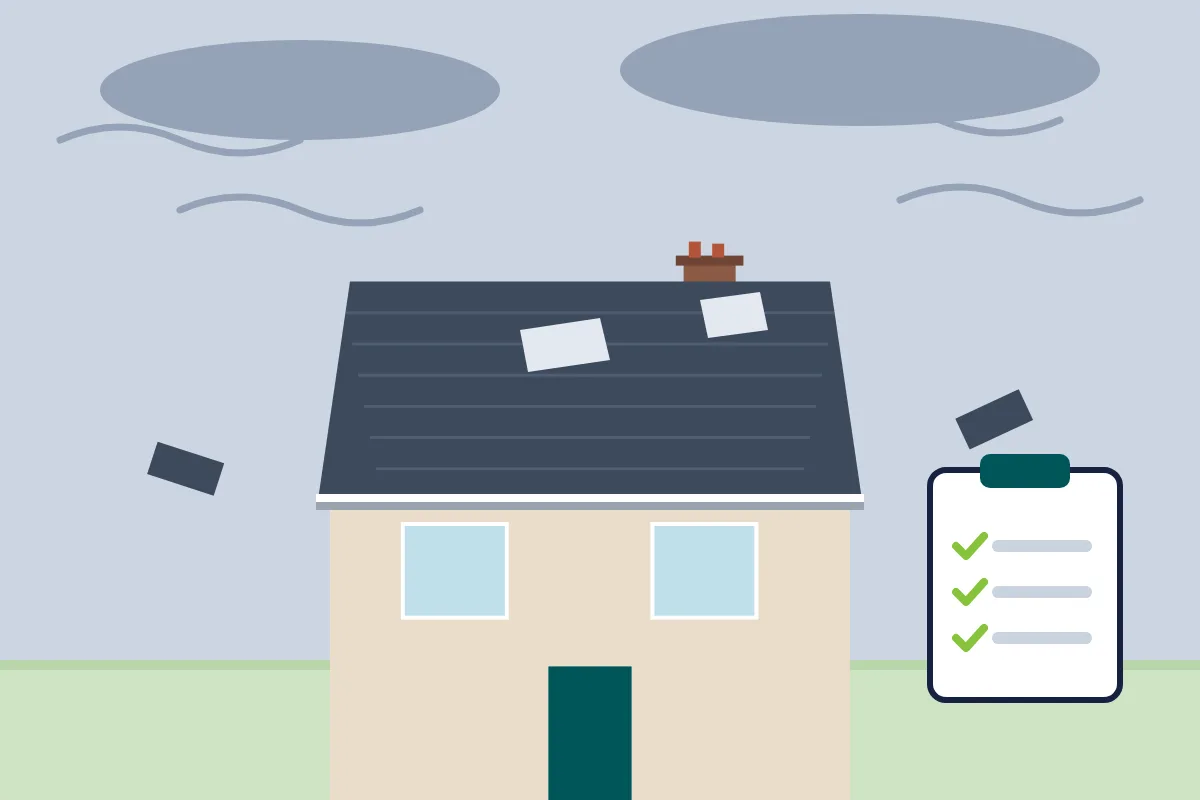
- Gaps where slates or tiles have gone
- Torn or lifted flat roof coverings
Storm damage roof report in Crawley
Many policies treat gusts of about 55 mph as storm conditions, but it varies by policy. Check your own policy wording. Whether the weather met it is for your insurer. We record the damage and what seems to have caused it. Each area of damage is photographed, and the report is yours to pass on. Insurers decide claims on their own policy wording. We survey slate and tile slopes, flat roofs and gutters and fascias, and the problems we’re asked to look at most are lead lifted at abutments and holes or cracks caused by debris.
When a storm passes over a place the size of Crawley, lots of roofs can be hit at once. A written record with photographs helps you explain what’s happened, whether to an insurer, a landlord or a roofer. We report what we find; we can’t say whether a claim will be paid. Wear and tear is usually excluded, so it’s useful to know what is old and what is new.
With the Standard Survey, you also get moisture detection, a structural check and a follow-up consultation. The Premium Survey adds thermal imaging, drone inspection where applicable, structural analysis and an in-person consultation.
- Where
- Crawley (RH10, RH11, RH12, RH6)
- Wider area
- West Sussex
- Cost
- From £150 inc. VAT
- Report
- Written, with photos, emailed to you
- Survey days
- Weekdays and weekends
- Insurance
- Professional indemnity and public liability
- Telephone
- 07833 053749
- Page updated
- 27 October 2026
DIY checks: what’s safe
A lot can be seen from the ground. Binoculars help you spot slipped slates or tiles, gaps along the ridge and a leaning stack. Never climb onto the roof to look.
The one thing to avoid is getting up close. Roofs are fragile and slippery, and a fall can be serious. That part is for a survey.
Nearby places to Crawley
What else we do in Crawley
Before and after the survey
Over many surveys, some simple habits stand out:
- Keep a note of the date of the storm
- Arrange temporary cover with a roofer if rain is getting in
- Keep any slates, tiles or debris that fall, if it’s safe to do so
- Look at what your policy says about wear and tear
If anything in the report isn’t clear, just ask us. The Standard Survey includes a follow-up consultation and the Premium Survey an in-person consultation.
Have overhanging branches looked at by a tree surgeon. Branches can hit or scrape the roof in a storm.
What we do, step by step
Every roof is different; as a rough guide, the survey takes an hour or two for most homes, depending on how much of the roof was hit. If you have questions on the day, just ask. Town-centre streets in Crawley can mean pay-and-display or permit parking, so a word about where to park saves time. Inside, the loft and any room with a stain are the places we will want to see. Outside, we work round the building to find the safe viewpoints.
- We start with the details: when the storm hit and what damage you can see.
- We view the roof from wherever it can safely be seen, including the loft where there is access.
- The damage is recorded with photographs, area by area.
- The likely cause is recorded, along with any evidence of older wear.
- The findings are written up with photographs for you to share with your insurer.
Before the survey
- Jot down any questions you want answered
- Let us know about parking near the property
- For a flat or shared roof, check access with the building owner or managing agent
How to book
Unsure which package suits your roof? The easiest way is to call 07833 053749 or use the contact form and describe the roof and why you want it surveyed. We will talk you through the options and what they cost.
Read more
For landlords and managing agents
Letting agents often book on a landlord’s behalf, and the report can go to both. We agree a time with the tenant beforehand.
For blocks of flats, a roof survey helps managing agents and residents’ management companies plan ahead. The report sets out what needs attention now and what can wait.
What a storm damage roof report looks like in Crawley
Handmade clay tiles and tile-hung upper walls are typical of older Sussex houses. Some old buildings in Sussex have Horsham stone slab roofs. Knowing the roof type helps narrow down where water may be getting in. Crawley was built as one of England’s post-war new towns. Many homes in the new towns date from the post-war decades, with concrete interlocking tiles, low-pitched roofs and flat-roofed garages and porches. Low pitches let wind-driven rain reach further under the tiles, and flat-roofed garages and porches are common leak points.
Take an older house close to Friary Church of St Francis and St Anthony: the leak may come from a chimney, a valley or tired lead rather than the covering itself. For businesses in and around places like County Mall, water through a ceiling can damage stock and close a sales floor, so the source needs finding fast.
Crawley is about 27 miles south of London, in West Sussex. In Crawley, as across West Sussex, every roof gets the same careful survey. We cover towns and villages across West Sussex.
Surveys in RH10, RH11, RH12 and RH6 are booked the same way as anywhere else. We offer storm damage roof reports to properties on Station Road, Queens Square and High Street and the roads around them. Crawley is on the A23 and A264, so it is easy for us to get to. Close by, we survey roofs in Southgate (1 mile south-west), Tilgate (1 mile south-east), West Green (1 mile north), Three Bridges (1 mile east) and Langley Green (1 mile north). Larger places within reach include Horsham (7 miles south-west), Haywards Heath (9 miles south-east), Burgess Hill (11 miles south), East Grinstead (8 miles east), Billingshurst (13 miles south-west) and Roffey (5 miles south-west). Crawley is among the bigger towns we cover in West Sussex.
Landmarks near Crawley
Locally, jobs take us to homes and businesses close to Tilgate Park, St Wilfrid's Catholic School and St Francis of Assisi Catholic Primary School and the streets around them. Crawley has its own railway station: Crawley station. Nearby you will also find Crawley Hospital (0.5 miles north-west) and County Mall (less than half a mile north-east). For a walk, there is Tilgate Lake.
Questions from Crawley
Is my home in Crawley listed or in a conservation area?
You can check whether a building is listed on Historic England’s list, and your council can tell you if it is in a conservation area. If a home is listed, changes that affect its special interest need listed building consent, and in a conservation area re-roofing in different materials may need permission.
Is Crawley in the area you cover?
Yes, Crawley is one of the places we work. Every survey there gets the same written report with photos, and visits run on weekdays and weekends.
Will you walk on the roof?
Only if it’s safe. We inspect whatever is safely visible: from the ground, from windows and vantage points, from the roof space, from the roof itself where safe and by drone where it applies. Anything we can’t see is noted in the report.
How do I arrange a storm damage roof report in Crawley?
It is easiest to phone 07833 053749 or send us an email. Give us the address and some details about the roof, and we will take it from there. Surveys run on weekdays and at weekends.
Can I check the roof after a storm?
Only from ground level or from windows. Never climb onto a roof after a storm. With binoculars, you can see a lot from ground level, and we’ll record the rest.
Is it the same as a RICS Level 2 or Level 3 survey?
No. It’s a specialist roof survey, not a RICS Level 2 or Level 3 building survey. It focuses on the roof and can sit alongside a RICS survey.
How long have you been surveying roofs?
Over 20 years and more than 5,000 surveys.
Do you need a storm damage roof report in Crawley?
Branches and trees often come down on roofs during storms. The report shows what was hit and the damage caused, with photos.
These are some of the problems a survey can pick up:
- Damaged gutters and fascias
- Damaged ridges and hips
- Loose or torn flashings
- Slates and tiles blown off the roof
Take a building like Three Bridges Junior School: on a building that size, finding the source of a drip means looking well beyond the stain.
Questions to ask before you book
- Will the report include photos?
- How they plan to inspect the roof safely
- Their track record with similar roofs
- What follow-up you get after the report
Roof by roof
Clay and concrete tiles
A missing tile lets rain reach the underlay. Each gap is recorded with a photo.
Slate roofs
Slates frequently outlast the nails that hold them. The report records whether slipped slates look like storm damage or older wear.