
Isle of Wight · London and the South East
Freshwater Storm Damage Roof Report
Not sure what state the roof is in? You can book a storm damage roof report in Freshwater and across the Isle of Wight, with plain-English findings.
- Lifted or missing ridge and hip tiles
- Slates and tiles blown off the roof
- Damage from fallen branches or debris
How a storm damage roof report works in Freshwater
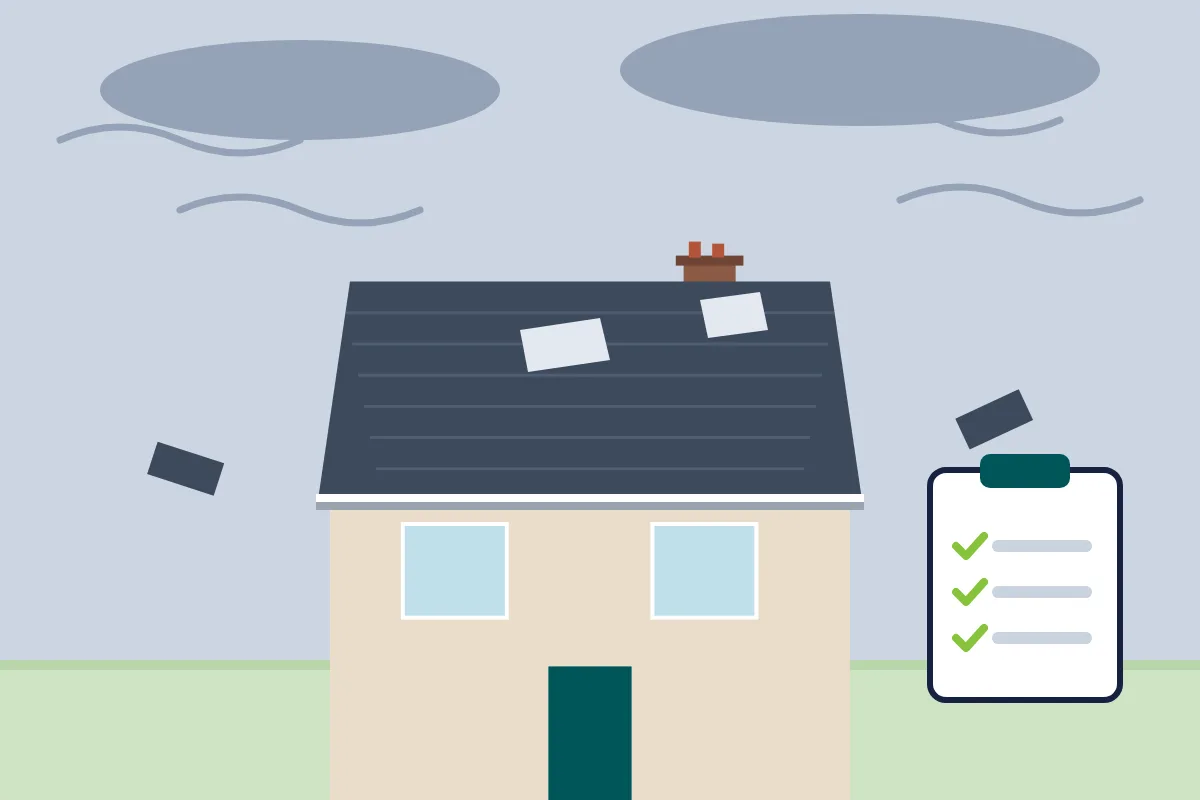
When a storm has damaged your roof, a written record can help you explain it to your insurer. Our report shows the damage in photos and says whether it looks like storm damage, wear and tear, or a mix. We’re not loss adjusters and can’t tell you if your claim will succeed. What we give you is an independent record of the roof. We survey gutters and fascias, chimney stacks and flashings, and the problems we’re asked to look at most are slipped or missing slates or tiles and loose or broken chimney pots and cowls.
In older homes around places like Freshwater, the underlay may be old bitumen felt, or there may be none at all. Once the slates or tiles let water past, there’s little to stop it reaching the ceiling. Whether it is long-term wear or recent damage makes a difference to what happens next. Wet battens and insulation in the loft are often the first clue.
Pictures do a lot of the work in our reports, so you can see each defect rather than just read about it. If something couldn’t be seen safely, the report is clear about it.
- Location
- Freshwater (PO40)
- Region
- Isle of Wight
- Price
- From £150 inc. VAT
- Your report
- Written, with photos, emailed to you
- Appointments
- Weekdays and weekends
- Cover
- Professional indemnity and public liability
- Phone
- 07833 053749
- Page updated
- 27 October 2026
Should I look at the roof myself first?
Look up at the roof after a storm, from the ground: pieces of tile or slate on the ground, a gap in the ridge or a lifted flashing are all worth noting. Leave anything above ground level to a survey.
Inside, the loft is a good place to look, with care. Use a torch and stay on the joists or boards, checking for stains, damp wood or chinks of daylight.
Wind, rain and roofs in Freshwater
The coast is about 1 mile or less from Freshwater, where sea air brings more salt and stronger wind than inland. Strong wind lifts anything already loose, and driving rain gets in wherever it can, and salt air slowly wears metal fixings. A number of the island’s villages keep thatched roofs on older buildings, and sea air and wind reach every part of the island. Where water gets in depends a good deal on what the roof is made of and how it is detailed.
If you live in an older home near All Saints' Church, the leak may come from a chimney, a valley or tired lead rather than the covering itself. If you look after a building such as All Saints Church of England Primary School, tracing a leak on a big roof starts with where the water appears and works back.
Freshwater is about 5 miles south of Lymington, in the Isle of Wight. We carry out storm damage roof reports in Freshwater for houses, flats, blocks and commercial buildings. We cover towns and villages across the Isle of Wight. We also survey roofs in Southampton.
Here we cover the PO40 postcode area for storm damage roof reports. You’ll find streets like Dall Square, High Street and The Square, all of which we cover. Nearby, we also carry out storm damage roof reports in Easton (1 mile south-east), Colwell (1 mile north-west), Norton Green (1 mile north), Afton (1 mile south-east) and Totland (1 mile west). Within a short drive, we also cover Newport (10 miles east), Cowes (11 miles north-east), Shanklin (15 miles east), Ventnor (15 miles south-east), East Cowes (12 miles north-east) and Barton (10 miles east). Harder-to-reach addresses take a little more planning, so let us know where you are as you book.
Around Freshwater
Locally, jobs take us to homes and businesses close to The Red Lion pub, among other places. Well-known places in the area include Yarmouth Castle (1.9 miles north-east) and Ferguson Family Museum (0.7 miles north-east). Not far away are Lymington and Keyhaven Marshes Nature Reserve and Afton Down.
How the survey works
We’ll ask a few questions first, such as when any problem began and what work has been done before. Then the inspection itself takes roughly 1–2 hours at a house, and longer if the damage is spread across a large roof. For a survey in Freshwater, we agree the time, the access and parking before the day. Weekday and weekend visits are both possible. If there are outbuildings or garages you want looked at, mention them.
- We start with what you’ve seen and any temporary repairs.
- Inside, we look for signs of water in the loft and rooms below.
- We view the roof from safe positions.
- Storm damage and older wear are recorded separately where we can.
- You receive the written report with photographs.
How to prepare
- Clear the way to the loft hatch
- If the roof is shared, arrange access with whoever manages the building
- If it isn’t your property yet, arrange access through the agent
How to book
If you are buying, it helps to book soon after your offer is accepted, so you have the findings in time to act on them before you exchange. For any other survey, just call 07833 053749 or drop us an email when you’re ready.
Related advice
Before and after the survey
A few practical points come up again and again on our surveys. They’re worth knowing whatever the roof:
- Keep a note of the date of the storm
- Keep fallen slates or tiles as evidence if safe
- Keep invoices for temporary repairs
- Report the damage to your insurer as soon as you can
If a claim is declined and you disagree, the first step is a complaint to the insurer. After that, you may be able to take it to the Financial Ombudsman Service.
A well-maintained roof stands up to storms better. Have loose slates, tiles and flashings seen to promptly.
Towns and villages near Freshwater
Also in Freshwater
What a storm damage roof report does not cover
Our survey is not a RICS Level 2 or Level 3 survey, a structural engineer’s report or an asbestos survey. Other limits to bear in mind:
- Negotiating a claim settlement
- A price for the repairs
- What’s beneath slates, tiles or membranes
Not sure which survey suits your roof? You can ring 07833 053749 or use the contact form and we will tell you before booking. What our survey covers.
What this survey covers
- Chimney stacks
- Ridges and hips
- Slate and tile slopes
- Gutters and fascias
- Flashings
- Flat roofs
Common roof problems in Freshwater
Some people book because a claim has been questioned. An independent report gives you another view of the roof. What happens next is up to the insurer.
People typically book a survey after spotting something like this:
- Lead lifted at abutments
- Slipped or missing slates or tiles
- Damaged ridges and hips
- Cowls or aerials dislodged in the wind
Mottistone Manor, about 4.6 miles south-east, is one of the historic houses in the wider area around Freshwater. Older roofs in the area may have lead flashings, valleys and gutters that have been patched many times.
Before booking any roof surveyor
- What the survey won’t cover
- Are they insured for the work?
- Whether the loft is part of the inspection
- If they fly a drone, whether they hold a CAA Flyer ID and Operator ID
FAQs for Freshwater
Is Freshwater within the area you cover?
We do. Villages and rural addresses get the same survey as a town house.
Do roofs near the sea, like those around Freshwater, take more of a battering?
Yes, coastal weather is harder on roofs: there’s more wind, and more salt in the air. Exposed details such as ridges, verges, flashings and metal fixings are the ones to watch.
Will my insurer pay out if I get a storm damage report?
Only your insurer can decide that. We record the damage, with photographs and the likely cause, for you to give to your insurer.
How long will you be at the property?
That depends on the size and shape of the roof, but most surveys take about 1–2 hours for most homes, depending on how much of the roof was hit. The report is sent afterwards by email.
Is this an asbestos survey?
No. We don’t carry out asbestos surveys or testing. If we see materials that could contain asbestos, such as cement roof sheets or soffits on buildings from before 2000, we flag them.
Will you deal with the insurance company for me?
No. We are not loss adjusters, and we do not negotiate claims. We give you an independent report of the damage for you to send to your insurer.
Do I need to be at home?
Not always. An outside-only look can be arranged beforehand, but anything inside needs someone there to give access.
Roof by roof
Flat roof coverings
Debris blown onto a flat roof can puncture the covering or block outlets. Any damage is recorded with photos.
Lead flashings
Old flashings that were already loose can give way in a storm. Our report separates fresh damage from older wear where we can.