
Buckinghamshire · London and the South East
Storm Damage Roof Report in Halton
Wondering about the roof at a property in Halton? We carry out storm damage roof reports in Halton and across Buckinghamshire, with plain-English findings.
- Loose or broken chimney pots and cowls
- New damp or leaks inside
- Damaged gutters and fascias
How a storm damage roof report works in Halton
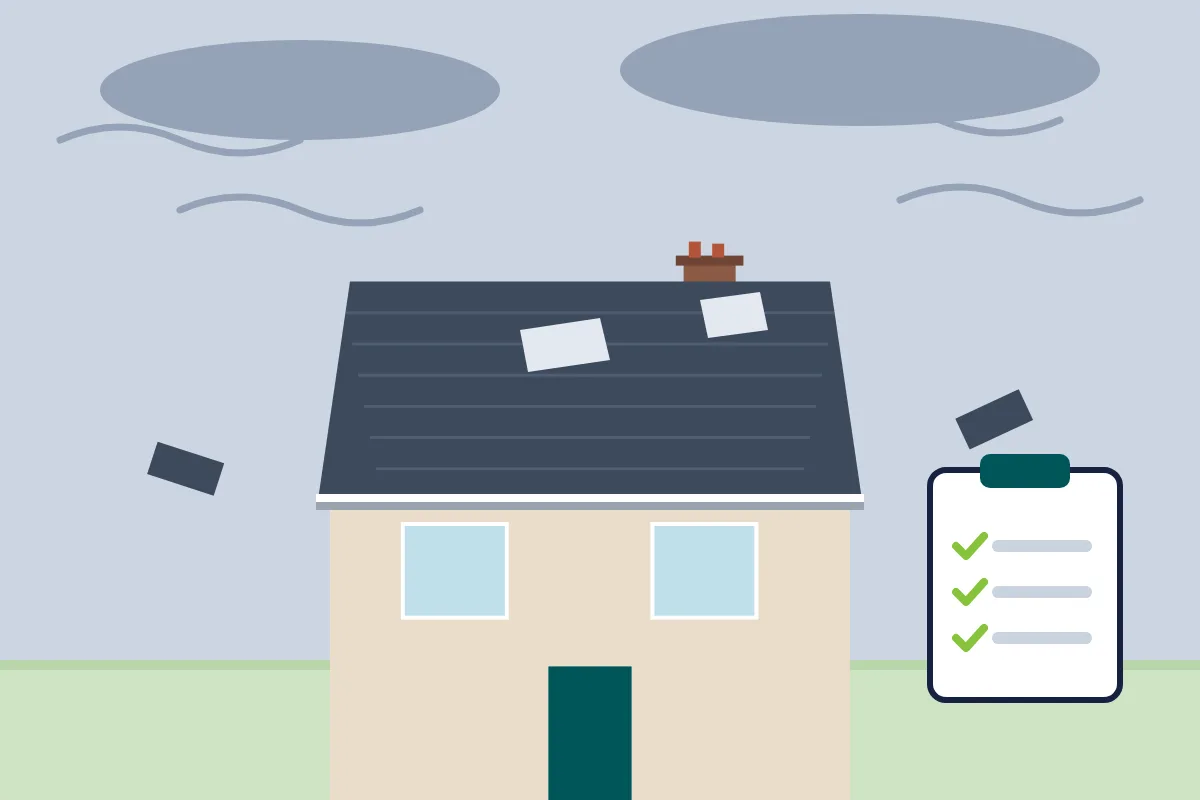
A storm damage roof report is priced from £150. It is a report with photos, sent by email. It does not price the repairs, so ask a roofer to quote for the work. Your insurer may also send its own loss adjuster. What you get is an independent record of the damage and what seems to have caused it. Typical surveys look at roofs hit by falling trees and slates and tiles blown off the roof, across gutters and fascias, slate and tile slopes and chimney stacks.
For a small place like Halton, the inspection is the same as anywhere: we simply plan the journey and access ahead. It’s useful to know where the water appears, in what weather, and what you’ve seen outside, plus any earlier repairs. If you have photos of the water coming in, they help as well.
We keep jargon out of it: where something needs attention, it says so plainly.
- Place
- Halton (HP22)
- Region
- Buckinghamshire
- Price
- From £150 inc. VAT
- Reports
- Written, with photos, emailed to you
- Survey days
- Weekdays, Saturdays and Sundays
- Insurance
- PI and public liability insurance
- Phone
- 07833 053749
- Updated
- 27 October 2026
How the survey works
Expect us to ask a few questions before we start, about the roof’s history, any leaks and past repairs. The inspection then takes about 1–2 hours for most homes, depending on how much of the roof was hit. For a village or hamlet like Halton, the journey is planned ahead of time: let us know about narrow lanes, gates, long drives and where we can park. On the day, we inspect what can be seen safely, inside and out.
- We start with what you’ve seen and any temporary repairs.
- Inside, we look for signs of water in the loft and rooms below.
- We view the roof from safe positions.
- Storm damage and older wear are recorded separately where we can.
- You receive the written report with photos.
Getting ready for the survey
- For flats, check roof access has been agreed
- If it isn’t your property yet, arrange access through the agent
- Point out any leaks or damp patches
Getting a price
To get a price for storm damage roof reports in Halton, ring 07833 053749 or send us an email. The address, the type of property and what you want to find out help us give you an accurate price.
Read more
Landlords, agents and block managers in Halton
We also survey roofs for businesses and commercial landlords. Bigger roofs take more time.
Managing agents and residents’ management companies use roof surveys to plan maintenance. The report sets out what needs attention now and what can wait, which helps when budgeting.
Nearby places to Halton
More services for Halton
What we can’t see
A survey is a close look at the roof, but it can’t do everything. The main limits are:
- The work of a loss adjuster appointed by your insurer
- Areas we cannot see safely
- The outcome of a claim
If you’re not sure which survey you need, call 07833 053749 or use the contact form and we will give you a straight answer. What a survey covers and doesn’t.
Roof types and parts we check
- Chimney stacks
- Flat roofs
- Ridges and hips
- Slate and tile slopes
- Gutters and fascias
- Flashings
Tips that help
Some practical points come up on survey after survey. They apply to most roofs:
- Keep a note of the date of the storm
- Take photos of stains and damp inside
- Take photos from ground level or a window, never by climbing
- Keep fallen slates or tiles as evidence if safe
The insurer might appoint a loss adjuster. Our report gives you an independent record alongside theirs.
A well-maintained roof stands up to storms better. Fix slipped slates, loose ridges and lifted flashings when you spot them.
Halton: your questions answered
Does a conservation area affect roof work in Halton?
For listing, use Historic England’s list; for conservation areas, ask the council. It matters most if you are planning to re-roof in a different material.
Will you come out to Halton?
Yes. Halton is within the area we cover, which takes in towns, villages and rural addresses. We work right across London and South East England. Let us know about access, parking and anything unusual about getting there when you book.
How much is a storm damage roof report?
A storm damage report starts from £150. Commercial and larger roofs are quoted on size. Repair costs aren’t part of the report.
Do you survey on Saturdays and Sundays?
We survey on any day from Monday to Sunday, during the day. Let us know your preferred days as you book.
Does this replace a RICS home survey?
No. We look at the roof, not the whole building, so it’s not a RICS Level 2 or Level 3 survey. It can sit alongside a RICS survey if you want both.
Is wear and tear covered by insurance?
Insurers usually exclude wear and tear. We describe what looks like fresh storm damage and what looks older. Your insurer decides the claim.
Is this an asbestos survey?
No. Asbestos surveys and testing aren’t part of what we do. We flag materials that could contain asbestos, such as cement sheets or soffits on pre-2000 buildings and suggest a specialist asbestos surveyor checks them before any work.
Storm damage roof reports around Halton
A number of Buckinghamshire villages keep thatched roofs on their older buildings. Older houses in the South East frequently have slate or clay tile roofs, while many later estates have concrete tiles. The covering and its details give the first clues when tracing where water is coming from. Historic houses such as Cholesbury Manor House, about 3.9 miles south-east, show how far back building in the area around Halton goes. Period homes nearby can have lead valleys, tall chimneys and a patchwork of past repairs, and any change of roofing material on a listed home needs checking with the council first.
If you let a flat or house near Wendover station, finding the cause of a leak fast keeps a tenant’s home dry and the work focused. The streets around a church such as Church of St Michael and All Angels are often among the oldest in a place, and if you own one of the older houses nearby, old mortar, worn lead and slipped slates are the usual suspects when water gets in. For site and facilities teams at buildings such as Halton Community Combined School, on a building that size, finding the source of a drip means looking well beyond the stain.
Halton is about 3 miles west of Tring, in Buckinghamshire. Bookings from Halton are handled just like any other: get in touch, agree the price and pick a day. Halton is one of the towns and villages in Buckinghamshire where we work. We also survey roofs in Milton Keynes.
Surveys in HP22 work the same way as everywhere else we cover. If you need a storm damage roof report at a property on Halton Lane, Mcewen Ride and The Orchard or anywhere close by, we can help. If you are just outside Halton, we cover Weston Turville (1 mile north-west), Wendover (1 mile south), Stoke Mandeville (2 miles west), Nash Lee (2 miles south-west) and Terrick (3 miles south-west). Further out, we also cover Aylesbury (4 miles north-west), High Wycombe (11 miles south), Chesham (7 miles south-east), Marlow (15 miles south), Amersham (9 miles south-east) and Beaconsfield (13 miles south).
Around Halton
Around Halton, our work takes us to homes and buildings near John Colet School and the streets around them. The closest station to Halton is Wendover station, about 1.6 miles south of the centre. Other landmarks nearby include Trenchard Museum (0.7 miles south-east) and Little Kimble Motte (3.7 miles south-west). For a walk, there is Dancersend Nature Reserve and Haddington Hill.
Should I look at the roof myself first?
A lot can be seen from ground level. With binoculars, look for slipped or missing slates and tiles, gaps along the ridge and leaning chimneys. Never climb onto the roof to look.
If you have a loft with safe access, take a look inside. Take a torch and only step on boards or joists, and look for staining, damp timber or daylight coming through.
Roof by roof
Chimney stacks
Flashings around stacks can lift in strong winds. We photograph any we find.
Ridge and hip tiles
Water can get in where ridge tiles have moved. Each one is recorded with photos.