
Greater London · London and the South East
Storm damage roof report in Southend, Greater London
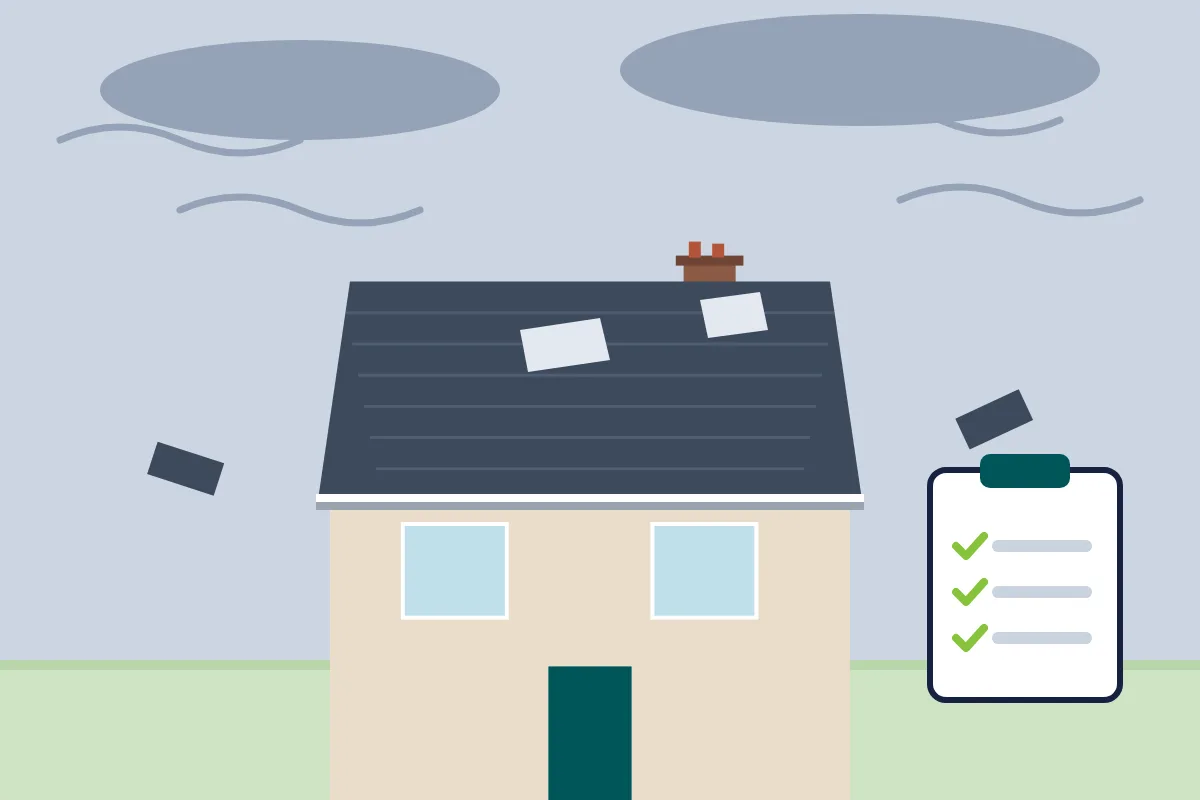
A careful look at the roof at your property in Southend, with photos and a written report.
- Broken or displaced guttering
- Gaps where slates or tiles have gone
- Ridge tiles that have come loose
How a storm damage roof report works in Southend
The Financial Ombudsman looks at three things when it considers a storm damage complaint: whether there were storm conditions around the date, whether the damage fits a storm, and whether the storm was the main cause. Our report focuses on the second and third points. Weather records for the date are for you or your insurer to check. Common reasons to book are flashings pulled away from walls or stacks and ridge tiles that have come loose, across flashings, chimney stacks and ridges and hips.
In a London flat, water can travel some way before it shows. That makes the source hard to pin down, and finding it matters for whoever has to deal with it. In Southend, we inspect what we can reach safely and are given access to. Let us know when the water shows, and in what kind of weather.
If any part of the roof couldn’t be seen safely, we say so in the report. You’ll know exactly what was inspected and what wasn’t, and what we’d suggest next.
- Where
- Southend (SE6, SE26, SE23)
- Wider area
- Greater London
- Cost
- From £150 inc. VAT
- Your report
- Written, with photos, emailed to you
- Survey days
- Weekdays, Saturdays and Sundays
- Insurance
- PI and public liability insurance
- Call
- 07833 053749
- Last updated
- 27 October 2026
What a storm damage roof report does not cover
We only report everything that’s safely in view on the day, so some things are outside what a survey can do:
- Your insurer’s view of the claim
- Negotiating a claim settlement
- Areas we can’t see safely
If in doubt, ring 07833 053749 or send us an email and we will point you to the right survey. What our survey covers.
Roof types and parts we check
- Chimney stacks
- Gutters and fascias
- Slate and tile slopes
- Flat roofs
- Flashings
- Ridges and hips
Towns and villages near Southend
Other services in Southend
Storm damage roof reports around Southend
The wider area around Southend has a long history of building, with Kingswood House about 2.5 miles west. Older homes in the wider area frequently have features worth a closer look, like lead valleys, tall stacks and roofs that have been patched over the years, and a listed home or one in a conservation area may need consent for changes of material. Inner London’s Victorian and Edwardian terraces frequently have Welsh slate roofs. Many have butterfly roofs draining to a central valley gutter, with parapet walls and gutters hidden behind them. Shared chimney stacks, party-wall upstands and lead work come with this kind of house. The covering and its details give the first clues when tracing where water is coming from.
Homes near green spaces such as Forster Memorial Park can get more leaves in their gutters in autumn. Take a building like Elfrida Primary School: water through a big roof can travel a long way before it drips, so the search covers more than the obvious spot. For businesses in and around places such as Lewisham Shopping Centre, a leak can close part of a shop or office, so finding the cause quickly matters.
Southend is about 2 miles north of Beckenham, in Greater London. Houses, flats, blocks and commercial buildings in Southend can all book storm damage roof reports, with a written report and photographs every time. Southend is one of the places in Greater London where we work. There’s also a page for London.
Here we cover the SE6, SE26 and SE23 postcode area for storm damage roof reports. We offer storm damage roof reports to properties on Oslac Road, Orford Road and Aitken Road and the roads around them. You’ll find Southend on the A2218, which makes it simple to reach. We also cover the places around Southend: Bellingham (1 mile north), Bell Green (1 mile west), Catford (1 mile north-east), Perry Vale (1 mile west) and Sydenham (1 mile west). We also work in nearby towns such as London (6 miles north-west), City of Westminster (8 miles north-west), Marylebone (8 miles north-west), Kensington (9 miles north-west), St Pancras (8 miles north-west) and Shoreditch (7 miles north).
Landmarks near Southend
Locally, jobs take us to homes and businesses close to Allenby Tutorial Trust, Sedgehill School and Forster Memorial Park and the streets around them. Southend has its own railway station: Bellingham station. Other landmarks nearby include Prefab Museum (1 mile east) and Lewisham Shopping Centre (2.2 miles north). Green spaces nearby include Downham Woodland Walk and Knight's Hill.
Landlords, agents and block managers in Southend
Shared roofs need a little more planning: we need access agreed with the building owner or managing agent. Tell us about it when you book and we will plan the survey around it.
Freeholders and residents’ companies use a roof report to plan and budget.
What we do, step by step
The visit has one job: to see as much of the roof as can be seen safely and record it clearly. Notes and photos go into the written report. It usually takes about 1–2 hours for most homes, depending on how much of the roof was hit. In a London area like Southend, the main things to sort out are parking and access: let us know about parking, the floor the property is on, any shared entrance and loft access. On the day, the roof is looked at from ground level, from windows, from inside the roof space and from the roof where it is safe.
- First we go through when the storm hit and what you’ve noticed.
- We check the roof from wherever it’s safe.
- Each area of damage is photographed and described.
- The report notes whether the damage fits a storm, older wear or both.
- You get a written report to pass to your insurer.
How to prepare
- Tell us about any leaks, stains or damp patches you know of
- Leave a clear route to the loft
- Dig out any old roof reports or invoices
Arrange a survey
To book a survey, ring 07833 053749 or send us an email with the address and what you’d like to know about the roof. You will know the price before anything is booked.
Related advice
Useful tips for Southend property owners
A few practical points come up again and again on our surveys. They’re worth knowing whatever the roof:
- Keep receipts for any emergency work
- Check how your policy defines a storm
- Arrange temporary cover with a roofer if rain is getting in
- Check your policy for how to report damage
If you’re unhappy with how your insurer handles the claim, you can complain to them first. After that, you may be able to take it to the Financial Ombudsman Service.
Keep gutters and outlets clear so heavy rain can drain away. Blocked drainage can add water damage to wind damage.
Different roofs, different checks
Chimney stacks
High winds can loosen pots, cowls and aerials on stacks. The report notes any damage to the stack.
Clay and concrete tiles
A missing tile lets rain reach the underlay. We photograph each gap.
DIY checks: what’s safe
Watch the gutters in a downpour, from a window or the ground. Overflowing water can be a sign of a blockage or a gutter that has dropped.
Your own check is a good start, but it isn’t a survey. You won’t see flashings, valleys or the backs of chimneys properly from ground level.
Questions from Southend
How do I find out if my home in Southend is listed?
You can check whether a building is listed on Historic England’s list, and your council can tell you if it is in a conservation area. If a home is listed, changes that affect its special interest need listed building consent, and in a conservation area re-roofing in different materials may need permission.
Do you cover Southend?
Yes, Southend is one of the places we work. The survey and report are the same in Southend as anywhere else, and visits run on weekdays and weekends.
Can I challenge a declined storm claim?
The first step is a complaint to your insurer. If you are still unhappy, you may be able to take it to the Financial Ombudsman Service. Our report gives you an independent record of the roof, though we cannot predict the outcome.
How long does the survey take?
It normally takes about 1–2 hours for most houses, or half a day or so for a commercial building. You’ll then get the report by email.
Is wear and tear covered by insurance?
Insurers normally exclude wear and tear. We describe what looks like fresh storm damage and what looks older. The claim decision is your insurer’s.
What do I do if water is coming in?
Emergency cover over a damaged roof should be arranged with a roofer. Take photos from ground level first if it is safe. Keep receipts for any emergency work.
Can you survey a shared roof?
Yes, as long as access is agreed. The roof of a block or converted house is often shared, so we need permission from whoever owns or manages the building. We can only inspect what we are given access to.