
Oxfordshire · London and the South East
Gutter Survey in Baulking
We take a careful look at the gutter at your property in Baulking, with photographs and a written report.
- Leaves and moss blocking gutters
- Leaks at the gutter joints
- Overflowing eaves gutters
What we do, step by step
We work from the outside in: first the slopes, edges and gutters from every safe viewpoint, then the roof space where it can be reached. All told, expect roughly 1–2 hours at a typical home, rising to roughly 3–4 hours on a commercial building. Around Baulking, older homes can have small or awkward roof spaces, so tell us about the loft hatch and any ladder. Only areas that can be reached safely are inspected.
- We start by hearing about any drips, overflows or damp patches.
- The eaves gutters, downpipes and fascias are looked at from ground level and vantage points.
- Valley, parapet and box gutters are inspected as far as they can safely be seen.
- Where the loft can be reached safely, we check it for staining or damp.
- We send a written report with photos and clear recommendations.
Before we arrive
- Keep pets in another room
- Tell us where we can park nearby
- Buyers: confirm access with the estate agent or seller
Arrange a survey
Photos help, if you have them. Take them safely from the ground or a window; never climb up to get a better view. To send them or to book, call 07833 053749 or send us an email.
Related advice
Gutter survey in Baulking
Most blocked gutters are full of leaves, moss or silt. Buildings near trees collect more and moss from the roof slopes makes it worse. We note where gutters are clogged or holding water and where outlets or hoppers are choked and whether any overflows are doing their job. Photos show each problem clearly. It is an easy job to put off but it rarely improves. If you’ve noticed overflowing valley or parapet gutters and choked outlets or hopper heads, we can find out what’s behind it, on valley gutters, downpipes and eaves gutters alike.
Village roofs often face open fields and take the full force of wind and rain, which is hard on ridges, chimneys, flashings and gutters. Damp in old walls is slow to dry, so a small leak can do a lot of harm. A written report sets out what to deal with and in what order. On exposed older roofs, chimneys and lead flashings are often the first to give way.
The report is written in plain words, so it makes sense without any roofing background. Each point is backed by a photograph where possible.
- Place
- Baulking (SN7)
- Region
- Oxfordshire
- Cost
- From £150 inc. VAT
- Report
- Written, with photos, emailed to you
- Survey days
- Monday to Sunday, daytime
- Insured
- PI and public liability insurance
- Telephone
- 07833 053749
- Last updated
- 27 October 2026
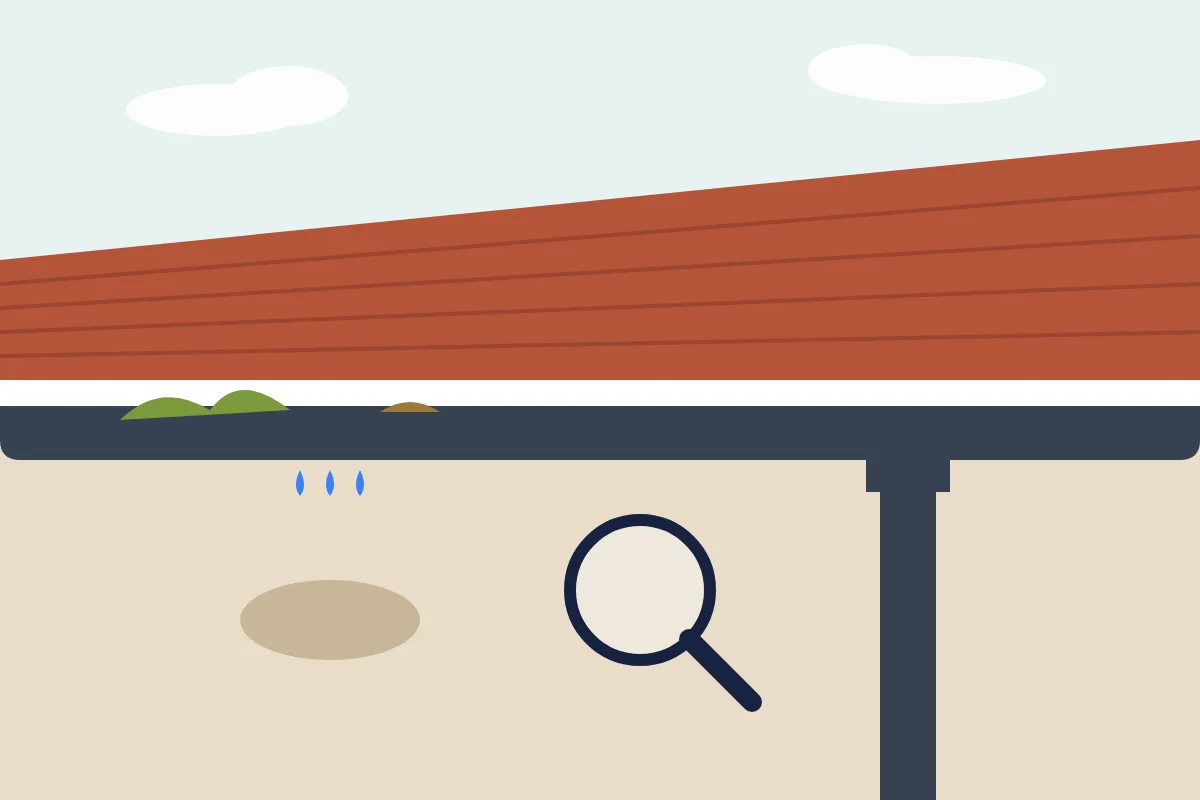
What we’re asked to look at in Baulking
Many gutter joints depend on rubber seals or sealant that age. Plastic gutters move with heat and cold, and in time their joints can drip. Cast iron joints can corrode and part once the paint has worn away.
People usually book a survey when they’ve noticed something like this:
- Blocked outlets and hoppers
- Dripping or leaking gutter joints
- Rotten fascias or stained soffits
- Gutters that have fallen out of line
In and around Baulking, as anywhere, a roof is easiest to deal with when its problems are found early.
What to check before booking
- Are they insured for the work?
- What’s outside the scope of the survey
- How long the report takes to arrive
- Whether VAT is added on top
Gutter surveys around Baulking
Older buildings in west Oxfordshire often have Cotswold stone slate roofs, and some Oxfordshire villages still have thatch. Across the South East, older homes tend to have slate or clay tiles, and many later ones concrete tiles. Each of these coverings has its own weak points, from fixings and valleys to flashings, chimneys and gutters. If your home is older, it is worth knowing whether it’s listed or in a conservation area before planning roof work. Listed building consent covers changes to a listed building’s special interest, and an Article 4 direction can bring extra controls in a conservation area.
Take an older house close to Church of St Nicholas: its roof may have old fixings, lead flashings and chimneys that need a closer look.
Baulking is about 5 miles west of Wantage, in Oxfordshire. Baulking is part of the area we cover across London and South East England. Baulking is one of the towns and villages in Oxfordshire we cover. Our Oxford page covers surveys nearby.
Postcode districts we cover here for gutter surveys: SN7. We also cover the places around Baulking: Uffington (1 mile south-west), Fernham (2 miles north-west), Shellingford (2 miles north), Stanford in the Vale (2 miles north-east) and Bow (2 miles north-east). Larger places within reach include Didcot (13 miles east), Abingdon-on-Thames (12 miles east), Witney (12 miles north), Carterton (11 miles north), Wantage (5 miles east) and Grove (5 miles east).
Landmarks near Baulking
Nearby you’ll also find Faringdon Day Hospital (3.4 miles north-west) and Faringdon Castle (3.3 miles north-west). The countryside around Baulking includes Dragon Hill and Letcombe Valley.
Towns and villages near Baulking
Also in Baulking
Should I look at the roof myself first?
What you cannot do safely is get up close. Roofs are fragile and slippery, and a fall can be serious. That part is for a survey, using safe viewpoints and a drone where it applies.
Keep a simple record: when leaks happen, ground-level photos and any past roof work. Share it with us when you book, as it helps us focus the survey.
Questions from Baulking
Is Baulking in the area you cover?
Yes, Baulking is one of the places we work. Every survey there gets the same written report with photographs.
Will you come out to Baulking?
Yes, we do. We work right across London and the South East, from towns to the smallest villages. Longer journeys are simply planned beforehand.
Could my damp wall be caused by the gutters?
The survey looks at whether rainwater is spilling onto the wall, through overflows, drips or damaged downpipes. We cannot see inside walls, so the report covers what can be seen.
Does someone need to be in?
That depends on the survey. Inside the building and in the loft, we need someone to let us in.
Can you survey a shared roof?
Yes, if the freeholder or managing agent agrees access. We check the parts we are given access to.
Can you inspect my roof with a drone?
Where it helps and the rules allow, yes. Our sub-250g drone is flown by a CAA-registered operator with a Flyer ID and Operator ID, and every flight depends on the airspace and the weather.
Is there a good time of year to book a gutter survey?
There is no wrong time. If water is already spilling over, book sooner rather than later as overflowing water can damage walls.
Roof by roof
Box and secret gutters
Box and secret gutters often cause leaks indoors. We look at the outlets, linings and overflows where safe.
Aluminium and other metal gutters
Metal gutters are common on commercial buildings and some homes. Their joints and outlets still need checking.
For landlords and managing agents
Where a roof is shared: access has to be agreed with whoever owns or manages the building. Mention it when you get in touch and we will plan the visit with that in mind.
Freeholders and residents’ companies use a roof report to plan and budget, putting the urgent items at the top.
Useful tips for Baulking property owners
There’s plenty you can do without going near the roof. Here’s what helps most:
- Keep climbers away from the eaves
- Watch for green marks down the brickwork
- Include valley, parapet and box gutters when clearing
- Look for downpipes coming loose
Where the evidence points to drains below ground, the report says so, so you can arrange a drain survey. Anything else we notice on the roof, as far as we can see it, is noted too.
Have overhanging branches and climbing plants cut back from the roof by someone who can do it safely. Less debris means fewer blocked outlets.