
Oxfordshire · London and the South East
Littlemore Gutter Survey
Gutter surveys for homes and businesses in Littlemore. More than 5,000 surveys completed across London and South East England.
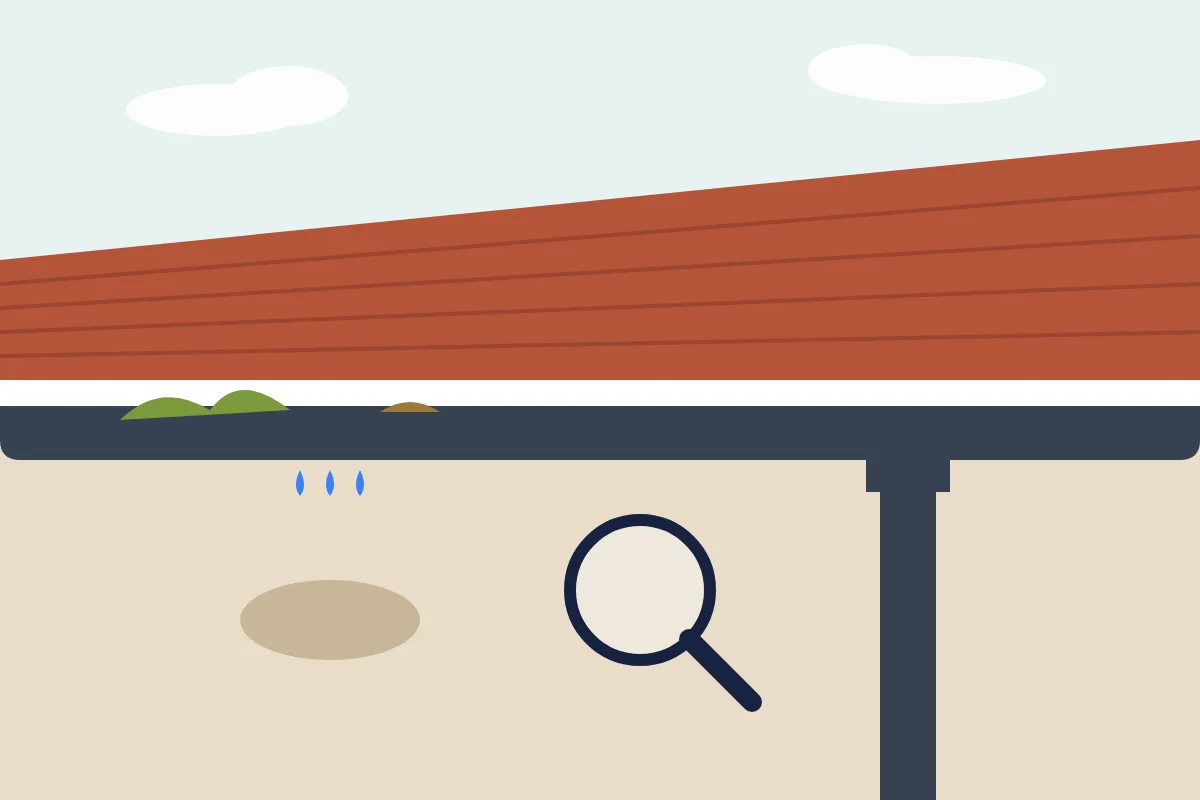
- Water spilling over the gutter edge
- Dripping or leaking gutter joints
- Overflowing valley or parapet gutters
What we cannot see
Without opening up the roof, some things stay hidden, and that sets some limits:
- What’s hidden inside a downpipe
- Hidden sections we can’t view safely
- Asbestos testing of old gutters, downpipes or soffits
If in doubt, phone 07833 053749 or drop us an email and we will point you to the right survey. The full list of what we check.
What we check
- Downpipes
- Eaves gutters
- Fascias and soffits
- Outlets and hoppers
- Valley gutters
- Parapet and box gutters
Gutter survey in Littlemore
People book a gutter survey when gutters overflow, when damp appears or before the wetter months. Landlords and managing agents use the report to plan upkeep and buyers sometimes want the gutters looked at before they exchange. Whoever books, we inspect and report in the same way with photos and clear recommendations. Visits can be on weekdays, Saturdays or Sundays. We survey downpipes, valley gutters and outlets and hoppers, and the problems we are asked to look at most are valley or box gutters that overflow inside and brackets that have dropped or snapped.
In a smaller place like Littlemore, homes range from older cottages to bungalows and newer houses. Older roofs can have slate, clay tiles or other traditional coverings, while many later ones have concrete tiles. On older homes, chimney stacks, valleys and gutters are normally where the work is. Nails and battens under older coverings often give out before the slates or tiles themselves.
We keep jargon out of it: where something needs attention, it says so plainly.
- Where
- Littlemore (OX4, OX3)
- Region
- Oxfordshire
- Prices
- From £150 inc. VAT
- Your report
- Written, with photos, emailed to you
- When we survey
- Weekdays, Saturdays and Sundays
- Cover
- PI and public liability insurance
- Phone
- 07833 053749
- Last updated
- 27 October 2026
Littlemore homes and their roofs
West Oxfordshire’s older buildings often carry Cotswold stone slates, and a few villages in the county keep their thatch. Across the South East, older homes tend to have slate or clay tiles, and many later ones concrete tiles. Knowing the covering helps explain which parts of a roof are likely to need work first. Holywell Manor, about 2.7 miles north, is one of the historic houses in the wider area around Littlemore. Older roofs in the wider area can hide decades of patch repairs, so the detail matters.
Landlords with a home close to Radley station may find that the gap between tenancies is a good time to have the roof looked at. Take a building like Emmanuel Christian School: its roofs, gutters and any chimneys need the same checks as a house’s, just on a bigger scale.
Littlemore is about 2 miles south of Oxford, in Oxfordshire. We visit Littlemore as part of our work across Oxfordshire, for homes and businesses alike. Our Oxfordshire coverage includes Littlemore and the places around it.
All of OX4 and OX3 is covered for gutter surveys. You will find streets like Giles Road, Astrop Lane and Grange Road. With the A4074 close by, Littlemore is simple for us to get to. We also cover the places around Littlemore: Sandford-on-Thames (1 mile south), Blackbird Leys (1 mile east), Iffley (1 mile north), Kennington (1 mile south-west) and Cowley (1 mile north-east). Further out, we also cover Didcot (8 miles south), Bicester (13 miles north), Abingdon-on-Thames (4 miles south-west), Witney (12 miles west), Thame (11 miles east) and Wantage (12 miles south-west).
Around Littlemore
Around Littlemore, our work takes us to homes and buildings near John Henry Newman Academy, The Catherine Wheel pub and The Oxford Academy and the streets around them. The closest station to Littlemore is Radley station, roughly 2.4 miles south of the centre. Nearby you will also find Oxford Castle and earlier settlement remains (2.7 miles north-west) and Littlemore Hospital (within half a mile south). For a walk, there is Headington Hill and CS Lewis Nature Reserve.
Nearby places to Littlemore
Also in Littlemore
Signs you need a gutter survey in Littlemore
Leaves are behind most blocked gutters. Nearby trees drop leaves, twigs and seeds into gutters every autumn, and they collect at the outlets. A choked outlet soon means a full, overflowing gutter.
It’s worth booking a survey if you’ve seen:
- Leaks at the gutter joints
- Blocked outlets and hoppers
- Water spilling over the gutter edge
- Brackets that have dropped or snapped
The streets around a church like Church of St Mary and St Nicholas are frequently among the oldest in a place, and if your house is among the older ones nearby, its roof may have old fixings, lead flashings and chimneys that need a closer look.
Before booking any roof surveyor
- If they fly a drone, whether they hold a CAA Flyer ID and Operator ID
- How long the report takes to arrive
- Whether the loft is part of the inspection
- What exactly goes into their report
FAQs for Littlemore
Is Littlemore within the area you cover?
Yes. Littlemore is within the area we cover, which takes in towns, villages and rural addresses. We survey roofs across London and the South East. Just mention lanes, gates or anything else about the route when you book.
How do I find out if my home in Littlemore is listed?
You can check whether a building is listed on Historic England’s list, and your council can tell you if it’s in a conservation area. Listed building consent is needed for changes that affect a listed building’s special interest, and conservation areas can limit changes of roofing material.
Does someone need to be in?
Someone needs to let us in if we are looking inside or in the loft. Access is agreed with you as you book.
Do you use drones?
Where it helps and it is safe, yes. Flights depend on the weather on the day and airspace rules, including flight restriction zones near airports. We hold a CAA Flyer ID and Operator ID.
Do you carry professional indemnity insurance?
We are covered by professional indemnity and public liability insurance.
Do you test soffits or gutters for asbestos?
No. We don’t carry out asbestos testing. If rainwater goods or soffits look like they could contain asbestos, we note it so a specialist asbestos surveyor can check before any work.
Does the report include photos?
Yes. Photographs are part of every report, so you can see each point for yourself.
Tips from our surveys
A survey works best with a little help from you, before and after. Tips:
- Check the loft with care after heavy rain
- Note any damp stains below the gutters
- Include valley, parapet and box gutters when clearing
- Don’t climb a ladder to look in the gutters
The report comes with photos and recommendations, prioritised by urgency where relevant. Share it with a contractor of your choice so they know what needs doing.
Get the gutters cleared every year or more frequently near trees. The best time is typically after the leaves have dropped. Clear gutters can carry water away as they should.
Why get it checked now?
A gutter clear-out takes the leaves away, but it does not tell you why a gutter overflows. Our survey also looks at falls, joints, brackets, outlets and downpipes, so you know whether there’s more to it. In an older home around Littlemore, water from a roof defect can get into timber and plaster, and that is a much bigger job than the original defect.
Prices start from £150, including VAT, for a Basic Survey. Standard is from £250 and Premium from £400, both with VAT included. You will know the price for your survey before booking.
Why book with us
- Independent findings on the roof’s condition
- Drones and thermal imaging where it applies
- A written report with photos
- We hold a CAA Flyer ID and Operator ID
See what a roof survey costs and what we found on two real jobs.
What we do, step by step
We don’t take risks to get a closer look. Everything that can safely be seen is inspected, and if part of the roof cannot be seen, the report says so. The survey usually takes roughly 1–2 hours for a house, and more on a big or complicated roof. Some parts of a survey depend on the weather, so a visit to Littlemore is booked with the forecast in mind: drone flights and thermal imaging need the right conditions, while a look from the ground and the loft can go ahead in most weather.
- We start with what you’ve noticed, such as damp or overflowing gutters.
- We walk round the building and check the gutters, downpipes and fascias from the ground.
- Valleys, parapets and box gutters are inspected where they can be seen safely.
- The roof space is checked for staining, where it can be reached safely.
- A written report with photos and recommendations follows.
Preparing for the visit
- Buyers: confirm access with the estate agent or seller
- Show us where any leaks or stains appear
- Let us know about parking near the property
Arrange a survey
When you are ready to go ahead, ring 07833 053749 or use the contact form. We will suggest a package, agree the price and find a date, weekday or weekend.
Advice
What you can safely check yourself
During heavy rain, look at the gutters from the ground or a window. Water spilling over the edge can point to a blockage or a sagging run.
You can learn a lot from the ground. Binoculars help you spot slipped slates or tiles, gaps along the ridge and a leaning stack. Never climb onto the roof to look.