
Essex · London and the South East
Gutter Survey in Tarpots
Not sure what state the gutter is in? We carry out gutter surveys in Tarpots and across Essex, with plain-English findings.
- Valley or box gutters that overflow inside
- Leaves and moss blocking gutters
- Joints that drip after rain
Leave it or get it looked at?
It is easy to put damp down to the wrong cause. When rainwater goods are the source, treating the wall alone won’t solve it. A gutter survey helps rule the rainwater system in or out. Outbuildings and barns around Tarpots are easy to forget, but a failed roof there can spoil what’s stored inside. A quick look before winter can save a lot.
Our price is from £150, including VAT. What you pay depends on the size and height of the roof, access and which survey you book.
Why book with us
- Drone flown under a CAA Flyer ID and Operator ID
- Surveys on any day of the week
- Plain-English reports with photos
- Drone and thermal imaging surveys available
Read what a roof survey costs and what we found on two real jobs.
Gutter survey in Tarpots: what you get
We look at the rainwater system above ground level: gutters, outlets, hoppers, downpipes and overflows. It is not a CCTV drain survey, so we can’t see inside underground pipes. Where water seems to be backing up from below ground, we will say so in the report, with a suggestion to book a separate drain survey. Anything we find above ground, such as a split hopper or a leaking downpipe, is photographed and recorded. If you are worried about leaks at the gutter joints and gutters that have fallen out of line, we can find out what’s behind it, whatever the roof.
Somewhere as small as Tarpots, homes are often older cottages and farmhouses, with outbuildings and some newer houses. Roofs there can be clay tile, slate, stone or thatch, and chimney stacks are often old. Each needs checking in its own way, and thatch is a specialist material we report on as far as it can be seen. On older roofs, it’s normally the chimneys and lead flashings that need work first.
The report works through the roof section by section, from the main slopes down to the gutters and outlets, each with a short note and a photograph. You’ll see the good as well as the bad.
- Place
- Tarpots (SS7)
- Region
- Essex
- Price
- From £150 inc. VAT
- Report
- Emailed report with photos and recommendations
- Survey days
- Weekdays, Saturdays and Sundays
- Insured
- Professional indemnity and public liability
- Telephone
- 07833 053749
- Last updated
- 27 October 2026
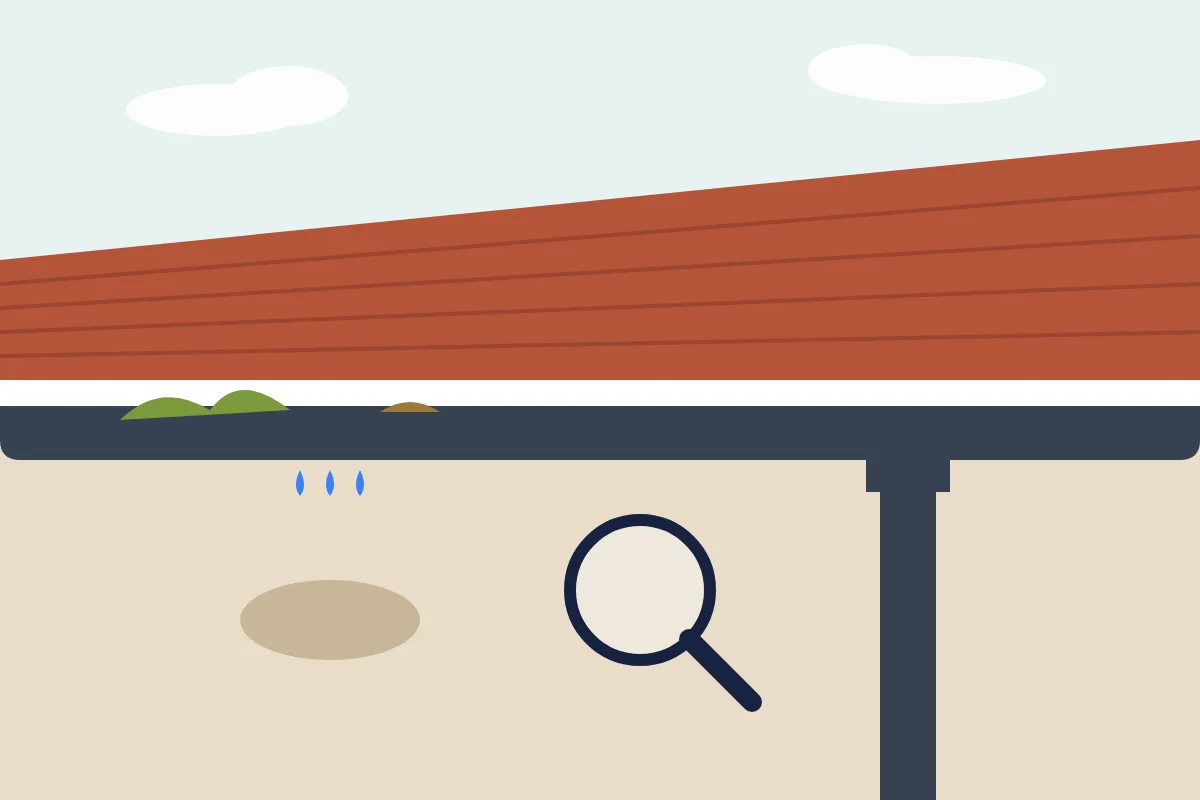
Should I look at the roof myself first?
Inside, the loft is a good place to look, with care. Take a torch and only step on boards or joists, checking for stains, damp wood or chinks of daylight.
It is useful to keep a record: when leaks happen, ground-level photos and any past roof work. Share it with us when booking and it will help the survey.
How it works
Photos are taken throughout the visit, so the report shows exactly what we saw. We take close-ups from wherever is safe. Most surveys take an hour or two at a typical home; commercial roofs usually need 3–4 hours. Rural addresses near Tarpots can be hard to find from a postcode alone, so a few directions, or a note of a nearby landmark, help us arrive on time. After that, the survey runs as it would anywhere.
- We ask about overflows, damp or leaks you’ve noticed.
- Gutters, downpipes, fascias and soffits are inspected from safe vantage points.
- Valley, parapet and box gutters are inspected as far as they can be seen safely.
- Where the loft can be reached safely, we check it for staining or damp.
- We send a written report with photos and clear recommendations.
Before we arrive
- Find any records of previous roof work
- If the roof is shared, arrange access with whoever manages the building
- Let us know about parking near the property
How to book
Our price is from £150, including VAT. What you pay depends on the roof’s size, access and the package, and you can phone 07833 053749 or email us to find out.
Advice
How the survey changes by roof type
Aluminium and other metal gutters
Metal gutters are common on commercial buildings and some homes. Their joints and outlets still need checking.
Lead-lined valley and parapet gutters
Lead linings are common in valleys and parapet gutters on older houses. A split lining can leak straight into the building.
Signs you need a gutter survey in Tarpots
Valley, parapet and box gutters are often lined with lead or a sheet material. Splits and blocked outlets in these gutters can send water straight into the building as there’s nowhere harmless for it to go. Lead linings can also be stolen.
Look out for signs like these:
- Rotten fascias or stained soffits
- Overflowing eaves gutters
- Gutters packed with leaves or moss
- Sagging gutters and loose brackets
Shop and office owners around Eastgate Shopping Centre may find that a written record of the roof’s condition helps you plan maintenance rather than react to leaks.
What to check before booking
- What they will not be able to tell you
- What the report includes, and whether it has photos
- Do they have a CAA Flyer ID and Operator ID for drone work?
- Whether they hold professional indemnity and public liability insurance
Prices for gutter surveys in Tarpots
Survey packages start from £150, with VAT included. What you pay for your roof depends on:
- House, block, shop or office
- Roof area
- The package you choose: Basic, Standard or Premium
- Any need for thermal images or a drone flight
Thermal imaging and drone inspection (where applicable) come with the Premium Survey, which starts from £400, with VAT included. We’ll tell you which package suits the questions you have.
Booking your survey
The more you tell us, the easier it is to price the survey. When you get in touch, it’s useful to mention:
- Where the property is, with the postcode
- What kind of property and roof it is
- Anything about access we should know
- Dates you are working to, such as exchange
To book a survey, ring 07833 053749 or use the contact form and let us know the address and what’s prompted the survey. We will confirm the price before booking.
Tarpots: your questions answered
Does a conservation area affect roof work in Tarpots?
Historic England’s list shows listed buildings, and the local council can tell you about conservation areas. If a home is listed, changes that affect its special interest need listed building consent, and in a conservation area re-roofing in different materials may need permission.
Will you come out to Tarpots?
Yes, Tarpots is covered. We survey roofs across London and the South East, from towns to the smallest villages. Longer journeys are simply planned in advance.
Will you walk on the roof?
Only when it is safe. Safe viewpoints, the roof space and a drone where applicable cover most of what’s needed.
How long does a gutter survey take?
It normally takes roughly 1–2 hours for most homes, and longer where there are parapet, valley or box gutters to follow. We’ll give you an idea when booking.
Do you need to get into the loft?
Typically, if there’s one and it can be reached safely. The roof space can show things the outside cannot, such as damp timbers, staining or daylight.
Do you survey roofs on blocks of flats?
Yes, as long as access is agreed. The roof of a block or converted house is often shared, so we need permission from the building owner or managing agent. We can only inspect what we are given access to.
Are hidden gutters like valleys and box gutters included?
Yes. These gutters often cause leaks indoors when they block, so they’re an important part of the survey. Parts of them may not be visible, and the report says so.
Roofs, chimneys and gutters in Tarpots
Tarpots lies within about 4 miles of the sea, and being near the sea means more wind and salt than a roof inland would face. Salt is hard on nails, clips and metal flashings, and strong wind lifts anything already loose on a roof, while driving rain finds any gap. What can be done to an older roof may depend on listing or a conservation area. Your council and Historic England’s list will tell you where you stand.
Take a building like The Appleton School: a written record of a large roof helps plan work for the holidays rather than in term time. The streets around a church such as St George are often among the oldest in a place, and if yours is one of the older homes nearby, its chimney, valleys and lead work are likely to be the parts that need attention first.
Tarpots is about 1 mile west of Thundersley, in Essex. Roofs in Tarpots get the same thorough look as anywhere else in Essex. We cover towns and villages across Essex, from the larger towns to small villages. Chelmsford is in our area too.
Gutter surveys in SS7 are booked the same way as anywhere else. Whether your property is on London Road, Hatley Gardens and High Road or a nearby road, we can help. If you’re just outside Tarpots, we cover South Benfleet (1 mile south-east), North Benfleet (1 mile north-west), Thundersley (1 mile east), Bowers Gifford (1 mile west) and Pitsea (2 miles west). Further out, we also cover Chelmsford (12 miles north), Basildon (4 miles west), Brentwood (11 miles west), Maldon (13 miles north-east), Canvey Island (3 miles south-east) and Billericay (7 miles north-west).
Near you in Tarpots
Around Tarpots, our work takes us to homes and buildings near Jotmans Hall Primary School and the streets around them. The nearest railway station is Benfleet station, about 1.6 miles south of the centre. Other landmarks nearby include The Motor Boat Museum (3 miles west) and Chartwell Private Hospital (3.8 miles east). Open spaces near Tarpots include Bowers Marsh RSPB Reserve.