
Greater London · London and the South East
Roof leak investigation in Victoria, Greater London
Independent roof leak investigations in Victoria. More than 5,000 surveys completed across London and South East England.
- Wet patches high on an inside wall
- Water that shows only in certain storms
- Staining around the chimney inside
Roof leak investigation in Victoria: what you get
We use moisture detection and thermal imaging where they help. Moisture readings show which materials are wet. A thermal camera shows patterns of temperature rather than water, so we confirm what it suggests with moisture readings. Moisture detection is included in the Standard Survey, and thermal imaging in Premium. Thermal imaging works best after a sunny day, on a dry roof with little wind. We are often asked to look into staining around the chimney inside and wet patches high on an inside wall, on the roof space, slate and tile slopes and chimney stacks.
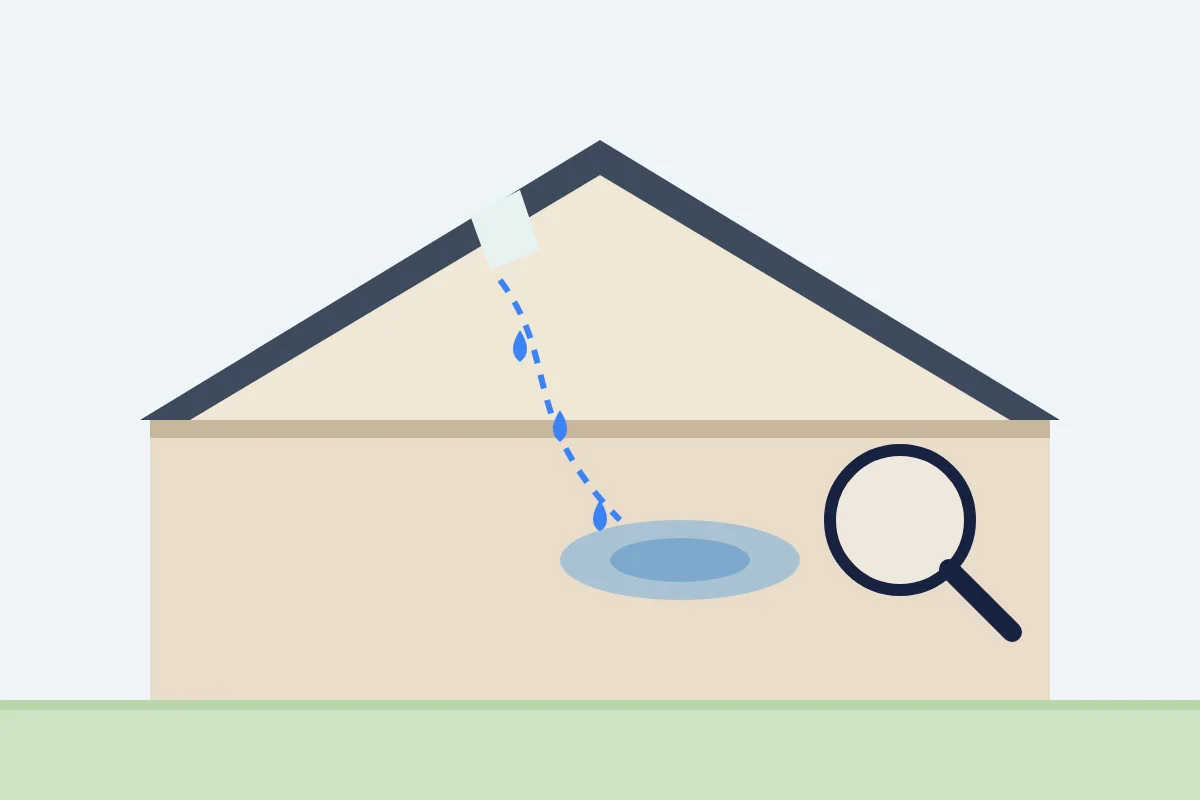
In London, leaks often start somewhere hidden: the valley gutter in a butterfly roof, a parapet gutter, a chimney flashing or the flat roof over a rear extension. For a leak or storm damage in Victoria, those hidden details are where the inspection begins. Water from a hidden gutter can run along joists and show up a room or two away.
The written findings come by email, ready to forward to whoever needs them. Turnaround is within 48 hours for Basic, 24–48 hours for Standard and same day for Premium.
- Where
- Victoria (SW1V, SW1P, SW1X)
- Region
- Greater London
- Cost
- From £150 inc. VAT
- Report
- A written report with photos, by email
- Appointments
- Weekdays, Saturdays and Sundays
- Insured
- Professional indemnity and public liability
- Call
- 07833 053749
- Page updated
- 27 October 2026
What we look for on each type of roof
Slate and tile slopes
Ridge and hip tiles can loosen as their mortar cracks. Rain can then run in at the ridge.
Lead flashings
Mortar fillets are sometimes used instead of lead. They crack as the roof and wall move, and water runs down behind them.
Leaks and storm damage in Victoria
Inner London’s Victorian and Edwardian terraces often have Welsh slate roofs. A butterfly roof with a central valley gutter, tucked behind a parapet wall, is common on these houses. Lead flashings, party-wall upstands and shared chimney stacks are typical of these houses, if yours is one of them. Knowing the roof type helps narrow down where water may be getting in. With Buckingham Palace about 0.4 miles north, Victoria sits in an area with a long building history. Older roofs in the wider area can hide decades of patch repairs, so the detail matters, and any change of roofing material on a listed home needs checking with the council first.
For landlords with property near London Victoria station, a tenant living with a leak needs the cause found, not just the stain painted over. Shop and office owners around Harrods may find that a quick answer on where water is coming in keeps a business running.
Victoria is about 1 mile south of City of Westminster, in Greater London. Surveys in Victoria work the same way as everywhere we cover: a careful look at everything that’s safely in view, photographs and a clear written report. Victoria is one of the towns and villages in Greater London where we work for roof leak investigations.
Postcode districts we cover here for roof leak investigations: SW1V, SW1P and SW1X. Streets in the area include Eaton Lane, Gerald Road and Wilton Road. Main roads around Victoria include the A202 and A302, so getting to you is simple. If you are just outside Victoria, we cover Belgravia (1 mile north-west), Pimlico (1 mile south-east), Westminster (1 mile north-east), Millbank (1 mile north-east) and Brompton (1 mile west). Further out, we also cover Shoreditch (4 miles north-east), Walthamstow (8 miles north-east), Hoxton (4 miles north-east), Whitechapel (4 miles north-east), Hampstead (4 miles north) and Ruislip (13 miles north-west).
Local landmarks in Victoria
Locally, jobs take us to homes and businesses close to Westminster Cathedral Choir School, Wetherspoons pub and Green Park, among other places. You’ll also find Westminster City School (within half a mile north-east) and London Library (0.9 miles north). Victoria has its own railway station: London Victoria station. Other landmarks nearby include Baynard's Castle (2.2 miles north-east) and Harrods (0.9 miles west). For a walk, there is Ludgate Hill and St. James's Park Lake.
FAQs for Victoria
Is my home in Victoria listed or in a conservation area?
Check Historic England’s online list first, then ask the council about conservation areas and any Article 4 direction. The answer matters most when a change of material is on the cards.
Will parking be an issue for a roof survey in Victoria?
It can be, so it helps to let us know about permits, visitor bays or off-street space as you book. That way the visit can be planned around it.
Do you test for asbestos?
No. We don’t sample or test for asbestos. Where a material might contain it, such as old cement sheets on a building from before 2000, the report flags it, with a recommendation to have a specialist asbestos surveyor check before it’s disturbed.
Do you take photos of the roof?
Yes. Photos are part of every report, so you can see each point for yourself.
How long have you been surveying roofs?
We have more than 20 years’ experience and have carried out more than 5,000 surveys across London and South East England.
Will you definitely find the leak?
Not every leak can be pinned down in a single visit. Most leave clues we can follow, but some only appear in certain weather. We report what we found and the likeliest sources.
How long does a roof leak investigation take?
It typically takes about 1–2 hours, more where the leak is intermittent or the roof is large. The report follows within 48 hours for Basic, 24 to 48 hours for Standard and the same day for Premium.
Common roof problems in Victoria
Chimneys can let water in by several routes. Water can enter through crumbling mortar, cracked flaunching, worn flashings or uncapped pots. The damp may appear on a chimney breast, a ceiling or in the loft.
Here are some of the things we see frequently:
- Damp patches next to the stack
- Condensation that looks like a leak
- Wet patches on loft insulation
- A leak that comes and goes with the weather
The streets around a church such as St. Michael's Church are often among the oldest in a place, and if your home is one of the older ones nearby, old mortar, worn lead and slipped slates are the usual suspects when water gets in.
What to check before booking
- What exactly goes into their report
- Whether VAT is in the quoted price
- How soon the report will arrive
- What’s outside the scope of the survey
What happens if roof problems are left?
Guesswork repairs are a common reason leaks keep coming back. The real way in may be a metre or more away. An investigation finds the likely cause first, so the repair is aimed at the right place. Blocked gutters and hoppers on London houses overflow and soak brickwork, which can lead to damp inside. A small blockage left for a few winters becomes a damp problem.
Larger roofs, taller buildings and commercial roofs take longer, so the price reflects that. You will know the figure before booking.
Why choose Independent Roof Survey in Victoria
- Over 5,000 surveys carried out
- Visits on any day of the week
- Thermal imaging and drones used where they help
- A sub-250g drone, flown with a CAA Flyer ID and Operator ID
Take a look at how roof surveys are priced and two real surveys.
What you can safely check yourself
Keep a simple record: dates of leaks, photos from the ground and any work done on the roof. Share it with us as you book and it will help the survey.
Watch the gutters in a downpour, from a window or the ground. Water spilling over the edge can be a sign of a blockage or a gutter that has dropped.
What we do, step by step
A survey visit follows a simple order: we listen to what’s been worrying you, inspect the roof from every safe vantage point, take photographs as we go and make notes for the report. Most visits take between one and two hours at a typical home, while a commercial roof takes nearer three to four hours. In a London conversion, the way into the roof space is often from a communal landing or the top flat. If that applies to your building, it is useful to agree access with the neighbours or the managing agent first. Otherwise, the visit in Victoria runs like any other.
- We start with what you’ve seen: where the stain is and when it gets worse.
- The visit starts indoors, at the stain and in the loft.
- Outside, we check every likely route in.
- Moisture readings and thermal imaging are used where they help.
- We email a report with photos, the likely entry point and recommendations.
How to prepare
- Have any paperwork from past roof work to hand
- Keep pets in another room
- Leave a clear route to the loft
How to book
A quick phone call is normally the easiest start: call 07833 053749 or drop us an email. You will have a price before anything is arranged.
Read more
What we cannot see
Before booking, it’s worth knowing what a survey will not do:
- Plumbing leaks that look like roof leaks
- What’s under the covering or behind the plaster
- A structural engineer’s report
If you are not sure which survey you need, phone 07833 053749 or use the contact form and we will give you a straight answer before you book. What our survey covers.
Roof types and parts we check
- Flat roof details
- The roof space
- Slate and tile slopes
- Rooflights and dormers
- Chimney stacks
- Lead flashings
- Valleys and parapet gutters