
Buckinghamshire · London and the South East
Storm damage roof report in Marlow Bottom, Buckinghamshire
Storm damage roof reports across Marlow Bottom, with over 20 years’ experience behind it. You get a clear report with photos.
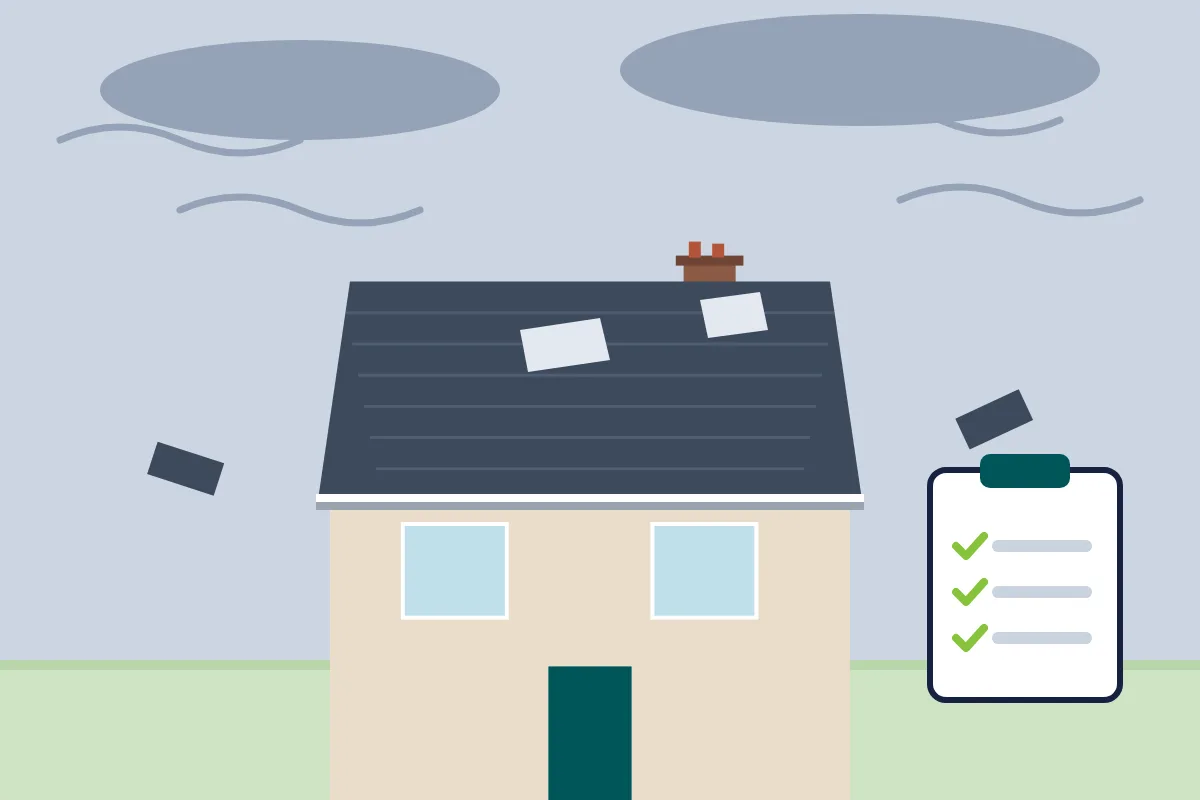
- Ridge tiles that have come loose
- Torn or lifted flat roof coverings
- Cowls or aerials dislodged in the wind
Marlow Bottom questions
How do I find out if my home in Marlow Bottom is listed?
For listing, use Historic England’s list; for conservation areas, ask the council. It matters most if you’re planning to re-roof in a different material.
Will you come out to Marlow Bottom?
We do. A small place gets exactly the same survey as a big one.
Does your report mean my claim will be accepted?
That is not something we can promise. Insurers decide claims on their own policy wording. What we provide is an independent record of the damage.
Will you deal with the insurance company for me?
No. Our report is an independent record for you to use. Your insurer may appoint its own loss adjuster.
Can you survey a shared roof?
Yes, once access has been agreed. Roofs over flats are often shared, so whoever owns or manages the building needs to agree access. We can only inspect what we are given access to.
How strong does the wind have to be for a storm claim?
There is no single figure. Many use gusts of about 55 mph, but each policy sets its own definition. Check your policy wording.
Is it the same as a RICS Level 2 or Level 3 survey?
No. We check the roof, not the whole building, so it is not a RICS Level 2 or Level 3 survey. It can sit alongside a RICS survey if you want both.
Storm damage roof report in Marlow Bottom: what you get
After a storm, safety comes first. Take photos from ground level or from windows, and do not climb onto the roof. If water is coming in, a roofer can put temporary protection in place. Our report records the damage so you have an independent record to give your insurer. Keep receipts for any emergency work. If you’ve noticed damaged pots on the stack and broken or displaced guttering, we can find out what’s behind it, whatever the roof.
For a small place like Marlow Bottom, the inspection is the same as anywhere: the journey and access are just planned ahead of time. Tell us where the water shows, when it appears and anything you’ve noticed outside, along with any repairs done before. Photographs of the stain and of the roof from outside are helpful too.
The report records the roof as we found it on the day. That makes it useful now and a handy reference later.
- Location
- Marlow Bottom (SL7)
- Wider area
- Buckinghamshire
- Price
- From £150 inc. VAT
- Reports
- Emailed report with photos and recommendations
- Survey days
- Weekdays, Saturdays and Sundays
- Cover
- Professional indemnity and public liability
- Phone
- 07833 053749
- Updated
- 27 October 2026
Why get it checked now?
If the damage is partly wear and tear, it’s better to know. Our report gives an honest view of both, so you know what the roof shows. For older village homes like those around Marlow Bottom, the right replacement materials are not always easy to find quickly. Spotting a problem early leaves room to find them.
One thing that affects the price is the package: Basic from £150, Standard from £250 or Premium from £400, all including VAT. Size, height and access can affect the price too.
What you get with us
- Surveys seven days a week
- Professional indemnity and public liability insurance
- Prices that include VAT
- 98% of customers satisfied
See our cost guide or two real surveys.
For landlords and managing agents
For blocks of flats, a roof survey helps managing agents and residents’ management companies plan ahead. The report sets out what needs attention now and what can wait.
An agent can book and manage the survey for a landlord, with the report sent to whoever needs it. We agree a time with the tenant beforehand.
The survey, step by step
Where it is relevant and can be reached safely, the roof space is checked as well as the outside. In the loft, the signs we look for are staining, damp, daylight and sagging. The whole visit normally takes an hour or two at a house, and longer if the damage is spread across a large roof. Older roofs in small places like Marlow Bottom can have low, tight loft spaces, so let us know about the loft hatch and any ladder. Only areas that can be reached safely are inspected.
- You let us know what happened and whether a roofer has made the roof safe.
- We check inside, including the loft where there is access, for water damage.
- We view the roof from safe positions.
- Storm damage and older wear are recorded separately where we can.
- You receive the written report with photos.
Preparing for the visit
- Unlock side gates and any roof access doors
- If you’re buying, check with the agent that we can get in
- Check the loft hatch can be reached
How to book
Getting a price is simple: just phone 07833 053749 or use the contact form and give us some details about the property and we will explain which survey suits. The price is agreed up front.
Advice
What affects the price in Marlow Bottom
What a survey costs depends on the time and equipment it needs. That comes down to:
- The use of thermal imaging or a drone
- Chimneys, valleys, parapets and other details
- House, block, shop or office
- Whether you choose the Basic, Standard or Premium Survey
We offer three survey packages: the Basic Survey from £150, the Standard Survey from £250 and the Premium Survey from £400, with VAT included. The price for your roof depends on its size, access and what you want to find out.
What to tell us when you get in touch
Before you get in touch, it is useful to have:
- When you need the report by
- The property’s address and postcode
- Why you want a survey: buying, a leak, a storm or new work
- How the loft is reached, if there is one
When you’re ready to go ahead, call 07833 053749 or drop us an email. From there it’s a case of choosing a package, agreeing the price and fixing a day, weekday or weekend.
Also near Marlow Bottom
Also in Marlow Bottom
Storm damage roof reports around Marlow Bottom
Thatch survives on some older buildings in Buckinghamshire’s villages. Across the South East, older homes tend to have slate or clay tiles, and many later ones concrete tiles. The covering and its details give the first clues when tracing where water is coming from. About 2.8 miles south-west lies Harleyford Manor, a reminder of how long the area around Marlow Bottom has been built on. If you own one of the older houses, expect a mix of original materials and later repairs on the roof, and a listed home or one in a conservation area may need consent for changes of material.
Landlords with a home close to Marlow station may find that a clear finding on where water gets in helps you brief a roofer right away. If you look after a shop, office or commercial unit, for instance near Eden, water through a ceiling can damage stock and close a sales floor, so the source needs finding fast. If you run a hotel or guest house in or near Marlow Bottom, a roof problem can mean rooms out of use, so it pays to find faults before guests do.
Marlow Bottom is about 1 mile north of Marlow, in Buckinghamshire. From houses to flats and shops in Marlow Bottom, the roof can be surveyed on a weekday or at the weekend. Across Buckinghamshire, we cover Marlow Bottom and the places around it. We also survey roofs in Reading.
Here we cover the SL7 postcode area for storm damage roof reports. You will find streets like Marlow Bottom, Squirrel Rise and Kingsley Drive. We also cover the places around Marlow Bottom: Burroughs Grove (1 mile east), Marlow (1 mile south), Little Marlow (2 miles east), Fern (2 miles east) and Bisham (2 miles south). Within a short drive, we also cover High Wycombe (3 miles north-east), Chesham (11 miles north-east), Amersham (10 miles north-east), Beaconsfield (6 miles east), Chalfont St Peter (10 miles east) and Southcourt (15 miles north).
Local landmarks in Marlow Bottom
In Marlow Bottom, that means homes and buildings near Great Marlow School and Three Horseshoes pub, among other places. For rail, the closest station is Marlow station, roughly 1.5 miles south-east of the centre. Well-known places in the area include Eden (2.9 miles north) and Chiltern Sound Phonograph Museum (1.2 miles south). For a walk, there is Carpenter's Wood.
Checking the roof from ground level
Look up at the roof after a storm, from the ground: pieces of tile or slate on the ground, a gap in the ridge or a lifted flashing are all worth noting. Leave anything above ground level to a survey.
What you can’t do safely is get up close. Slates, tiles, flat roofs and rooflights can give way, and a fall can be serious. That is where a survey comes in, using safe viewpoints and a drone where applicable.
What we look for on each type of roof
Clay and concrete tiles
Broken or missing tiles leave the underlay exposed to rain. We photograph each gap.
Chimney stacks
Flashings around stacks can lift in strong winds. Loose flashings are recorded.