
West Sussex · London and the South East
Clayton Gutter Survey
A survey of gutters, valleys, outlets and downpipes around Clayton, with findings in writing and pictures to back them up. Weekday and weekend visits available.
- Choked outlets or hopper heads
- Overflowing eaves gutters
- Rotten fascias or stained soffits
Clayton: your questions answered
Is my home in Clayton listed or in a conservation area?
You can check whether a building is listed on Historic England’s list, and your council can tell you if it’s in a conservation area. Listed building consent is needed for changes that affect a listed building’s special interest, and conservation areas can limit changes of roofing material.
Can a landlord with a rental near Hassocks station book a roof survey?
Yes, rented property is part of what we cover. You can call 07833 053749 or use the contact form with the address and some details.
How many surveys have you done?
More than 5,000 surveys over 20+ years, across London and South East England.
Will you look at parapet and box gutters as well?
Yes. Hidden gutters are a common cause of leaks inside, so they’re an important part of the survey. Some may only be partly visible, and the report says so.
How long will you be on site?
A visit normally takes about 1–2 hours for a house, and more on a big or complicated roof. You will know roughly how long when we arrange the visit.
What will the report tell me?
It works through the roof part by part, in writing and with photos. Points are put by urgency where it matters.
How do I arrange a gutter survey in Clayton?
The quickest way is to call 07833 053749 or use the contact form. Let us know the address and a little about the roof, and we’ll suggest the right survey. Surveys run on weekdays and at weekends.
About our gutter survey in Clayton
Gutters are typically fixed to fascia boards, so fascias and soffits are part of the survey. Water that overflows for long enough can rot timber fascias and mark the soffits underneath. Older buildings, from before 2000, can have asbestos cement soffits, gutters or downpipes. We do not carry out asbestos testing, so we flag anything that might contain it for a specialist asbestos surveyor to check. Common reasons to book are hoppers and outlets full of debris and gutters full of debris and silt, across eaves gutters, fascias and soffits and parapet and box gutters.
Older buildings in small places like Clayton may be listed or in a conservation area. That can affect what materials can be used when work is done, so check with the council before planning anything. Knowing the roof’s condition helps you plan ahead with that in mind. Older materials such as clay tiles, slate and stone are often matched when work is done.
The report doesn’t just list problems. For each finding, it explains what it is, why it matters and what we’d recommend.
- Where
- Clayton (BN6)
- Region
- West Sussex
- Price
- From £150 inc. VAT
- Your report
- Emailed report with photos and recommendations
- When we survey
- Weekdays and weekends
- Insured
- PI and public liability insurance
- Phone
- 07833 053749
- Last updated
- 27 October 2026
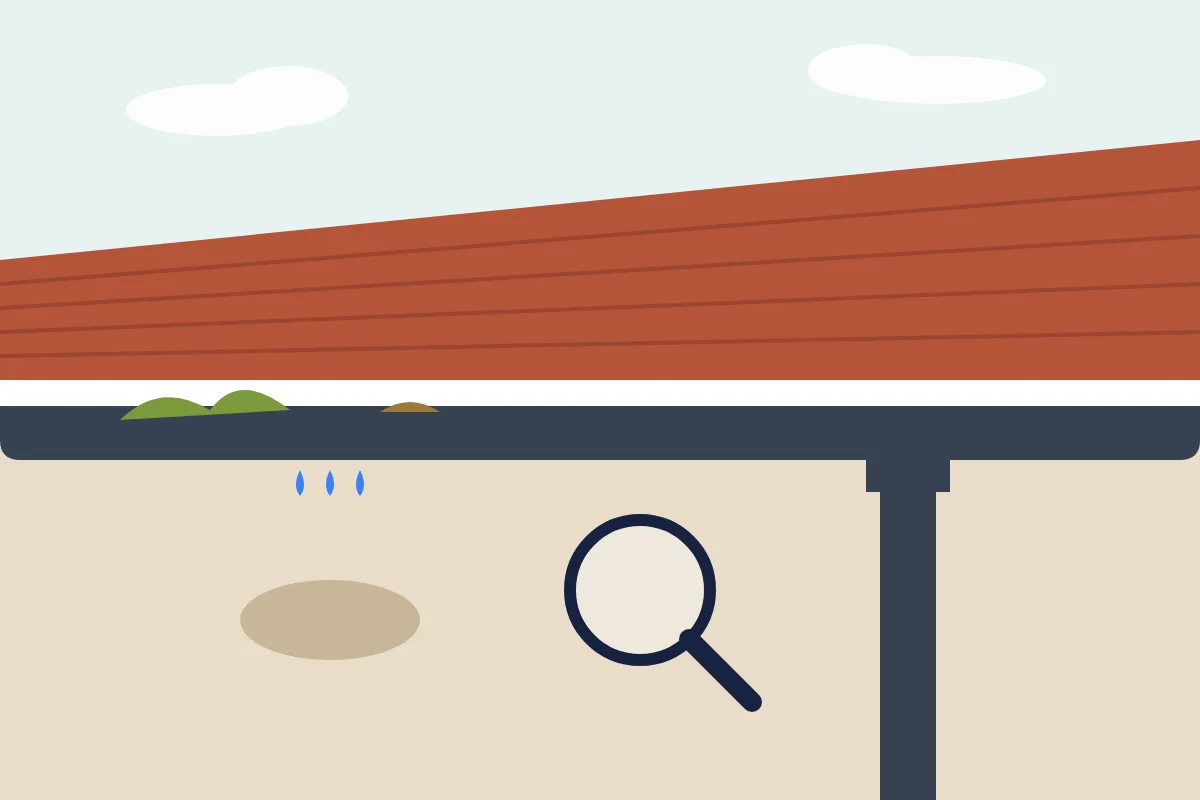
Local roofs in Clayton
With Preston Manor & Gardens about 4.7 miles south, Clayton sits in an area with a long building history. If your home is one of the older ones, expect a mix of original materials and later repairs on the roof, and any change of roofing material on a listed home needs checking with the council first. Handmade clay tiles and tile-hung upper walls are typical of older Sussex houses. A few old Sussex buildings still carry heavy Horsham stone slabs. On roofs like these, good slates or tiles can outlast the nails, battens, lead and mortar around them.
Take a building like The Windmills Junior School: its roofs, gutters and any chimneys need the same checks as a house’s, just on a bigger scale. Landlords with a home close to Hassocks station may find that a roof report helps you deal with small faults before they turn into a call from a tenant.
Clayton is about 3 miles south of Burgess Hill, in West Sussex. We provide gutter surveys for homes and businesses in Clayton. Clayton is one of the places in West Sussex we cover for gutter surveys.
All of BN6 is covered for gutter surveys. Whether your property is on Spring Lane, Underhill Lane and Brighton Road or a nearby road, we can help. We also cover the places around Clayton: Keymer (1 mile north-east), Hassocks (1 mile north), Ditchling (2 miles north-east), Westmeston (2 miles east) and Hurst Wickham (2 miles north-west). Within a short drive, we also cover Crawley (14 miles north), Horsham (13 miles north-west), Worthing (13 miles south-west), Haywards Heath (6 miles north), Burgess Hill (3 miles north) and Shoreham-by-Sea (7 miles south-west).
Near you in Clayton
Around Clayton, our work takes us to homes and buildings near Downlands Community School and The Greyhound Public House. The nearest railway station is Hassocks station, roughly 1 mile north. Other landmarks nearby include Clayton Castle (within half a mile south-west) and The Budding Foundation Museum of Gardening (0.9 miles north-west). The countryside around Clayton includes Wolstonbury Hill and Ladies Mile.
Tips from our surveys
These tips come from what we see on roofs every week, before and after a survey:
- Look out for overflows when it pours
- Have gutters cleared at least once a year
- Include valley, parapet and box gutters when clearing
- Look for new stains on ceilings below valleys after rain
If we think the problem lies underground, we’ll say so, so you can arrange a drain survey. Anything else we notice on the roof, as far as we can see it, is noted too.
Deal with drips, sags and loose downpipes early. They tend to get worse, and the water they spill can damage walls and timber.
How the survey works
We photograph the roof as we go, so you can see in the report what we found and where. Close-ups come from the safest viewpoint available, including by drone where it’s applicable and the weather allows. A typical visit takes roughly 1–2 hours at a house, depending on how many gutter runs and downpipes there are. Older rural homes like those around Clayton can have a main roof, lower lean-to roofs and outbuildings all joined together. Each part is looked at from wherever it can safely be seen, and anything we can’t see is noted.
- We start by hearing about any drips, overflows or damp patches.
- We look along the gutters, downpipes and fascias from the ground and from windows.
- Valley, parapet and box gutters are inspected as far as they can safely be seen.
- The loft space is checked for water marks if it is safe to get into.
- The findings are written up with photos and recommendations.
Getting ready for the survey
- Find any records of previous roof work
- Keep pets inside or away from the areas we are looking at
- Mention any parking restrictions on your street
How to book
To arrange a survey, ring 07833 053749 or drop us an email with the address and what you’d like to know about the roof. You’ll know the price before anything is booked.
Advice
Towns and villages near Clayton
Also in Clayton
What a gutter survey does not cover
It helps to know what a survey will not do before you book:
- Underground drains, which need a CCTV drain survey
- Rot or damp concealed behind fascias or inside walls
- The inside of a downpipe along its whole length
If in doubt, ring 07833 053749 or use the contact form and we’ll point you to the right survey before you book. The full list of what we check.
Roofs we survey in Clayton
- Parapet and box gutters
- Valley gutters
- Eaves gutters
- Downpipes
- Outlets and hoppers
- Fascias and soffits
When to book a survey in Clayton
Some gutters may be too small, or have too few downpipes, for the roof they serve. An extension or extra roof slope can add water to an existing gutter and the weakness shows in a heavy downpour.
Here are some of the things we see frequently:
- Rotten fascias or stained soffits
- Downpipes that are split or coming away
- Joints that drip after rain
- Gutters that have fallen out of line
For an older house near a landmark such as St John the Baptist's Church, the nails, lead and mortar on the roof may be wearing out even where the slates or tiles look fine.
Questions to ask before booking
- Which limits apply to the survey
- What follow-up you get after the report
- Their drone registration, if they fly one
- Whether the loft space is looked at, where there is one
Can I check my roof myself?
Look up at the roof after a storm, from the ground: pieces of tile or slate on the ground, a gap in the ridge or a lifted flashing are all worth noting. Leave anything above ground level to a survey.
Inside, the loft is a good place to look, with care. Take a torch and only step on boards or joists, and look for staining, damp timber or daylight coming through.
What a survey costs
All our prices include VAT. What changes the price is:
- How big the roof is
- How complicated the roof is, with its valleys, chimneys and parapets
- Whether you choose the Basic, Standard or Premium Survey
- The use of thermal imaging or a drone
Every price we give includes VAT. Prices start from £150, including VAT. We confirm the price for the job before booking.
What to let us know when you get in touch
You do not need to know any roofing terms. Just tell us:
- Access details, such as a loft hatch or a shared roof
- Your postcode, so we can check access and travel
- What’s prompted the survey
- Where any leaks, stains or damp patches show inside
Buyers should book once an offer has been accepted, so there is time to use the report before exchange. Otherwise, simply ring 07833 053749 or drop us an email whenever suits you.