
Oxfordshire · London and the South East
Gutter survey in Mill End, Oxfordshire
A survey of gutters, valleys, outlets and downpipes around Mill End, with a written report you can act on. Weekday and weekend visits available.
- Overflowing valley or parapet gutters
- Gutters packed with leaves or moss
- Joints that drip after rain
Gutter survey in Mill End
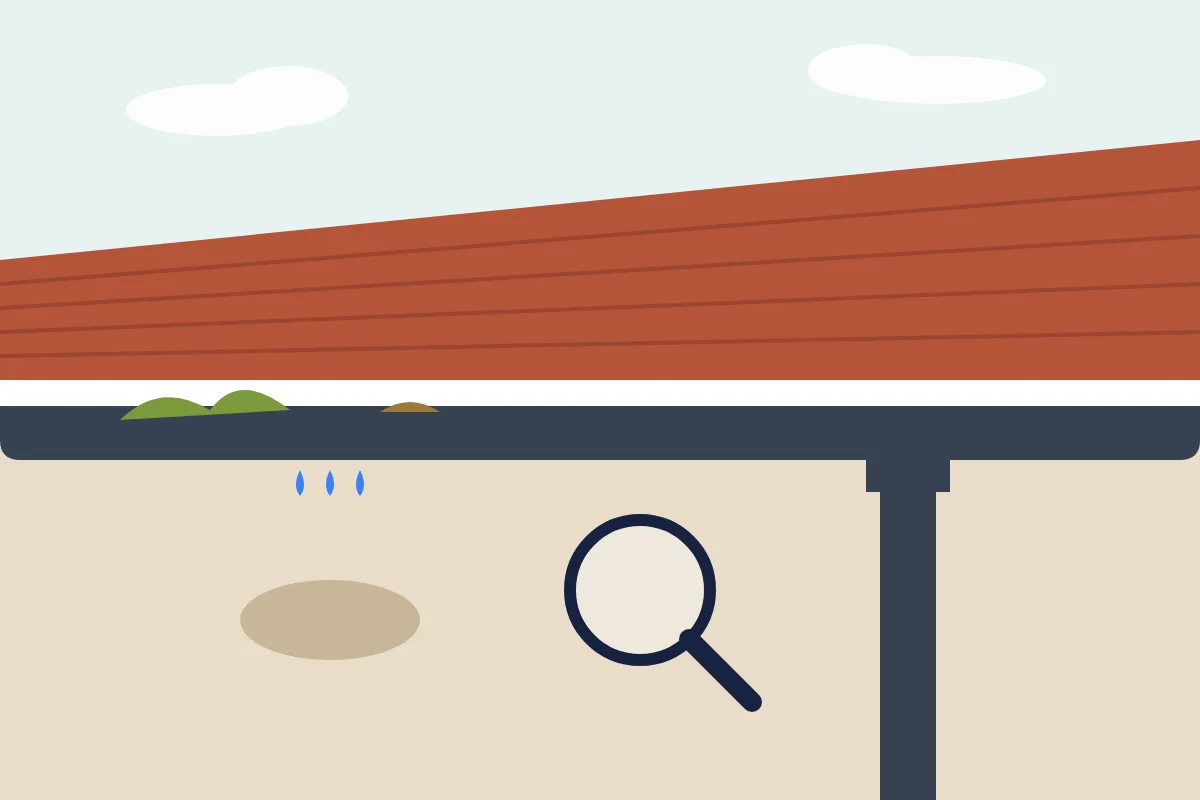
Most blocked gutters are full of leaves, moss or silt. Homes close to trees fill their gutters faster and moss from the roof slopes makes it worse. We note where gutters are clogged or holding water and where outlets or hoppers are choked and whether any overflows are doing their job. The photos show you exactly what we found. Blocked gutters are easy to put off but it rarely improves. If you’ve noticed gutters that have fallen out of line and leaks at the gutter joints, a survey will tell you what’s going on.
In a small place like Mill End, many roofs stand in the open, which is hard on ridges, chimneys, flashings and gutters. Older walls take a long time to dry once water gets in. A written report sets out what to deal with and in what order. On exposed older roofs, chimneys and lead flashings are often the first to give way.
The report works through the roof section by section, from the main slopes down to the gutters and outlets, with a note and a photo for each point. It records what’s sound as well as what is not.
- Place
- Mill End (RG9)
- Region
- Oxfordshire
- Cost
- From £150 inc. VAT
- Your report
- A written report with photos, by email
- Survey days
- Weekdays, Saturdays and Sundays
- Insured
- Professional indemnity and public liability
- Call
- 07833 053749
- Updated
- 27 October 2026
Mill End homes and their roofs
Older buildings in west Oxfordshire frequently have Cotswold stone slate roofs, and some Oxfordshire villages still have thatch. Across the South East, older homes tend to have slate or clay tiles, and many later ones concrete tiles. On roofs like these, good slates or tiles can outlast the nails, battens, lead and mortar around them. With Greenlands about 0.8 miles north-west, Mill End sits in an area with a long building history. Period homes nearby can have lead valleys, tall chimneys and a patchwork of past repairs, and the council can say whether a home is in a conservation area.
If you let a flat or house near Henley-On-Thames station, knowing the condition of the roof, chimneys and gutters helps you plan work rather than react to complaints. If your house is among the older ones in the streets near Church of St Mary, its roof may have old fixings, lead flashings and chimneys that need a closer look.
Mill End is about 4 miles west of Marlow, in Oxfordshire. In Mill End, as across Oxfordshire, every roof gets the same careful survey. Mill End is one of the towns and villages in Oxfordshire we cover. You can also see our page for Reading.
We cover every part of RG9 for gutter surveys. Other places close to Mill End include Aston (1 mile south), Remenham (1 mile south-west), Medmenham (1 mile east), Remenham Hill (1 mile south) and Bockmer End (2 miles east). Further out, we also cover Thame (14 miles north), Benson (11 miles north-west), Chinnor (10 miles north), Tilehurst (10 miles south-west), Wallingford (12 miles west) and Little Heath (11 miles south-west).
Around Mill End
In Mill End, that means homes and buildings near Fawley Court and Temple Island and Flower Pot Hotel, among other places. The closest station to Mill End is Henley-On-Thames station, roughly 2.2 miles south-west of the centre. Other landmarks nearby include Marlow Community Hospital (4.3 miles east) and Frazer Nash Archives (2.3 miles south-west). Not far away are Weycock Hill and Hurley Chalk Pit.
Why act early in Mill End
A dripping joint or sagging bracket won’t get better on its own. Every downpour adds to the damage on the walls, the fascias and sometimes the rooms inside. Getting it surveyed now shows what needs attention first. Matching old materials, such as handmade tiles or stone slates, can take time to source. Spotting a problem early leaves room to find them.
Simple, low roofs take less time to survey than tall or complicated ones, and the package matters as well. The price is always agreed first.
Why choose Independent Roof Survey in Mill End
- An independent look at the roof
- A written report with photos
- CAA-registered drone operator (Flyer ID and Operator ID)
- Surveys on any day of the week
See how roof surveys are priced or what we found on two real jobs.
Tips from our surveys
Here are a few things we’d tell any owner, before and after a survey:
- Check for spilling water in a downpour
- Book gutter clearing once a year, more often near trees
- Don’t climb a ladder to look in the gutters
- Include valley, parapet and box gutters when clearing
The report comes with photos and clear written recommendations. Share it with a contractor of your choice so they can see exactly what’s needed.
Watch your gutters from ground level or a window during heavy rain. Water spilling over the edge or out of a joint is a sign that something needs attention before the walls suffer.
What we do, step by step
Photos are taken throughout the visit, so the report shows exactly what we saw. We take close-ups from wherever is safe, including by drone where it’s applicable and the weather allows. A typical visit takes between one and two hours at a house, depending on how many gutter runs and downpipes there are. Somewhere as small as Mill End, access is often the only tricky part. Let us know about outbuildings, past repairs and any leaks you’ve noticed. Visits can be on weekdays, Saturdays or Sundays.
- We ask about overflows, damp or leaks you’ve noticed.
- The eaves gutters, downpipes and fascias are checked from ground level and vantage points.
- We check hidden gutters, such as valleys and parapets, where it is safe to see them.
- We look in the loft space, where there’s safe access, for signs of water getting in.
- We send a written report with photos and clear recommendations.
Before we arrive
- Find any records of previous roof work
- Unlock side gates and any roof access doors
- Make a note of anything you’d like us to look at
Getting a price
When you are ready to go ahead, ring 07833 053749 or email us. We’ll suggest a package, agree the price and find a date.
Related advice
DIY checks: what’s safe
After strong wind, take a look from the pavement or garden: broken slates or tiles in the garden, gaps along the ridge or loose lead are signs to note. Do not go up yourself.
Inside, the loft is a good place to look, with care. Use a torch and stay on the joists or boards, and look for staining, damp timber or daylight coming through.
Landlord and commercial surveys in Mill End
Freeholders and residents’ companies use a roof report to plan and budget, putting the urgent items at the top.
An agent can book and manage the survey for a landlord. Access is agreed with the tenant beforehand.
Signs you need a gutter survey in Mill End
Hidden gutters are often lined with lead or another sheet covering. When a lining splits or an outlet blocks, the water can come inside, because there’s no outer edge for it to spill over. Lead linings can also be stolen.
These are some of the problems a survey can pick up:
- Cracked or loose downpipes
- Water backing up from a hidden gutter
- Gutters packed with leaves or moss
- Rotten fascias or stained soffits
Trees in and around Fawley Court and Temple Island shed leaves that can end up in nearby gutters, and blocked gutters overflow and soak walls.
Questions to ask before booking
- What exactly goes into their report
- Will they check the loft as well as the outside?
- Which parts of the roof they’ll actually see
- What insurance they carry
Towns and villages near Mill End
What else we do in Mill End
Mill End questions
Is Mill End within the area you cover?
We do. Villages and rural addresses get the same survey as a town house.
Is my home in Mill End listed or in a conservation area?
Historic England’s list shows listed buildings, and the local council can tell you about conservation areas. Listed building consent is needed for changes that affect a listed building’s special interest, and conservation areas can limit changes of roofing material.
What happens after the survey?
You receive the written report by email, with photographs and recommendations. It’s yours to share with a seller, insurer, roofer or managing agent, whichever applies.
Will you check the loft?
If the survey needs it and the loft space can be reached safely, yes. Please clear anything stored under the hatch.
Does someone need to be in?
That depends on the survey. For inside areas and the loft space, someone has to give us access.
Will you go up on the roof?
Not always. Some roofs are too steep or fragile to walk on safely. We use safe viewpoints, the loft space and a drone where applicable.
Do you carry professional indemnity insurance?
Our cover is professional indemnity plus public liability.