
Greater London · London and the South East
Gutter survey in Single Street, Greater London
Find out what’s going on with the gutter before you spend money on it. We carry out gutter surveys in Single Street.
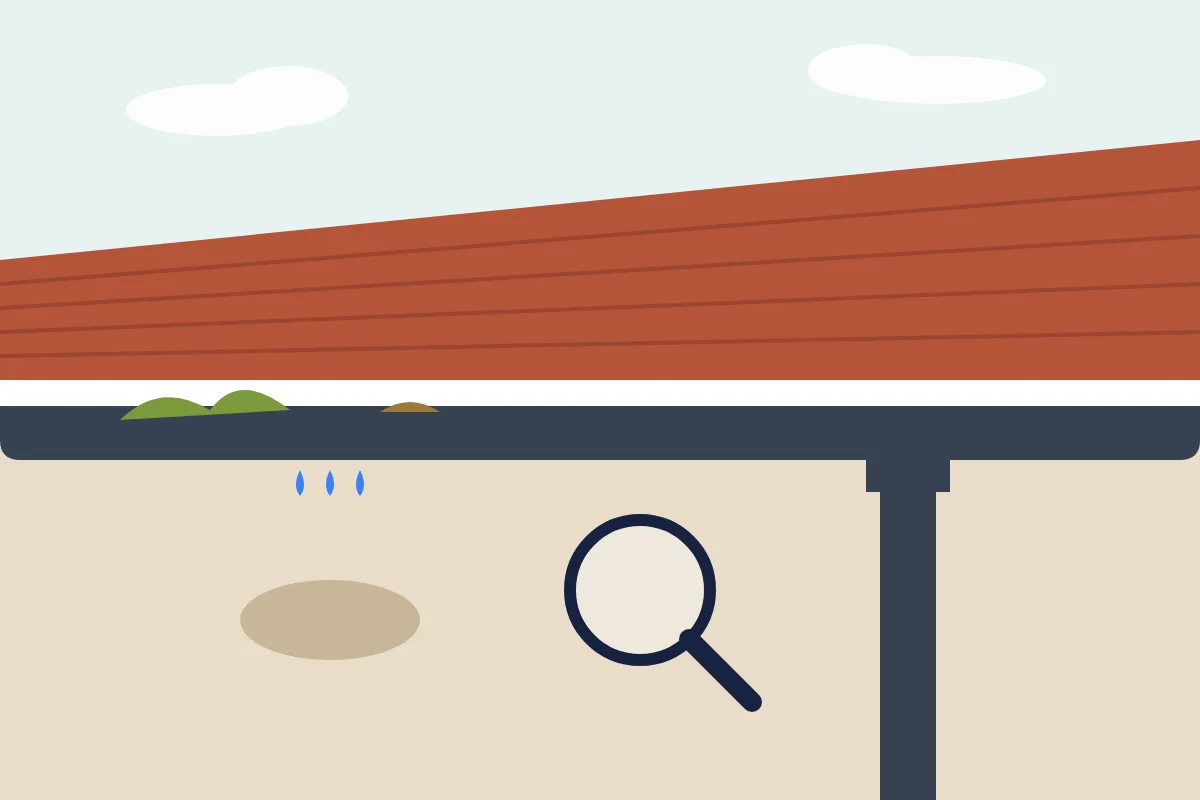
- Choked outlets or hopper heads
- Overflowing eaves gutters
- Valley or box gutters that overflow inside
How a gutter survey works in Single Street
Most gutters hang from the fascia boards at the eaves, so fascias and soffits are part of the survey. Long-term overflowing can soften and rot timber boards and stain the soffits below. Older buildings, from before 2000, can have asbestos cement soffits, gutters or downpipes. We don’t carry out asbestos testing, but we flag anything that could contain it. If you’ve noticed dripping or leaking gutter joints and brackets that have dropped or snapped, a survey will tell you what’s going on.
London has Victorian and Edwardian terraces in almost every borough, many with Welsh slate roofs, shared chimney stacks and parapet or valley gutters. Slates can last a century or more, but the nails holding them corrode, and slates slip. In Single Street, as across London, that is why a roof needs a careful look rather than a glance from the street. Shared chimney stacks and the lead around them are just as important to check.
If any part of the gutter couldn’t be seen safely, we say so in the report. You will know exactly what was inspected and what wasn’t, and what we’d suggest next.
- Place
- Single Street (TN16)
- Wider area
- Greater London
- Price
- From £150 inc. VAT
- Report
- A written report with photos, by email
- Survey days
- Weekdays and weekends
- Insurance
- Professional indemnity and public liability
- Telephone
- 07833 053749
- Last updated
- 27 October 2026
Gutter surveys in Single Street: local notes
Down House, about 1 mile north-west, is one of the historic houses in the wider area around Single Street. Older homes in the wider area frequently have features worth a closer look, like lead valleys, tall stacks and roofs that have been patched over the years, and a listed home or one in a conservation area may need consent for changes of material. Further from the centre, London’s housing takes in interwar semis with hipped roofs in clay or concrete tiles as well as slate-roofed terraces. On a semi of that age, the small roofs over the bays, the hip tiles and any later dormer each need their own look. Whichever you have, the details that tend to fail before the covering itself get the closest look.
If yours is one of the older homes in the streets near Church of St Peter and St Paul, the nails, lead and mortar on the roof may be wearing out even where the slates or tiles look fine. For site and facilities teams at buildings like Cudham Church of England Primary School, its roofs, gutters and any chimneys need the same checks as a house’s, just on a bigger scale.
Single Street is about 5 miles south of Orpington, in Greater London. We carry out gutter surveys for homes and businesses in Single Street and nearby. Our area takes in places right across Greater London, large and small. There is also a page for London.
We survey roofs across TN16 for gutter surveys. We cover properties on Berry's Hill and Single Street. If you’re just outside Single Street, we cover Berry's Green (1 mile south), Luxted (1 mile north-west), Cudham (1 mile east), Aperfield (1 mile south-west) and Horns Green (1 mile south-east). We also work in nearby towns such as London (14 miles north-west), Whitechapel (15 miles north-west), Stockwell (13 miles north-west), Orpington (5 miles north), Wimbledon (14 miles north-west) and Plaistow (14 miles north).
Landmarks near Single Street
Typical jobs here are in homes near Charles Darwin School and The Old Jail Public House and the streets around them. The closest station to Single Street is Chelsfield station, about 3.3 miles north-east of the centre. Other landmarks nearby include Princess Royal University Hospital (3.3 miles north) and Crofton Roman Villa (3.9 miles north). The countryside around Single Street includes Betsom's Hill and Downe Bank.
What happens on the day
Every visit follows the same pattern: we listen to what’s been worrying you, inspect the roof from every safe vantage point, photograph what we find and record our findings for the written report. It usually takes roughly 1–2 hours at a house, depending on how many gutter runs and downpipes there are. In Single Street, as in much of London, lots of properties are flats or terraces without side access, so the back of the roof is frequently seen from upstairs windows, from inside or, where a flight is allowed, from the air. If the building has a managing agent or access rules, tell us as you book.
- First, you tell us what you’ve seen, like overflows or damp.
- Gutters, downpipes, fascias and soffits are inspected from safe vantage points.
- Valley, parapet and box gutters are inspected as far as they can be seen safely.
- The loft space is checked for water marks if it is safe to get into.
- You get a written report with photos and recommendations.
Getting ready for the survey
- Point out any leaks or damp patches
- Make sure the loft hatch can be reached
- Jot down any questions you want answered
Booking a survey
Getting a price is simple: just call 07833 053749 or use the contact form, let us know about the property and we’ll explain which survey suits. We confirm the price before anything is booked.
Related advice
Signs you need a gutter survey in Single Street
Many gutter joints depend on rubber seals or sealant that age. Plastic sections expand and contract with the weather, and in time their joints can drip. Cast iron joints can corrode and part once the paint has worn away.
These are some of the problems a survey can pick up:
- Rotten fascias or stained soffits
- Overflowing valley or parapet gutters
- Cracked or loose downpipes
- Gutters full of debris and silt
If you own a rental within reach of Chelsfield station, a dated record of the roof is useful when planning maintenance across a let.
Before booking any roof surveyor
- Is VAT included in the price?
- Whether the loft is part of the inspection
- Whether you can ask questions once you have the report
- How soon the report will arrive
What a survey costs
Prices always include VAT. The things that change the price are:
- Height and safe access
- The size of the roof
- Chimneys, valleys, parapets and other details
- The type of building, from a house to a block or an office
Prices quoted always include VAT, and the report is not charged as an extra. Our price is from £150, including VAT. Size, height and access decide where your roof falls.
Helping us price your survey
When you call or email, these details help:
- The kind of building and roof involved
- Any marks or damp showing indoors
- The reason for the survey, such as buying, a leak or storm damage
- Photos of the roof, taken safely from the ground or a window
Most bookings start with a short call: call 07833 053749 or use the contact form, and we’ll ask about the building and what you need. The price is agreed before a date is set.
Landlords, agents and block managers in Single Street
Landlords, agents and building managers in Single Street and across Greater London can book any of our surveys. To discuss a property or a block, call 07833 053749 or email us.
If you own several properties, surveys can be booked for more than one address. To arrange surveys for several addresses, ring 07833 053749 or email us with the addresses.
Also near Single Street
Other services in Single Street
Common questions in Single Street
Does a conservation area affect roof work in Single Street?
For listing, use Historic England’s list; for conservation areas, ask the council. It matters most if you are planning to re-roof in a different material.
Is parking a problem for a survey in Single Street?
It depends on the street. If Single Street has controlled parking where you are, a visitor permit is the easiest answer, and a driveway is even better.
How long have you been surveying roofs?
More than 5,000 surveys over 20+ years.
Is it a structural engineer’s report?
No. We note visible signs like sagging or deflection, but we don’t carry out calculations or give an engineer’s opinion. Where an engineer is needed, we say so in the report.
Does the report include photos?
Yes. Photographs are taken throughout the survey, and the report uses them to show each finding alongside our recommendations.
Will you check the loft?
Yes, where the survey calls for it and there is safe access. We look for staining, damp, daylight and signs of movement, as far as the space allows.
Will the survey check for asbestos?
No, that is a job for a specialist asbestos surveyor. We point out materials on older buildings that could contain asbestos so you can arrange that check.
Leave it or get it looked at?
A written report gives you a dated record of the gutters’ condition, useful when you’re planning maintenance or getting work priced. Without one, it is guesswork from the ground. Any roof job in Single Street means planning around parking, neighbours and access. That’s a good reason to find problems early, while there is time to plan.
What a survey costs comes down to the roof itself: how big it is, how high it is, the number of separate roofs and how it can be reached and seen safely. Gutter survey starts from £150, including VAT.
Why book with us
- Weekday and weekend surveys
- Thermal imaging and drones used where they help
- Clear package prices, with VAT included
- Customer satisfaction of 98%
Before and after the survey
Some practical points come up on survey after survey. They’re worth knowing whatever the roof:
- Check the loft with care after heavy rain
- Ask for valleys and parapet gutters to be cleared too
- Keep climbers away from the eaves
- Check that downpipes are firmly fixed to the wall
Where the evidence points to drains below ground, the report says so, so you can arrange a drain survey. We also note anything else we spot on the roof while we are there.
Have your gutters cleared at least once a year, and more frequently if trees overhang the roof. Late autumn, after the leaves have fallen, is a sensible time. Clear gutters can carry water away as they should.