
Kent · London and the South East
Roof leak investigation in Cranbrook Common, Kent
Tracing where water is getting into your roof for Cranbrook Common, from an experienced roof surveyor. You get a clear written report with photos.
- Damp ceilings under a flat roof
- Water dripping from rafters or underlay
- Brown rings on upstairs ceilings
Roof leak investigation in Cranbrook Common
Not every drip is a leak. In a badly ventilated roof space, condensation can form under the roof and drip, leaving marks that look just like rainwater. Knowing which it is means the right fix can be done, since the cure for one will not solve the other. We look at the pattern of damp, the weather and the ventilation before reaching a view. If you are worried about water coming in around a roof light or dormer and damp patches next to the stack, a survey will tell you what’s going on.
In a village or hamlet like Cranbrook Common, older cottages and farmhouses often have roofs that have been patched over many years. That makes it hard to tell new damage from old wear, which matters if you’re thinking of an insurance claim. The report says what was seen and what it points to. Damp in old walls and timbers is slow to dry, so the sooner the cause is found the better.
The report is written in plain words, so it makes sense without any roofing background. Each point is backed by a photo where possible.
- Location
- Cranbrook Common (TN17)
- Region
- Kent
- Cost
- From £150 inc. VAT
- Reports
- A written report with photos, by email
- Survey days
- Weekdays and weekends
- Insurance
- Professional indemnity and public liability
- Phone
- 07833 053749
- Last updated
- 27 October 2026
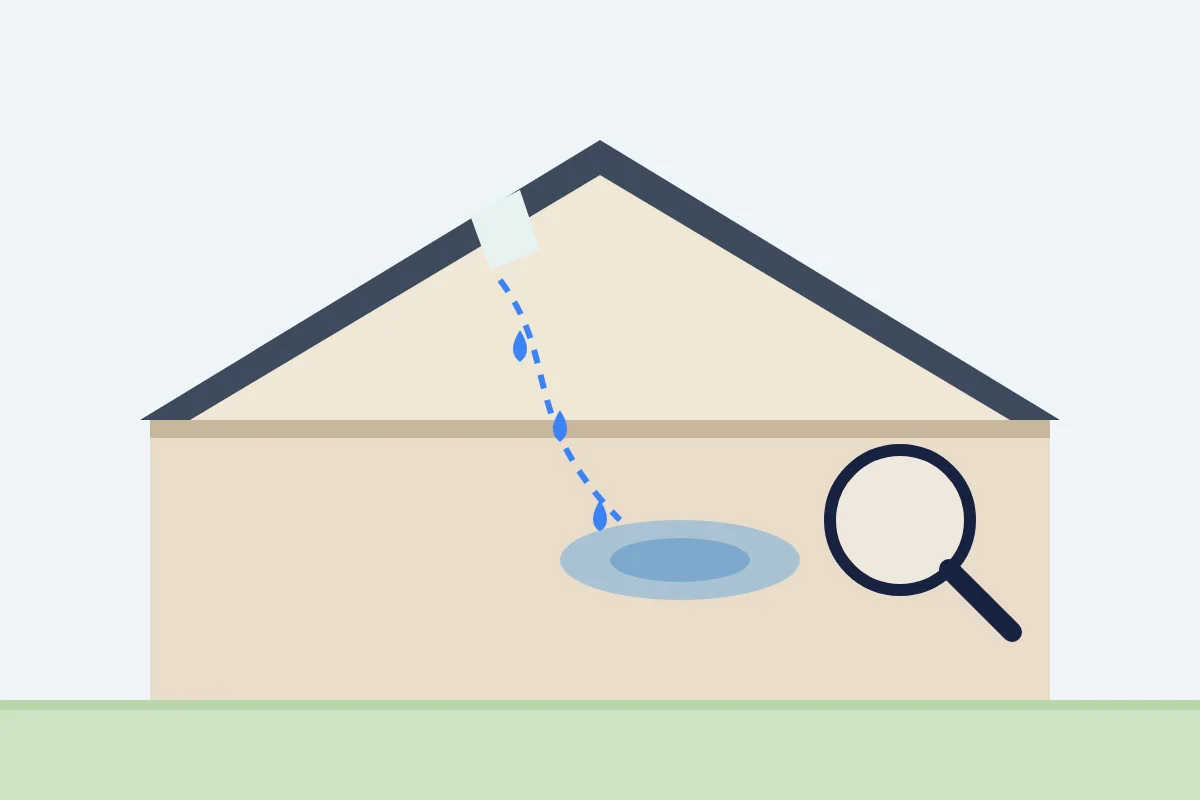
What a roof leak investigation looks like in Cranbrook Common
If your home is older, it is worth knowing whether it is listed or in a conservation area before planning roof work. Listed building consent covers changes to a listed building’s special interest, and an Article 4 direction can bring extra controls in a conservation area. Handmade clay tiles, including Kent peg tiles hung on pegs through two holes, are typical of older Kent buildings. Kent’s older buildings take in oast houses and timber-framed Wealden hall houses as well. Each of these roof types has its own typical places for water to get in.
For landlords with property near Staplehurst station, a tenant living with a leak needs the cause found, not just the stain painted over. Take a building like Cranbrook School: a leak through a large roof is often found some distance from where the water shows inside. The streets around a church such as Church of the Holy Trinity are often among the oldest in a place, and if you own one of the older houses nearby, old mortar, worn lead and slipped slates are the usual suspects when water gets in.
Cranbrook Common is about 10 miles south of Maidstone, in Kent. Cranbrook Common is part of the area we cover across London and South East England. Cranbrook Common is one of the towns and villages in Kent where we work for roof leak investigations. Our Maidstone page covers surveys nearby.
Surveys in TN17 work the same way as everywhere else we cover. If you are just outside Cranbrook Common, we cover Sissinghurst (1 mile south), Wilsley Pound (1 mile south-west), Knox Bridge (1 mile north), Wilsley Green (2 miles south-west) and Frittenden (2 miles north-east). Within a short drive, we also cover Maidstone (10 miles north), Ashford (13 miles east), Royal Tunbridge Wells (13 miles west), Tonbridge (13 miles north-west), Kings Hill (12 miles north-west) and Foley Park (11 miles north).
What’s near Cranbrook Common
Around Cranbrook Common, our work takes us to homes and buildings near The Bull Public House, among other places. The nearest railway station is Staplehurst station, about 3.5 miles north. Other landmarks nearby include Sissinghurst Castle (1 mile east) and Sissinghurst Castle (1 mile east).
Cranbrook Common: your questions answered
Do you cover Cranbrook Common?
We do. Every survey there gets the same written report with photos.
How do I find out if my home in Cranbrook Common is listed?
Historic England’s list shows listed buildings, and the local council can tell you about conservation areas. Listed building consent is needed for changes that affect a listed building’s special interest, and conservation areas can limit changes of roofing material.
Can you always find the source?
We cannot promise it. Water can travel a long way, and some leaks only show in particular storms. Where the source isn’t certain, we list the likely routes in order.
Can a leak be traced on a dry day?
Normally, yes. Moisture detection shows where materials are damp even on a dry day. If a leak only appears in driving rain from one direction, we’ll tell you what we found and what’s most likely.
Can you survey at the weekend?
Surveys run on weekdays, Saturdays and Sundays. To find a day that suits you, phone 07833 053749 or send us an email.
How do you tell a leak from condensation?
Many apparent leaks turn out to be condensation. Leaks tend to follow wet weather and show in one place, while condensation is often spread out and worse in cold weather. We tell you which it is most likely to be.
What does a roof survey cost?
Prices start from £150, including VAT. What you pay for your roof depends on its size, height, access and the package, and it’s agreed before booking.
How the survey changes by roof type
Parapet and box gutters
A butterfly roof drains to a central valley gutter. If that gutter or its outlet fails, water can come through the top-floor ceiling.
Flat roof upstands and outlets
On a flat roof, a leak can show some distance from the split. Where conditions allow, moisture readings and thermal imaging help narrow it down.
Also near Cranbrook Common
Other services in Cranbrook Common
What happens on the day
There isn’t much for you to do on the day. Show us any stains, drips or problem areas you know about, and we will take it from there. A typical survey takes between one and two hours at most homes, though large, tall or awkward roofs take more time. In a small place like Cranbrook Common, access is typically the main thing to plan. Mention any outbuildings, barns or garages you want included, and anything about the roof you already know. Weekday and weekend visits are available.
- We start with your notes and photos of the leak.
- We examine the damp area and the rooms near it.
- In the loft, we follow any signs of water back towards the roof.
- We inspect the likely entry points outside, from ground level, windows and the roof where safe.
- You receive a report with the likely source, photos and recommendations.
Preparing for the visit
- Point out any leaks or damp patches
- For a flat or shared roof, check access with the building owner or managing agent
- Make a note of anything you’d like us to look at
Booking a survey
Roof leak investigation starts from £150, including VAT. What you pay depends on the roof’s size, access and the package, so ring 07833 053749 or use the contact form with the details.
Related advice
What affects the cost of roof leak investigations
What a survey costs depends on the time and equipment it needs. That comes down to:
- Extra roofs, like extensions, dormers or garages
- Building height and the viewpoints available
- Which survey package you book
- The use of thermal imaging or a drone
All our prices include VAT. Roof leak investigation starts from £150, including VAT. We confirm the price for the job before booking.
Getting in touch
Before you get in touch, it is useful to have:
- The kind of building and roof involved
- Your postcode, so we can check access and travel
- Why you want a survey: buying, a leak, a storm or new work
- Photos of the roof, taken safely from ground level or a window
If you’re buying, it’s useful to book soon after your offer is accepted, so there’s time to use the report before exchange. Otherwise, simply ring 07833 053749 or email us whenever suits you.
Tips that help
Over many surveys, some simple habits stand out as worth the effort:
- Move stored items away from the hatch
- Check whether pipes or tanks run near the stain
- Put a bucket under the drip and move valuables
- Do not touch fittings that water is reaching
Where we find more than one possible route, we say which is most likely and why. Recommendations are prioritised by urgency where relevant, so you know what to deal with first.
Have leaves and moss cleared from gutters, valleys and outlets, particularly in autumn. Blocked outlets on parapet and flat roofs cause many leaks. Leave the clearing to someone with the right equipment.
What this survey cannot tell you
Some things can’t be seen without opening up the roof, so a survey has limits:
- An intermittent leak that shows no trace on the day
- Faults hidden behind ceilings or boarding
- The repair itself (the investigation finds and reports the cause)
If you are not sure which survey you need, call 07833 053749 or drop us an email and we’ll give you a straight answer before you book. What a survey covers and doesn’t.
What we look at
- Slate and tile slopes
- Rooflights and dormers
- Valleys and parapet gutters
- Lead flashings
- The roof space
- Chimney stacks
- Flat roof details
Can I check my roof myself?
After strong wind, take a look from the pavement or garden: broken slates or tiles in the garden, gaps along the ridge or loose lead are signs to note. Leave anything above ground level to a survey.
A lot can be seen from ground level. With binoculars, look for slipped or missing slates and tiles, gaps along the ridge and leaning chimneys. Never climb onto the roof to look.