
Kent · London and the South East
Drone roof survey in The Platt, Kent
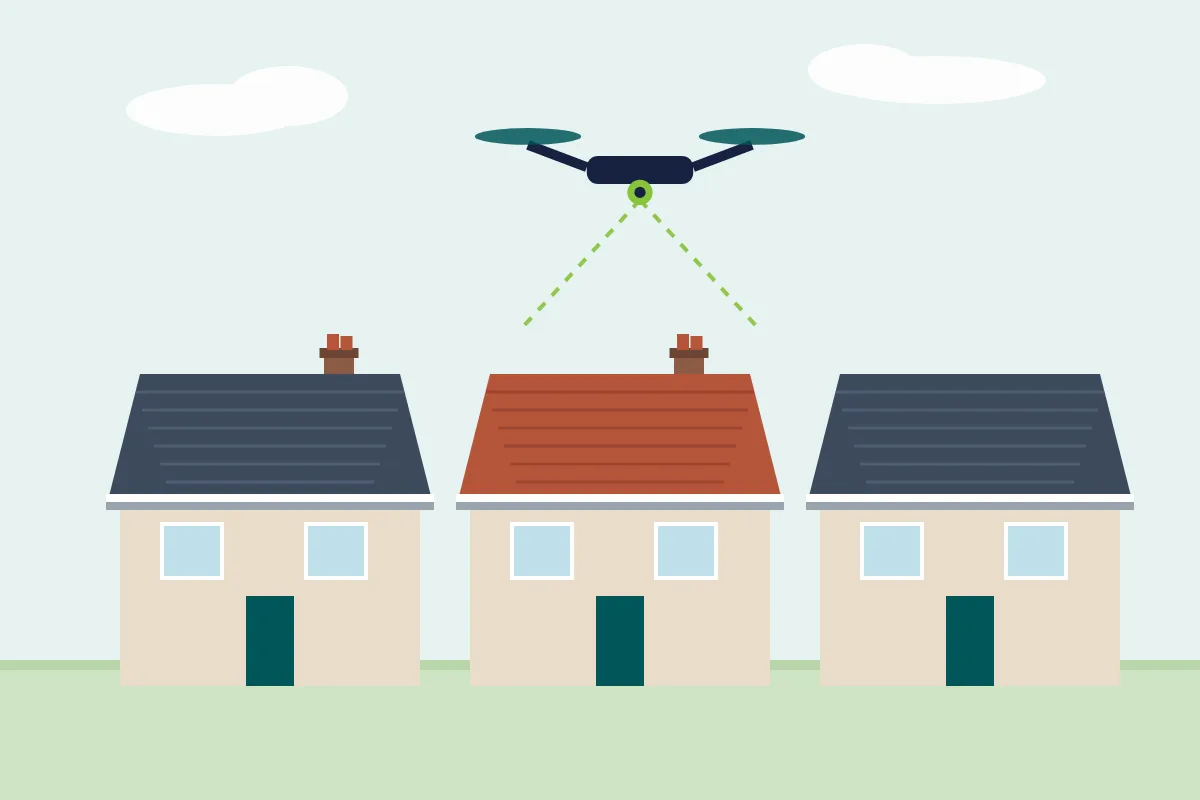
We take a careful look at the roof at your property in The Platt, and put it all in a report with photos.
- Tired mortar and pots at the top of a stack
- Loose ridge and hip tiles
- Cracked slates and tiles out of sight from below
How a drone roof survey works in The Platt
Drones need reasonable weather. High wind or heavy rain rules out a flight, because the drone has to stay safely under control. If the day turns out unsuitable, we’ll talk about another date or inspect what we can by other means. We check the forecast ahead of the visit and again on site. Calm, dry conditions give the sharpest close-up photos. A short delay is better than a rushed flight. If you’ve noticed hidden gutters full of leaves and storm damage on steep or tall roofs, a survey will tell you what’s going on, on large and complex roofs, tall and steep roofs and chimney stacks alike.
Somewhere as small as The Platt, older roofs are frequently steep and partly hidden by trees or outbuildings. A drone and a thermal camera each give a view you cannot get from the ground. Both the forecast and the airspace are checked first. Older roofs with steep slopes and tall chimneys are where the extra view helps most.
It is not only a list of defects. It explains what we found, why it matters and what we recommend, so you can decide what to do next.
- Location
- The Platt (TN3)
- Region
- Kent
- Cost
- From £400 inc. VAT
- Reports
- Emailed report with photos and recommendations
- Survey days
- Weekdays and weekends
- Insured
- Professional indemnity and public liability
- Telephone
- 07833 053749
- Page updated
- 27 October 2026
What you can safely check yourself
Watch the gutters in a downpour, from a window or the ground. Water spilling over the edge can be a sign of a blockage or a gutter that has dropped.
If you have a loft with safe access, take a look inside. Take a torch and only step on boards or joists, and look for staining, damp timber or daylight coming through.
FAQs for The Platt
Do you cover smaller places like The Platt?
We do. A small place gets exactly the same survey as a big one, with the route planned beforehand.
How do I find out if my home in The Platt is listed?
The council and Historic England’s list are the places to check. It is worth checking before planning roof work, as both can affect what’s allowed.
What’s the best way to book?
Just phone 07833 053749 or use the contact form with the address. We’ll ask a few questions, confirm the price and agree a date, weekday or weekend.
Is it the same as a RICS Level 2 or Level 3 survey?
No. Our survey is a roof survey, not a RICS Level 2 or Level 3 survey of the whole building. It focuses on the roof and can sit alongside a RICS survey.
What does the report include?
You get our findings in writing, part by part, with photos. Points are put by urgency where it matters.
Can you fly a drone near an airport?
Near airports like Heathrow, Gatwick, London City and Stansted, flight restriction zones apply. We check the airspace for your address and seek permission where it’s needed. If it isn’t given, we inspect by other means.
Do you test for asbestos?
No. Our report may flag materials that could contain asbestos, but only a specialist asbestos surveyor can confirm it. It may be present in buildings built or refurbished before 2000.
When to book a survey in The Platt
The top of a stack is the most exposed part of many roofs. From ground level, you rarely see cracked flaunching or loose pots. Close-up drone photos show their condition.
These are some of the problems a survey can pick up:
- Plant growth and moss on the roof
- Lead work pulling away at abutments
- Debris building up in hidden gutters
- Standing water on a flat roof
Anyone responsible for a site like Frant Church of England Primary School will know that big roofs are where photos from the air and thermal images show the most at once.
Choosing a roof surveyor
- Their report turnaround times
- Their drone registration, if they fly one
- Whether the price includes VAT
- Whether the loft is part of the inspection
What we cannot see
To be straight with you, a roof survey has limits:
- A structural engineer’s report
- Neighbouring roofs the owner hasn’t asked us to survey
- Flights in strong wind or heavy rain
If you are not sure which survey you need, ring 07833 053749 or drop us an email and we’ll give you a straight answer before booking. What our survey covers.
Roofs we survey in The Platt
- Flat roofs on upper floors
- Tall and steep roofs
- Fragile roofs
- Valleys and parapet gutters
- Large and complex roofs
- Chimney stacks
Nearby places to The Platt
What else we do in The Platt
Practical tips
A survey works best with a little help from you, before and after. Tips:
- Mention anything you’ve noticed on the roof
- A word with neighbours beforehand helps
- Give us the full address so we can check the airspace
- Expect a little longer if permission is needed
You get an in-person consultation with the Premium Survey to talk through the photographs and findings. It is a chance to ask about anything in the report.
Keep gutters, valleys and outlets clear, especially in autumn. On high roofs, leave clearing to a professional. Blocked hidden gutters cause many leaks.
How the survey works
It’s useful to start with what’s prompted the survey: a purchase, a leak, a storm, new work or simply peace of mind. It helps us focus on what matters most to you. The visit normally takes an hour or two at a house, including the airspace and weather checks before take-off. Older rural homes like those around The Platt can have a main roof, lower lean-to roofs and outbuildings all joined together. Each part is looked at from wherever it can safely be seen.
- We start by making sure a drone flight makes sense for the roof.
- We agree a date, including weekends, subject to the weather.
- The roof is photographed from the air, with the camera kept on your property.
- We also look inside the roof space where it is safe.
- The report sets out what we found, with photos and recommendations.
Preparing for the visit
- If the roof is shared, arrange access with whoever manages the building
- Keep pets in another room
- Unlock side gates and any roof access doors
Getting a price
Our phone lines are open seven days a week. To book or ask a question, ring 07833 053749 or send us an email.
Related advice
What a drone roof survey looks like in The Platt
About 3 miles south-east lies Wadhurst Castle, a reminder of how long the area around The Platt has been built on. Older homes in the wider area often have features worth a closer look, such as lead valleys, tall stacks and roofs that have been patched over the years, and any change of roofing material on a listed home needs checking with the council first. Before any flight, we check the Drone Safety Map for airspace restrictions, including zones around airports and prisons.
If your house is among the older ones in the streets near The Parish Church of St Alban, tall stacks and steep slopes are easier to judge with close-up aerial photos than from the pavement. For businesses in and around places such as The Corn Exchange, a commercial roof can be photographed from above without anyone walking on it.
The Platt is about 4 miles south of Royal Tunbridge Wells, in Kent. From houses to flats and shops in The Platt, we can survey the roof. Our Kent coverage includes The Platt and the places around it. Our Maidstone page covers surveys nearby.
Here we cover the TN3 postcode area for drone roof surveys. Other places close to The Platt include Frant (1 mile north), Mark Cross (2 miles south), Eridge Green (2 miles north-west), Town Row (3 miles south-west) and Tidebrook (3 miles south). Within a short drive, we also cover Sevenoaks (14 miles north), Royal Tunbridge Wells (4 miles north), Tonbridge (8 miles north), Kings Hill (14 miles north-east), Paddock Wood (8 miles north-east) and Southborough (5 miles north).
Around The Platt
Typical jobs here are in homes near The George Public House and Eridge Park. The Platt’s nearest station is Frant station, roughly 1.7 miles north-east. Well-known places in the area include Tunbridge Wells Homeopathic Hospital (3.4 miles north) and The Corn Exchange (2.9 miles north). For a walk, there’s Broadwater Warren RSPB Reserve.
How the survey changes by roof type
Valleys and parapet gutters
Some older terraces have a butterfly roof with a valley in the middle. You cannot see it from the street at all, but it is plain to see from the air.
Flat roofs on tall buildings
Felt frequently lasts around 15 to 20 years, EPDM rubber around 30 to 50 and GRP up to about 30. We record the signs of age we can see.