
Kent · London and the South East
Studdal Gutter Survey
Gutter surveys across Studdal, backed by more than 20 years’ experience. Every survey ends with a written report and photos.
- Brackets that have dropped or snapped
- Downpipes that are split or coming away
- Water backing up from a hidden gutter
Do you need a gutter survey in Studdal?
Valley, parapet and box gutters are often lined with lead or a sheet material. When a lining splits or an outlet blocks, the water can come inside, because there’s no outer edge for it to spill over. Lead linings can also be stolen.
It is worth booking a survey if you’ve seen:
- Hoppers and outlets full of debris
- Dripping or leaking gutter joints
- Rotten fascias or stained soffits
- Gutters overflowing in heavy rain
For an older house near a landmark such as East Studdal Church Hall, the nails, lead and mortar on the roof may be wearing out even where the slates or tiles look fine.
Before booking anyone
- If they fly a drone, whether they hold a CAA Flyer ID and Operator ID
- Are they insured for the work?
- When you will get the report
- Which viewpoints they use to see the roof
How a gutter survey works in Studdal
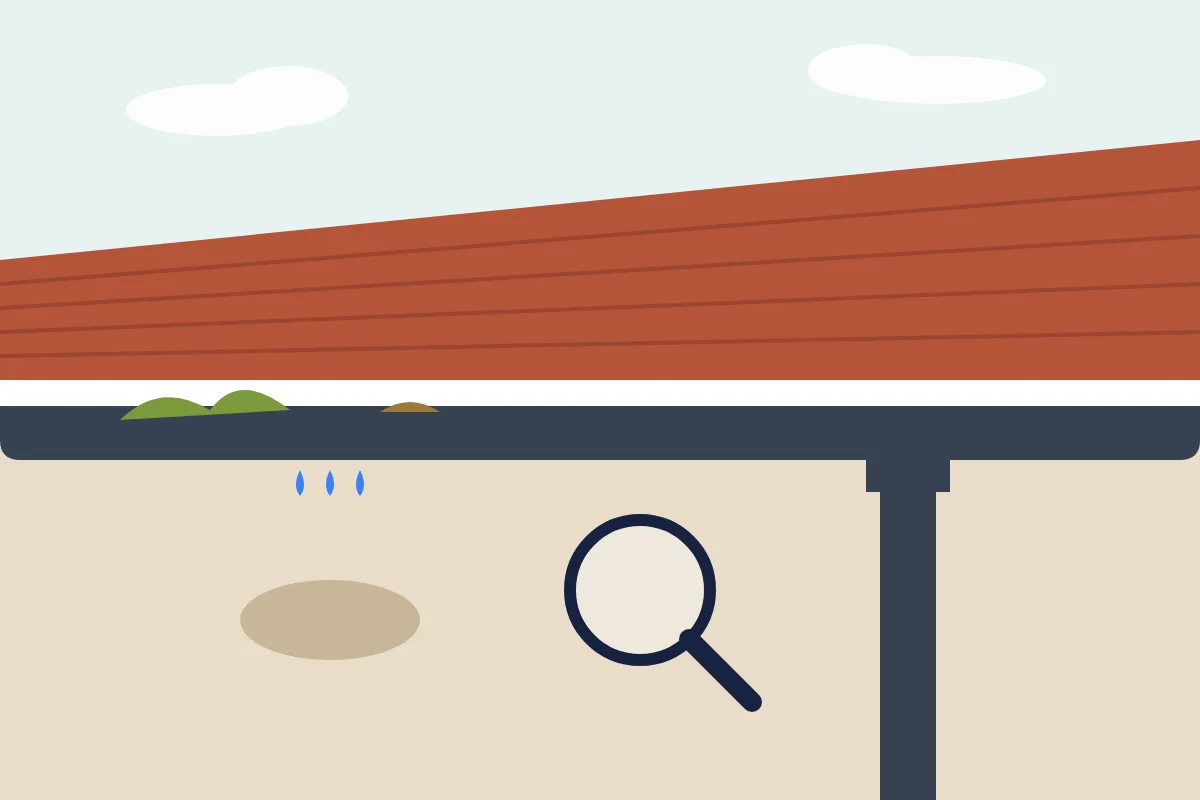
Most blocked gutters are full of leaves, moss or silt. Homes close to trees fill their gutters faster and moss from the roof slopes makes it worse. Our survey shows which gutters are blocked or standing full and where outlets or hoppers are choked and whether any overflows are doing their job. The photographs show you exactly what we found. Blocked gutters are easy to put off but it rarely improves. We are frequently asked to look into downpipes that are split or coming away and rotten fascias or stained soffits, on valley gutters, fascias and soffits and outlets and hoppers.
Some older homes in villages like Studdal are listed or in a conservation area. That can affect what materials can be used when work is done, so check with the council before planning anything. A roof report helps you plan work with that in mind. Older materials like clay tiles, slate and stone are frequently matched when work is done.
The report does not just list problems. For each finding, it explains what it is, why it matters and what we’d recommend.
- Place
- Studdal (CT15)
- Region
- Kent
- Cost
- From £150 inc. VAT
- Report
- A written report with photos, by email
- Survey days
- Weekdays and weekends
- Cover
- Professional indemnity and public liability
- Call
- 07833 053749
- Last updated
- 27 October 2026
Landlords, agents and block managers in Studdal
Freeholders and residents’ companies use a roof report to plan and budget, putting the urgent items at the top.
Letting agents can arrange access with tenants. We survey on weekdays and at weekends, which can make access easier.
Places near Studdal
Also in Studdal
FAQs for Studdal
Does a conservation area affect roof work in Studdal?
Start with Historic England’s list for listing and your council for conservation areas. Either can affect what roof work is allowed, so it’s worth checking before planning any.
Is Studdal within the area you cover?
We do. Villages and rural addresses get the same survey as a town house, with the route planned beforehand.
What happens next?
You receive the written report by email, with photographs and recommendations. It is yours to share with a seller, insurer, roofer or managing agent, whichever applies.
How long will you be on site?
Most visits to a house take about 1–2 hours, and longer for larger or complex roofs.
How much is a gutter survey?
Our price is from £150, including VAT. The price depends on the size of the building and how easy the gutters are to see. To get a price, phone 07833 053749 or send us an email.
Do you climb onto every roof?
Only when it’s safe. Most of what we need can be seen from safe viewpoints, the loft and, where applicable, a drone, and the report notes anything we couldn’t see.
Is a CCTV drain survey included?
No, CCTV drain work is not part of this survey. The survey covers gutters, outlets, hoppers, downpipes and overflows and note any sign that the drains need checking.
The survey, step by step
On the day, we start by asking what you’ve noticed and what you want to find out. After that, we check everything we can see safely, from the ground, from windows, in the loft space and by drone where applicable. Most surveys take roughly 1–2 hours at a house, depending on how many gutter runs and downpipes there are. In a hamlet or village like Studdal, a postcode doesn’t always lead to the right gate, so a few directions, or a note of a nearby landmark, help us arrive on time. The visit itself is the same as anywhere else.
- We agree which parts of the building you are most worried about.
- Each gutter run is checked for blockages, sags and leaking joints.
- We check the outlets, hoppers, downpipes and any overflows.
- We check fascias, soffits and walls for water damage.
- You get photos and written recommendations, prioritised where relevant.
Getting ready for the survey
- If you’re buying, check with the agent that we can get in
- For a flat or shared roof, check access with whoever owns or manages the building
- Tell us about any leaks, stains or damp patches you know of
Book a survey
If you are buying, it is useful to book soon after your offer is accepted, so there is time to use the report before exchange. Otherwise, simply call 07833 053749 or email us whenever suits you.
Related advice
Why act early in Studdal
Water spilling from a gutter runs down and soaks the wall below. Left for months, that can lead to damp inside, worn pointing and rotten timber. Spotting the problem early tends to mean a simpler fix. Older cottages and farmhouses around Studdal can have roof timbers that have been there a very long time, and water through a failed covering can rot timber if it’s left.
Our price is from £150, including VAT. The final price depends on the size and height of the roof, access and the package you choose.
Why book with us
- Over 20 years’ experience
- Thermal imaging and drone inspection where they help
- Surveys seven days a week
- A report with photographs
How the survey changes by roof type
Fascias and soffits
Overflowing water stains soffits and rots timber. We check them along with the gutters.
Box and secret gutters
Hidden gutters are a common source of leaks inside. Outlets, linings and overflows are checked as far as access allows.
Studdal homes and their roofs
The coast is about 5 miles or less from Studdal, and places near the sea get more salt in the air and more wind than inland. Salt is hard on nails, clips and metal flashings, and strong wind lifts anything already loose on a roof. Many older homes in Kent have handmade clay tiles, including Kent peg tiles held by pegs through two holes, and tile-hanging on their upper walls. Kent’s older buildings take in oast houses and timber-framed Wealden hall houses as well. Whichever you have, the details that tend to fail before the covering itself get the closest look.
Historic houses such as Walmer Castle, about 4 miles east, show how far back building around Studdal goes. On a period home nearby, the survey separates sound original work from tired later repairs. If you let a flat or house near Martin Mill station, a dated record of the roof is useful when planning maintenance across a let.
Studdal is about 4 miles north of Dover, in Kent. Roofs in Studdal get the same thorough look as anywhere else in Kent. We cover towns and villages across Kent, large and small. You can also see our page for Canterbury.
Here we cover the CT15 postcode area for gutter surveys. If you need a gutter survey at a property on Chapel Lane, Homestead Lane and Northdowns Close or anywhere close by, we can help. Other places close to Studdal include Ashley (1 mile south-west), East Studdal (1 mile north-east), West Langdon (1 mile south), Sutton (1 mile east) and Martin (2 miles south-east). Larger places within reach include Canterbury (12 miles north-west), Margate (13 miles north), Dover (4 miles south), Folkestone (10 miles south-west), Ramsgate (11 miles north-east) and Broadstairs (13 miles north-east).
What’s near Studdal
The nearest railway station is Martin Mill station, roughly 2.3 miles south-east of the centre. Nearby you’ll also find Walmer Castle (4 miles east) and Dover Transport Museum (3.2 miles south).
Checking the roof from ground level
Keep a simple record: dates of leaks, photos from ground level and any work done on the roof. Send it with your enquiry and it will help the survey.
You can learn a lot from the ground. Binoculars help you spot slipped slates or tiles, gaps along the ridge and a leaning stack. Please do not climb up for a closer look.