
Brighton and Hove · London and the South East
Roof Leak Investigation in Hove
Roof leak investigations in Hove, backed by more than 20 years’ experience. You get a clear report with photographs.
- Drips from nail tips in a cold loft
- Water coming in around a roof light or dormer
- Staining where a gutter or parapet meets the wall
Roof leak investigation in Hove: what you get
Leaks tend to begin where one part of a roof meets another. Common entry points include chimney and wall flashings, valleys, parapet and box gutters, and the upstands and outlets on flat roofs. We check each likely route and follow the evidence. Chimneys, dormers and roof lights each add joints of their own. Each one is checked from wherever it is safe to see it. If you’re worried about water marks that spread in wet weather and condensation that looks like a leak, a survey will tell you what’s going on, on rooflights and dormers, slate and tile slopes and chimney stacks alike.
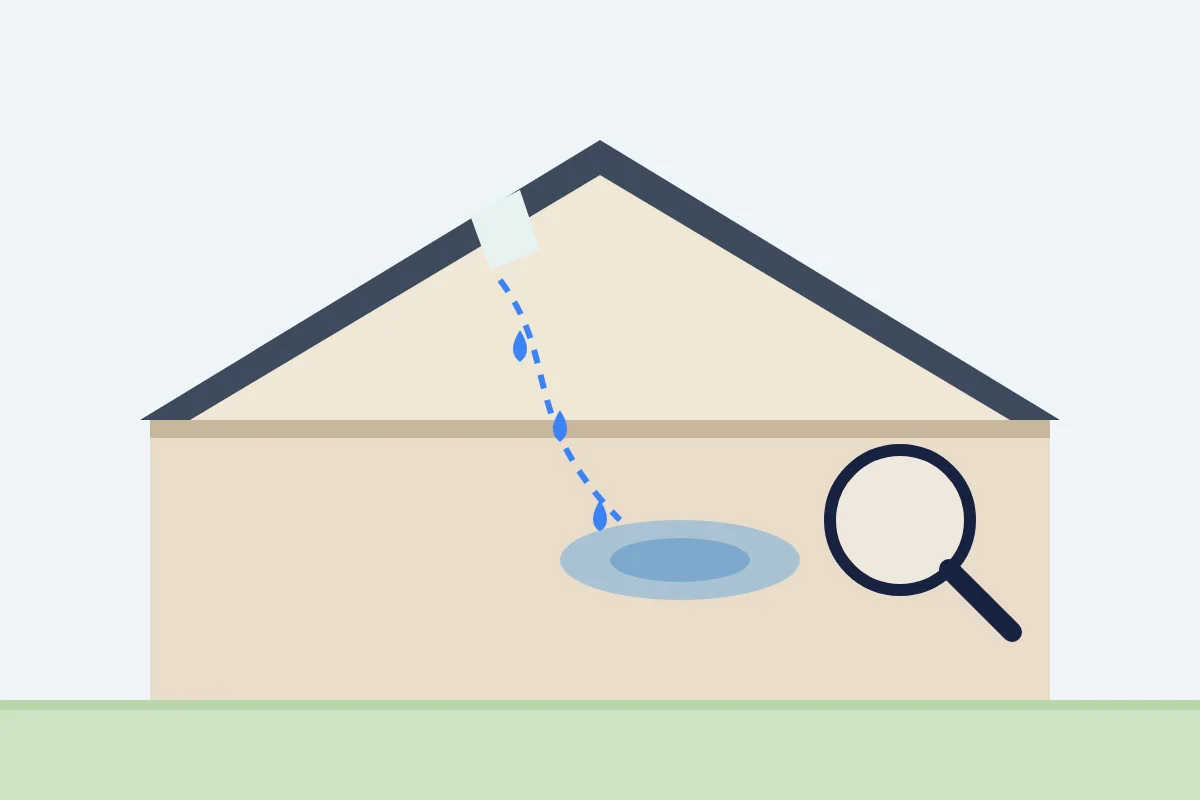
Extensions, dormers and conservatories are common on houses in towns like Hove, and where an extension meets the house is a common leak point. The flashings and upstands at those joints get a proper look. Water can run along the top of a wall or a joist before it shows, so the stain isn’t always the place to look.
Where we cannot see part of the leaking roof, the report says so. That way, it is clear what was covered and what wasn’t.
- Location
- Hove (BN3, BN1, BN52)
- Region
- Brighton and Hove
- Prices
- From £150 inc. VAT
- Your report
- A written report with photos, by email
- Appointments
- Weekdays, Saturdays and Sundays
- Insurance
- Professional indemnity and public liability
- Telephone
- 07833 053749
- Updated
- 27 October 2026
Hove roofs and the weather
Hove lies within about 1 mile of the sea, and places near the sea get more salt in the air and more wind than inland. Driving rain off the sea can be pushed into gaps that stay dry in calmer weather, and salt air slowly wears metal fixings. About 1.3 miles north-east lies Preston Manor & Gardens, a reminder of how long the area around Hove has been built on. Older homes in the wider area often have features worth a closer look, such as lead valleys, tall stacks and roofs that have been patched over the years.
If you let a flat or house near Hove station, tracing a leak quickly matters when a tenant is living with it. Homes near green spaces such as St. Ann's Well Gardens can get more leaves in their gutters in autumn, and an overflowing gutter soon means a wet wall. Take an older house close to Holy Trinity Church: leaks on older roofs often start at lead flashings, valleys or around old chimney stacks.
Hove is about 2 miles west of Brighton, in Brighton and Hove. Bookings from Hove are handled just like any other: get in touch, agree the price and pick a day. Hove is one of the towns and villages in Brighton and Hove we cover.
Every address in BN3, BN1 and BN52 is within our area for roof leak investigations, from the main roads to the quietest streets. We offer roof leak investigations to properties on Farm Road, York Road and Aymer Road. Main roads around Hove include the A270 and A2023, so getting to you is simple. If you are just outside Hove, we cover Brighton and Hove (1 mile north-west), Brunswick (1 mile south-east), Aldrington (1 mile west), Prestonville (1 mile north-east) and West Blatchington (1 mile north). We also work in nearby towns such as Kemptown (3 miles east), Whitehawk (3 miles east), Moulsecoomb (3 miles east), Hollingbury (3 miles north-east), Bevendean (3 miles east) and Saltdean (6 miles east). Being one of Brighton and Hove’s larger places, Hove has homes, rented property and businesses of every kind.
Landmarks near Hove
In Hove, that means homes and buildings near The Drive Prep School, St. Ann's Well Gardens and The Urchin pub. Hove has its own railway station: Hove station. Well-known places in the area include British Engineerium (0.9 miles north) and Montefiore Hospital (0.7 miles east). Not far away are Whitehawk Hill and Thundersbarrow Hill.
Places near Hove
What else we do in Hove
How we price roof leak investigations
Not every roof costs the same to survey, and it comes down to:
- How tall the building is and how easy the roof is to see
- Basic, Standard or Premium
- Roof area
- House, block, shop or office
Prices start from £150, including VAT. The final price depends on how big and how high the roof is, access and the package you choose.
What we need to know
To price your survey accurately, we will ask about:
- Where any leaks, stains or damp patches show inside
- Anything about access we should know
- The style of property, from a terrace to a block
- Photos of the roof, taken safely from the ground or a window
Buyers should book once an offer has been accepted, so you have the findings in time to act on them before you exchange. For any other survey, just phone 07833 053749 or use the contact form when you’re ready.
Honest limits
No survey can tell you everything, and it is better to know them up front. Keep these in mind:
- The repair itself (the investigation finds and reports the cause)
- A promise to find every leak on a single visit
- Water from pipes, tanks or heating systems
If you are not sure which survey you need, phone 07833 053749 or email us and we’ll give you a straight answer. What a survey covers and doesn’t.
What this survey covers
- Lead flashings
- Slate and tile slopes
- Valleys and parapet gutters
- Flat roof details
- The roof space
- Chimney stacks
- Rooflights and dormers
What we do, step by step
Before we start, let us know why you’ve booked: buying, a leak, storm damage, new work or just wanting to know where things stand. It helps us focus on what matters most to you. The visit usually takes about 1–2 hours, more where the leak is intermittent or the roof is large. For a visit in Hove, we need access to the loft, any rooms with leaks or stains, and the outside of the building. If there’s a side gate or a rear garden, let us know how to reach it. Visits can be on weekdays, Saturdays or Sundays.
- We start with your notes and photos of the leak.
- Inside, we look at the stain and the ceiling around it.
- In the loft, we follow any signs of water back towards the roof.
- We inspect the likely entry points outside, from the ground, windows and the roof where safe.
- You receive a report with the likely source, photos and recommendations.
Before the survey
- Check we can get to the back of the property
- Let us know where we can park nearby
- Make a note of anything you’d like us to look at
How to book
Most bookings start with a short call: phone 07833 053749 or email us and we’ll ask a few questions about the roof. You’ll have a price before anything is arranged.
Read more
Tips from our surveys
Nothing here needs a ladder. A few suggestions:
- Leave roof access to professionals
- Keep water away from lights and sockets
- Catch drips in a bucket and protect the floor
- Mention earlier attempts to fix the leak
We email the report to you, with photos of what we found. It sets out where we believe the water is getting in, how it is travelling and what needs attention. Turnaround is within 48 hours for Basic, 24 to 48 hours for Standard and the same day for Premium.
Keep gutters, valleys and outlets clear, ideally once the leaves have fallen. Many leaks start with a blocked outlet. Leave the clearing to someone with the right equipment.
Roof by roof
Chimney stacks
Chimneys let water in through pointing, flaunching, flashings and open pots. Each is checked from every safe vantage point, and look for damp on the breast inside.
Flat roof upstands and outlets
The upturned edge of a flat roof covering keeps water out at walls. A low or cracked upstand is a common way in.
Can I check my roof myself?
Fresh stains on ceilings or walls after rain are worth noting. Take a photo and write down when you saw it, as it helps a surveyor trace the cause.
Keep a simple record: dates of leaks, photos from ground level and any work done on the roof. Share it with us as you book and it will help the survey.
FAQs for Hove
Is the coastal weather around Hove hard on roofs?
Near the coast, roofs face more wind and more salt than further inland. Salt is hard on nails, clips and metal flashings, while strong wind lifts anything already loose.
Do you cover Hove?
Yes, Hove is one of the places we work. The survey and report are the same in Hove as anywhere else.
Why is not the leak directly above the stain?
Water rarely drops straight down. It runs along rafters, battens or underlay before it drips, so the entry point is often well away from the mark. That is why we trace the route rather than patching above the stain.
Is it a leak or condensation?
Many apparent leaks turn out to be condensation. A leak usually shows in one area and follows rain, while condensation is frequently spread out and worse in cold weather. The report explains which it looks like and what to do.
Will you check the loft?
If there’s a loft and safe access to it, yes. From inside, the underside of the roof frequently shows damp, staining or daylight that cannot be seen from outside.
Do I need to be at home?
If the survey includes the loft or the inside of the building, someone needs to let us in. We’ll talk about access when you book.
What happens after the survey?
You’ll get the report by email, with photos and clear recommendations. The Standard Survey includes a follow-up consultation, and the Premium Survey an in-person consultation, so you can talk the findings through.