
Kent · London and the South East
Thermal Roof Survey in Romney Street
Thermal imaging to find moisture and heat loss patterns in a roof around Romney Street, with a written report you can act on. Book a weekday or weekend visit.
- Thin or uneven insulation in the roof
- Ceilings that feel colder in places
- Damp around roof outlets and upstands
Thermal roof survey in Romney Street: what you get
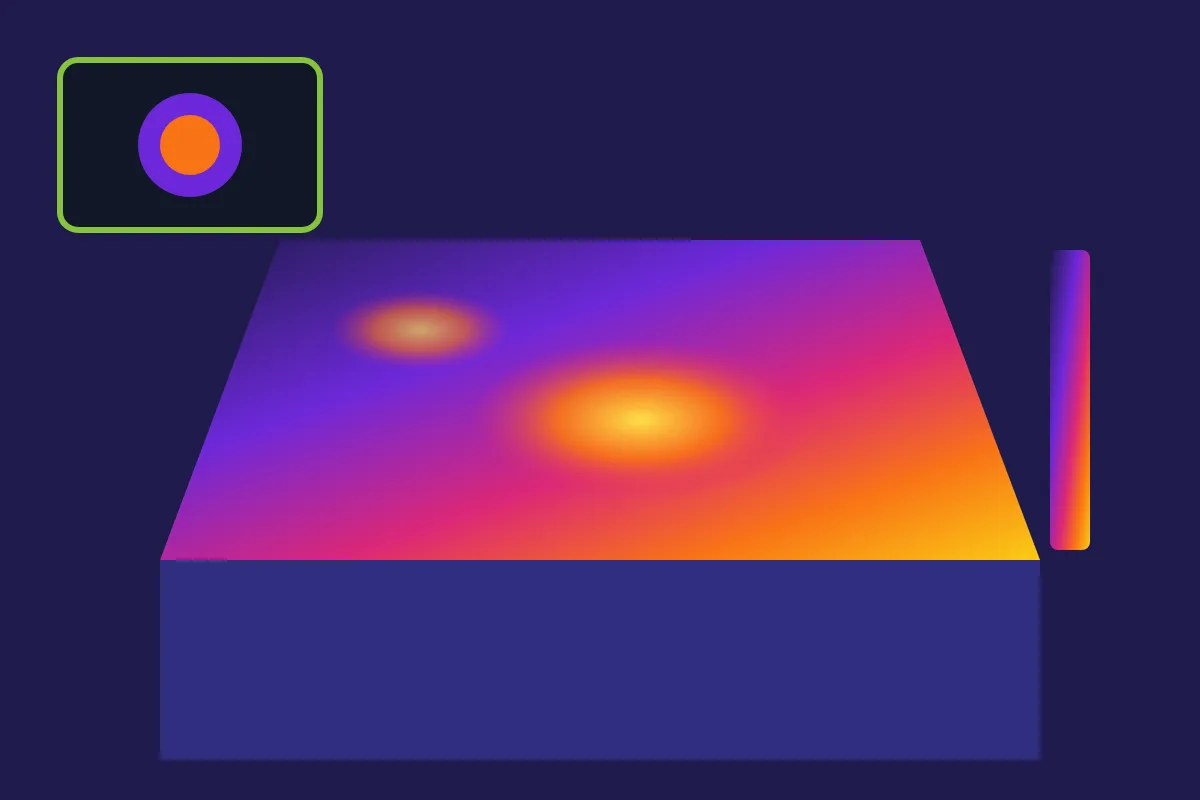
We present each thermal image next to a normal photo of the same area, so it is easy to see which part of the roof each one shows. We explain what each pattern may mean, what the moisture readings found and what we recommend. Premium reports are sent the same day. If you have questions, the in-person consultation gives you time to go through them. There’s a 12-month follow-up as well. If you’re worried about damp that repairs haven’t cured and damp around roof outlets and upstands, we can find out what’s behind it, on commercial roofs, flat roofs and loft conversions alike.
Older buildings in small places like Romney Street may be listed or in a conservation area. A look from above or with a thermal imager doesn’t touch the roof, which suits a building where any change needs care, before anyone decides what work it needs. Changes that affect a listed building’s special interest need listed building consent, so check with the council first.
We write the report in plain English, so you do not need to be a roofer to follow it. Each point is backed by a photograph where possible.
- Location
- Romney Street (TN15)
- Region
- Kent
- Price
- From £400 inc. VAT
- Reports
- Emailed report with photos and recommendations
- Survey days
- Weekdays, Saturdays and Sundays
- Insurance
- PI and public liability insurance
- Call
- 07833 053749
- Page updated
- 27 October 2026
Common roof problems in Romney Street
After a repair, some owners want to know whether the roof has dried out. A thermal survey with moisture readings can show whether wet areas remain when the conditions on the day are suitable.
Most people get in touch when they’ve noticed one of these:
- Thin or uneven insulation in the roof
- Patches of heat loss across the roof
- Moisture around outlets and upstands
- Water getting in at parapets and stacks
Historic houses like Lullingstone Castle, about 2.3 miles north-west, show how far back building around Romney Street goes. For older roofs nearby, a look from above or with a thermal imager is a hands-off way to check condition.
Before you book anyone
- What the report includes, and whether it has photographs
- What follow-up you get after the report
- When you will get the report
- Will they check the loft as well as the outside?
What we look for on each type of roof
Single-ply and EPDM roofs
Because these membranes are thin, patterns from below often show. Reflections from shiny surfaces can affect readings, which we allow for.
GRP fibreglass roofs
Cracks in GRP can let water into the boards beneath. We check cracks by eye and use the images to see whether there is a pattern around them.
What you can safely check yourself
Fresh stains on ceilings or walls after rain are worth noting. Photograph them and note the date.
Watch the gutters in a downpour, from a window or the ground. Overflowing water can be a sign of a blockage or a gutter that has dropped.
Tips from our surveys
Over many surveys, some simple habits stand out as worth the effort:
- Clear leaves from outlets and gutters each autumn
- Note where damp appears and after what weather
- Move stored items away from the loft hatch
- Check from ground level or a window, never by climbing
Where a pattern cannot be confirmed, the report says what could help, like electronic leak detection or opening up a small area.
Deal with small splits and lifted seams promptly. Water that gets under a covering can spread a long way before it shows.
Nearby places to Romney Street
Also in Romney Street
How we price thermal roof surveys
The price reflects the time and kit the roof needs. That comes down to:
- How complicated the roof is, with its valleys, chimneys and parapets
- Height and safe access
- Extensions, dormers and garages with roofs of their own
- The package you choose: Basic, Standard or Premium
There are three survey packages: Basic from £150, Standard from £250 and Premium from £400, all inc. VAT. What your roof costs depends on its size, access and what you want to find out.
What to tell us when you contact us
What helps most when you contact us:
- What kind of property and roof it is
- Any deadline, like an exchange date
- Any marks or damp showing indoors
- Pictures of the roof from a safe spot, if you have them
Buyers should book once an offer has been accepted, so you have the findings in time to act on them before you exchange. Otherwise, simply ring 07833 053749 or send us an email whenever suits you.
What happens on the day
Every roof is different; as a rough guide, the survey takes roughly 1–2 hours for most houses, and more on a big or complicated roof. If you have questions on the day, just ask. Somewhere like Romney Street needs a little journey planning: let us know about lanes, gates and parking. The roof is looked at from the ground, from windows, from the loft where there’s safe access and from the roof where it is safe.
- First we discuss the roof, any damp and the forecast for the visit.
- We look over the roof from wherever it is safe.
- We take thermal images of the roof and of the loft where we can reach it.
- Patterns that stand out are checked with moisture readings.
- Each image is set beside a normal photo and explained in the report.
Before the survey
- Have any questions written down, so nothing gets missed
- Have any paperwork from past roof work to hand
- Leave a clear route to the loft
Getting a price
A quick phone call is typically the easiest start: ring 07833 053749 or email us. The price is agreed before a date is set.
Read more
Questions from Romney Street
Do you cover Romney Street?
Yes. We work right across London and the South East, and Romney Street is part of that. You can ring 07833 053749 or email us with the address and some details.
How do I find out if my home in Romney Street is listed?
For listing, use Historic England’s list; for conservation areas, ask the council. The answer matters most when a change of material is on the cards.
Does the weather affect a thermal survey?
Conditions on the day affect the results. It works best after a sunny day, with a dry roof surface and little wind. Rain, wind and heavy cloud can weaken the patterns, so we discuss the forecast when booking.
What insurance do you have?
Every survey is covered by professional indemnity and public liability insurance, and details are available on request.
Will the camera show exactly where the water is?
The camera does not see water itself. Wet insulation holds heat longer than dry, so it can stand out, but we check each finding with moisture readings.
How long does the survey take?
It usually takes between one and two hours for most houses, or half a day or so for a commercial building. We will confirm the timing as you book.
What happens after the survey?
You will receive the report by email, and what you do next is up to you: raise it with a seller, send it to an insurer, brief a roofer or share it with a managing agent.
Drones, thermal imaging and Romney Street roofs
If the drone is used for your survey, the flight is checked against the Drone Safety Map first. Across Kent, older roofs are frequently handmade clay or peg tiles, and tile-hanging on upper walls is a familiar sight. Oast houses and timber-framed Wealden hall houses are part of the county’s older buildings too. Older coverings on steep or tall roofs are hard to judge from below, so close-up close-up aerial shots and thermal images help.
If you live in an older home near Church of Saint Mary the Virgin, thin or patchy insulation under an old roof frequently shows up clearly on a thermal image.
Romney Street is about 4 miles north-east of Sevenoaks, in Kent. Romney Street is part of the area we cover across London and South East England. Romney Street is one of the places in Kent we cover. Maidstone is in our area too.
Surveys in TN15 work the same way as everywhere else we cover. You will find streets like Bower Lane and Romney Street. Other places close to Romney Street include East Hill (1 mile north-east), Knatts Valley (1 mile east), Woodlands (1 mile south-east), Cotman's Ash (1 mile south-east) and Kemsing (2 miles south). Further out, we also cover Maidstone (14 miles east), Dartford (8 miles north), Sevenoaks (4 miles south-west), Royal Tunbridge Wells (14 miles south), Gravesend (10 miles north-east) and Tonbridge (9 miles south).
Local landmarks in Romney Street
Locally, jobs take us to homes and businesses close to Kemsing Down and the streets around them. The nearest railway station is Shoreham (Kent) station, roughly 1.6 miles west of the centre. Nearby you’ll also find Otford Heritage Centre (2.1 miles south-west) and Kemsing Castle Bank (1.7 miles south).