
Isle of Wight · London and the South East
Gutter survey in Totland, Isle of Wight
A survey of gutters, valleys, outlets and downpipes in Totland, using drones and thermal imaging where applicable. Call or email for a price.
- Water backing up from a hidden gutter
- Downpipes that are split or coming away
- Brackets that have dropped or snapped
Checking the roof from ground level
Inside, the loft is a good place to look, with care. Take a torch and only step on boards or joists, and look for staining, damp timber or daylight coming through.
Watch the gutters in a downpour, from a window or the ground. Water spilling over the edge can point to a blockage or a sagging run.
Gutter survey in Totland
Some gutters are easy to see from the street but plenty of gutters are tucked away. Valley, parapet, box and secret gutters can send water indoors when they overflow. We inspect them as far as it’s safe to see them, from ground level, from windows, from the roof space and from the roof where it is safe. Hidden gutters are a common source of leaks inside. If you are worried about valley or box gutters that overflow inside and gutters that have fallen out of line, we can find out what’s behind it, whatever the roof.
Around Totland, older cottages sit alongside bungalows and newer houses. Older roofs can have slate, clay tiles or other traditional coverings, while many later ones have concrete tiles. On older homes, chimney stacks, valleys and gutters are typically where the work is. The fixings under an older roof frequently fail before good slates or tiles do.
Where we can’t see part of the gutter, the report says so. You’ll know exactly what was inspected and what wasn’t.
- Where
- Totland (PO39, PO40)
- Region
- Isle of Wight
- Price
- From £150 inc. VAT
- Reports
- A written report with photos, by email
- Survey days
- Monday to Sunday, daytime
- Insurance
- PI and public liability insurance
- Telephone
- 07833 053749
- Last updated
- 27 October 2026
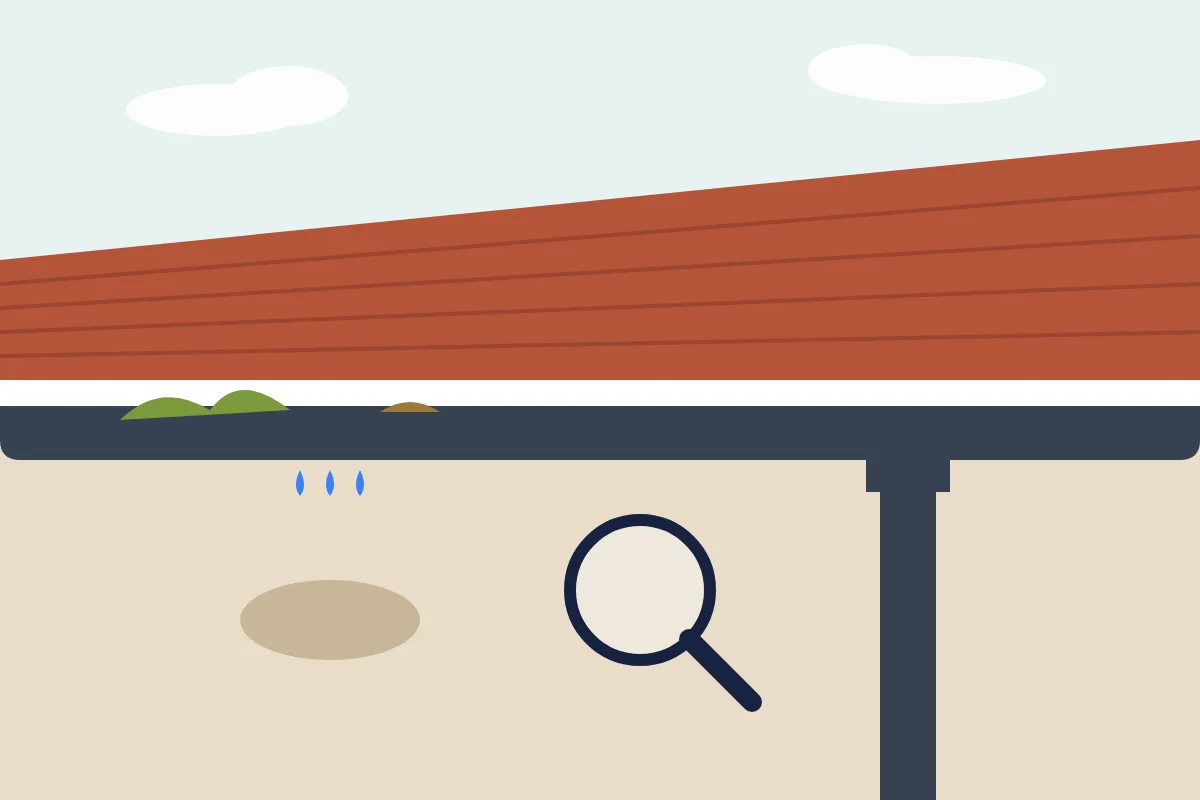
What a gutter survey does not cover
In fairness, there are limits to any roof survey:
- What’s hidden inside a downpipe
- Hidden sections we can’t view safely
- Rot or damp concealed behind fascias or inside walls
Not sure which survey suits your roof? You can call 07833 053749 or send us an email and we will tell you before you book. What a survey covers and doesn’t.
What we look at
- Fascias and soffits
- Outlets and hoppers
- Parapet and box gutters
- Downpipes
- Eaves gutters
- Valley gutters
Leave it or get it looked at?
It is easy to put damp down to the wrong cause. If a leaking gutter or downpipe is the source, other work on the wall will not stop it. A gutter survey helps rule the rainwater system in or out. In a smaller place like Totland, wherever a roof is exposed, a loose ridge or flashing does not stay loose for long. Each storm lifts it a little further.
Simple, low roofs take less time to survey than tall or complicated ones, and the package matters as well. We will give you the figure before anything is booked.
Why choose Independent Roof Survey in Totland
- Every finding written up with photos
- PI and public liability insurance
- Package prices that include VAT
- Over 5,000 surveys carried out
Read our cost guide and our case studies.
Roofs, chimneys and gutters in Totland
Totland lies within about 1 mile of the sea, where sea air brings more salt and stronger wind than inland. Salt is hard on nails, clips and metal flashings, and strong wind lifts anything already loose on a roof. If your home is older, it is worth knowing whether it is listed or in a conservation area before planning roof work. Listed building consent covers changes to a listed building’s special interest, and an Article 4 direction can bring extra controls in a conservation area.
Take a building like St Saviour's Catholic Primary School: large buildings have long gutter runs and big roofs that need checking like any other. For an older house near a landmark such as Christ Church, old fixings, lead flashings and tall chimneys are typical of older roofs.
Totland is about 5 miles south of Lymington, in the Isle of Wight. Totland is part of the area we cover and the surrounding area across London and South East England. We cover towns and villages across the Isle of Wight, from the larger towns to small villages. Our Southampton page covers surveys nearby.
Surveys in PO39 and PO40 work the same way as everywhere else we cover. Local streets include Meadow Barn Close, Ward Road and Weston Road. Being close to the B3322, Totland is easy for us to reach for gutter surveys. We also cover the places around Totland: Colwell (1 mile north-east), Freshwater (1 mile east), Easton (1 mile east), Norton Green (1 mile north-east) and Afton (1 mile east). Larger places within reach include Newport (11 miles east), Cowes (12 miles north-east), East Cowes (12 miles north-east), Barton (11 miles east), Hunny Hill (11 miles east) and Cross Lane (11 miles east). For harder-to-reach addresses, a little more planning is needed, so let us know when you contact us.
Local landmarks in Totland
Around Totland, our work takes us to homes and buildings near Colwell Bay Inn, among other places. Well-known places in the area include Yarmouth Castle (2.5 miles north-east) and Dimbola Museum And Galleries (1.2 miles south-east). Open spaces near Totland include Lymington and Keyhaven Marshes Nature Reserve and Tennyson Down.
FAQs for Totland
Is my home in Totland listed or in a conservation area?
The council and Historic England’s list are the places to check. It’s worth checking before planning roof work, as both can affect what’s allowed.
Is the coastal weather around Totland hard on roofs?
Places near the sea get more wind and more salt in the air than inland, and both are hard on roofs. Salt corrodes metal fixings and flashings, and wind lifts loose slates, tiles and ridge pieces.
When does the report arrive?
That depends on the survey you book: the Basic Survey report arrives within 48 hours, the Standard Survey in 24 to 48 hours and the Premium Survey the same day. Reports are sent by email.
Do I have to be there for the survey?
Not always. If we only need the outside, we can agree that ahead of time, but the loft and any rooms with damp need someone to let us in.
Do you take photos of the roof?
Yes, plenty. Each finding is shown in a picture where possible, which makes the report easy to follow.
How much time does the visit need?
Most visits to a house take about 1–2 hours, with commercial buildings nearer 3–4 hours.
Do you work in Totland?
Yes. We cover Totland and the rest of the Isle of Wight, as part of our work across London and the South East. For a price, ring 07833 053749 or email us.
Towns and villages near Totland
What else we do in Totland
Rented homes, blocks and businesses
For blocks of flats, a roof survey helps managing agents and residents’ management companies plan ahead. The report sets out what needs attention now and what can wait, which helps when budgeting.
Freeholders and residents’ companies use a roof report to plan and budget, with the most urgent items set out first.
Roof by roof
Fascias and soffits
Most gutters are fixed to the fascia, so rot in the boards can loosen the whole run. We note soft, stained or damaged boards we can see.
Plastic (uPVC) gutters
Many homes have plastic gutters and downpipes. As the seals age, joints can start to drip, and brackets can sag under load.
What happens on the day
Where it’s relevant and can be reached safely, the roof space is checked as well as the outside. In the loft, the signs we look for are staining, damp, daylight and sagging, as far as the space allows. All in, the survey typically takes between one and two hours for a house, with bigger or more complicated roofs taking longer. A visit to a smaller place like Totland is no different on the day: outside, inside and from any safe vantage point, in that order. It’s useful to show us anything you’ve already noticed.
- We agree which parts of the building you’re most worried about.
- We look along each run for debris, sagging and drips.
- Outlets, hoppers, downpipes and overflows are inspected.
- Fascias, soffits and the walls below are looked at for signs of overflow.
- Findings are photographed and set out in a written report.
Before we arrive
- Check we can get to the back of the property
- Make a note of anything you’d like us to look at
- Have any paperwork from past roof work to hand
Getting a price
Our phone lines are open seven days a week. To book or ask a question, ring 07833 053749 or drop us an email.