
Buckinghamshire · London and the South East
New Zealand Storm Damage Roof Report
Independent storm damage roof reports in New Zealand. More than 5,000 surveys completed across London and South East England.
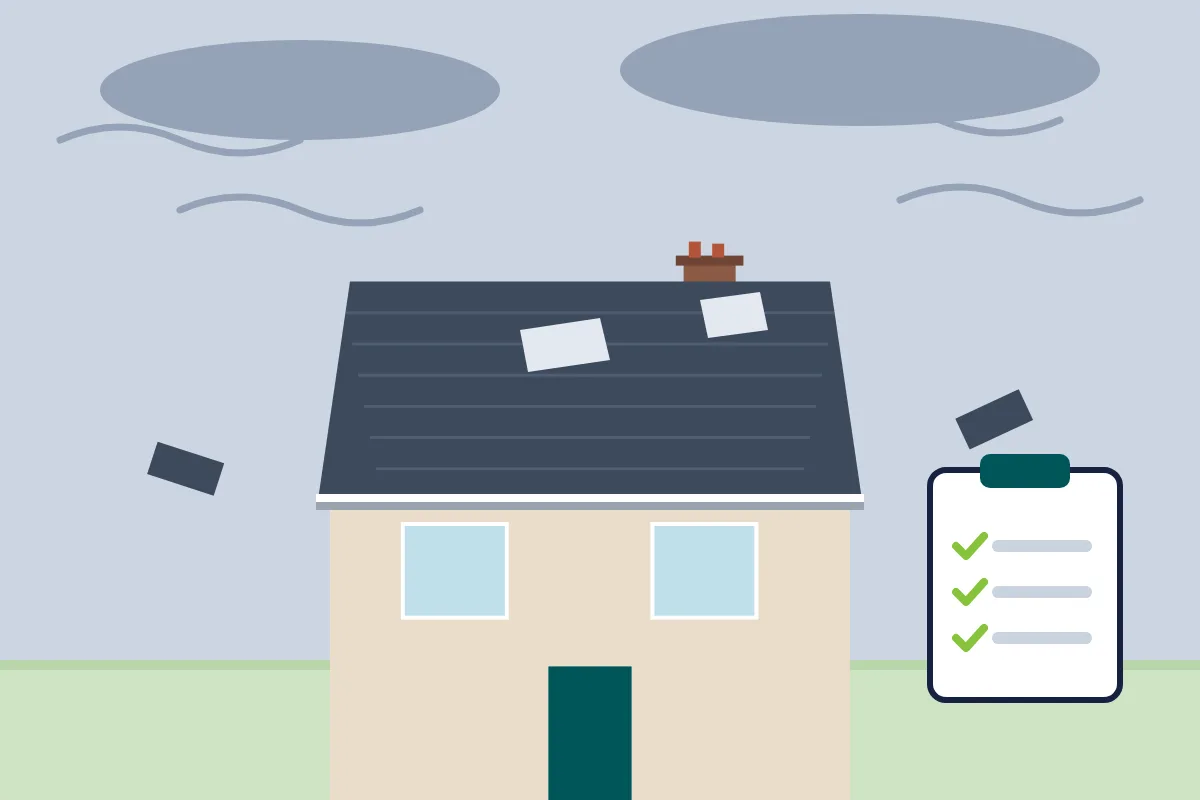
- Roofs hit by falling trees
- Broken or displaced guttering
- Slates and tiles blown off the roof
Tips that help
A little preparation and a few simple habits help. Some pointers:
- Report the damage to your insurer as soon as you can
- Don’t go onto the roof to take pictures
- Keep receipts for any emergency work
- Keep a note of the date of the storm
Questions about the findings are always welcome. Standard Surveys come with a follow-up consultation, and Premium Surveys with an in-person one.
Ask a tree specialist about branches over the roof. Branches can hit or scrape the roof in a storm.
Storm damage roof report in New Zealand: what you get
High winds usually affect the parts of a roof that are already exposed or loose. Typical damage includes lost slates and tiles, lifted ridges, loose flashings and torn flat roof coverings. Falling branches can cause damage too. Our report records what has happened to your roof, with photos. Where we also see signs of older wear, the report records that too. We survey slate and tile slopes, gutters and fascias and flat roofs, and people most frequently book us about flat roof edges peeled back and loose or torn flashings.
For a small place like New Zealand, the inspection is the same as anywhere: we simply plan the journey and access ahead. Let us know where the water shows, when it appears and anything you’ve noticed outside, plus any earlier repairs. If you have photographs of the water coming in, they help as well.
What you get is a clear record of the roof on the day we saw it. That makes it useful now and a handy reference later, such as when you want to compare after future work.
- Where
- New Zealand (HP19, HP20)
- Wider area
- Buckinghamshire
- Prices
- From £150 inc. VAT
- Reports
- Written, with photos, emailed to you
- Survey days
- Weekdays and weekends
- Cover
- Professional indemnity and public liability
- Telephone
- 07833 053749
- Last updated
- 27 October 2026
Wind, rain and roofs in New Zealand
Thatch survives on some older buildings in Buckinghamshire’s villages. Across the South East, older homes tend to have slate or clay tiles, and many later ones concrete tiles. The covering and its details give the first clues when tracing where water is coming from. Before planning roof work on an older home, find out whether it is listed or in a conservation area. Listed building consent covers changes to a listed building’s special interest, and an Article 4 direction can bring extra controls in a conservation area.
If you let a flat or house near Aylesbury station, a tenant living with a leak needs the cause found, not just the stain painted over. For an older house near a landmark like St Peter's, water on an older roof tends to find its way in at the lead, the valleys or the chimney.
New Zealand is about 1 mile west of Elmhurst, in Buckinghamshire. New Zealand gets the same service as everywhere else we work: a careful inspection, photographs and a written report. Across Buckinghamshire, we cover New Zealand and the places around it. Milton Keynes is in our area too.
Surveys in HP19 and HP20 work the same way as everywhere else we cover. You’ll find streets like Dunsham Lane, Drayton Road and Cannock Road. We also cover the places around New Zealand: Elmhurst (1 mile east), Aylesbury (1 mile south), Watermead (1 mile north-east), Quarrendon Estate (1 mile west) and California (1 mile south). Further out, we also cover High Wycombe (14 miles south), Chesham (12 miles south-east), Buckingham (14 miles north-west), Amersham (14 miles south-east), Princes Risborough (7 miles south) and Haddenham (6 miles south-west).
Around New Zealand
In New Zealand, that means homes and buildings near The New Zealand pub, Buckinghamshire UTC and The PACE Centre, among other places. For rail, the closest station is Aylesbury station, about 0.8 miles south of the centre. A little further out are Royal Buckinghamshire Hospital (under half a mile south) and Dinton Castle (3.8 miles south-west).
New Zealand: your questions answered
Does a conservation area affect roof work in New Zealand?
You can check whether a building is listed on Historic England’s list, and your council can tell you if it is in a conservation area. If a home is listed, changes that affect its special interest need listed building consent, and in a conservation area re-roofing in different materials may need permission.
Will you come out to New Zealand?
Yes, we do. We cover the whole of London and South East England, from towns to the smallest villages. Longer journeys are simply planned in advance.
Are you loss adjusters?
No. We are not loss adjusters and do not act for you with the insurer. We give you an independent report of the damage, which you can pass to your insurer.
Can you put a tarpaulin over the damage?
Emergency cover over a damaged roof should be arranged with a roofer. Take photos from the ground first if it is safe. Keep receipts for any emergency work.
Will you walk on the roof?
Only when it’s safe. Some roofs are too steep or fragile to walk on safely. We use safe viewpoints, the loft space and a drone where it applies.
Which days do you carry out surveys?
We carry out surveys on weekdays and at weekends. To arrange a date, call 07833 053749 or drop us an email.
Is it the same as a RICS Level 2 or Level 3 survey?
No. This is a survey of the roof only, so it’s not a RICS Level 2 or Level 3 survey. It can sit alongside a RICS survey if you want both.
Rented homes, blocks and businesses
Buyers’ agents can book surveys on behalf of their clients. Reports are emailed, so they’re easy to pass on, photos included.
Managing agents and residents’ management companies use roof surveys to plan maintenance. The report sets out what needs attention now and what can wait, which helps with budgets and planning.
What happens on the day
On the day, we start by asking what you’ve noticed and what you want to find out. After that, we look at everything we can see safely, using the ground, windows, the loft and a drone where it applies. Most surveys take roughly 1–2 hours at a house, and longer if the damage is spread across a large roof. Older rural homes like those around New Zealand can have a main roof, lower lean-to roofs and outbuildings all joined together. Each part is looked at from wherever it can safely be seen.
- You let us know what happened and whether a roofer has made the roof safe.
- We check inside, including the loft where there is access, for water damage.
- The roof is inspected from ground level, windows and the roof where it is safe.
- Storm damage and older wear are recorded separately where we can.
- The report, with photos, is emailed to you.
How to prepare
- Keep pets inside or away from the areas we are looking at
- Buyers: confirm access with the estate agent or seller
- Dig out any old roof reports or invoices
Book a survey
Most bookings start with a short call: phone 07833 053749 or drop us an email, and we’ll ask about the building and what you need. The price is agreed before a date is set.
Read more
Nearby places to New Zealand
Also in New Zealand
How the survey changes by roof type
Clay and concrete tiles
Tiles can lift, crack or blow off in high winds. The report shows each damaged area.
Ridge and hip tiles
The ridge and hips are among the most exposed parts of a roof. The survey notes loose, cracked or missing ridge and hip tiles.
Do you need a storm damage roof report in New Zealand?
A storm frequently finds a roof’s existing weak spots. Nail fatigue, eroded ridge mortar and tired flashings can all fail in high winds. Our report notes both the storm damage and any older wear.
Things that often lead to a survey include:
- Cowls or aerials dislodged in the wind
- Slipped or missing slates or tiles
- Lifted or missing ridge and hip tiles
- New damp or leaks inside
For site and facilities teams at buildings like Elmhurst School, on a building that size, finding the source of a drip means looking well beyond the stain.
Choosing a roof surveyor
- Whether they hold professional indemnity and public liability insurance
- Whether any drone flown is registered with the CAA
- Whether VAT is added on top
- What follow-up you get after the report
DIY checks: what’s safe
Watch the gutters in a downpour, from a window or the ground. Overflowing water can point to a blockage or a sagging run.
After strong wind, take a look from the pavement or garden: broken slates or tiles in the garden, gaps along the ridge or loose lead are signs to note. Leave anything above ground level to a survey.